Summary | Excerpt | Reading Guide | Reviews | Read-Alikes | Genres & Themes | Author Bio
Critics' Opinion:
Readers' Opinion:
First Published:
Sep 2000, 320 pages
Paperback:
Oct 2001, 352 pages
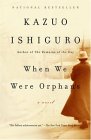
An English boy born in early-twentieth-century Shanghai, is orphaned at age nine when his mother and father both vanish under suspicious circumstances. Sent to live in England, he grows up to become a renowned detective and, 20 years later, returns to Shanghai, where the Sino-Japanese War is raging.
The maze of human memory--the ways in which we accommodate and alter it, deceive and deliver ourselves with it--is territory that Kazuo Ishiguro has made his own. In his previous novels, he has explored this inner world and its manifestations in the lives of his characters with rare inventiveness and subtlety, shrewd humor and insight. In When We Were Orphans, his first novel in five years, he returns to this terrain in a brilliantly realized story that illuminates the power of one's past to determine the present.
Christopher Banks, an English boy born in early-twentieth-century Shanghai, is orphaned at age nine when his mother and father both vanish under suspicious circumstances. Sent to live in England, he grows up to become a renowned detective and, more than twenty years later, returns to Shanghai, where the Sino-Japanese War is raging, to solve the mystery of the disappearances.
The story is straightforward. Its telling is remarkable. Christopher's voice is controlled, detailed, and detached, its precision unsurprising in someone who has devoted his life to the examination of details and the rigors of objective thought. But within the layers of his narrative is slowly revealed what he can't, or won't, see: that his memory, despite what he wants to believe, is not unaffected by his childhood tragedies; that his powers of perception, the heralded clarity of his vision, can be blinding as well as enlightening; and that the simplest desires--a child's for his parents, a man's for understanding--may give rise to the most complicated truths.
A masterful combination of narrative control and soaring imagination, When We Were Orphans is Kazuo Ishiguro at his best.
Chapter One
It was the summer of 1923, the summer I came down from Cambridge, when despite my aunt's wishes that I return to Shropshire, I decided my future lay in the capital and took up a small flat at Number 14b Bedford Gardens in Kensington. I remember it now as the most wonderful of summers. After years of being surrounded by fellows, both at school and at Cambridge, I took great pleasure in my own company. I enjoyed the London parks, the quiet of the Reading Room at the British Museum; I indulged entire afternoons strolling the streets of Kensington, outlining to myself plans for my future, pausing once in a while to admire how here in England, even in the midst of such a great city, creepers and ivy are to be found clinging to the fronts of fine houses.
It was on one such leisurely walk that I encountered quite by chance an old schoolfriend, James Osbourne, and discovering him to be a neighbour, suggested he call on me when he was next passing. Although at that ...

If you liked When We Were Orphans, try these:
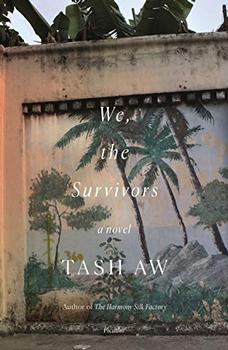
by Tash Aw
Published 2020
From the author of The Harmony Silk Factory and Five Star Billionaire, a compelling depiction of a man's act of violence, set against the backdrop of Asia in flux.
by Diane Wei Liang
Published 2009
The first novel in an exhilarating new detective series, The Eye of Jade is both a thrilling mystery and fascinating journey through modern China.
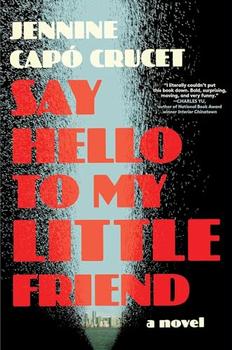
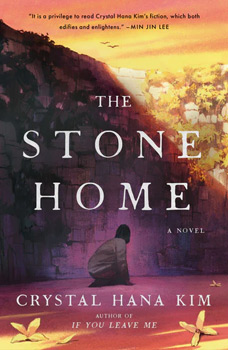
The Stone Home
by Crystal Hana Kim
A moving family drama and coming-of-age story revealing a dark corner of South Korean history.
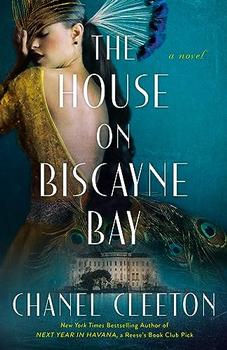
The House on Biscayne Bay
by Chanel Cleeton
As death stalks a gothic mansion in Miami, the lives of two women intertwine as the past and present collide.
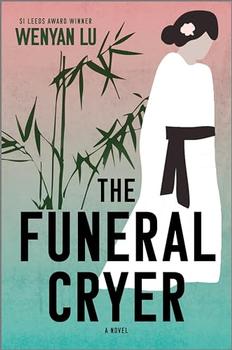
The Funeral Cryer by Wenyan Lu
Debut novelist Wenyan Lu brings us this witty yet profound story about one woman's midlife reawakening in contemporary rural China.
Your guide toexceptional books
BookBrowse seeks out and recommends the best in contemporary fiction and nonfiction—books that not only engage and entertain but also deepen our understanding of ourselves and the world around us.