Summary | Excerpt | Reviews | Beyond the book | Read-Alikes | Genres & Themes | Author Bio
Critics' Opinion:
Readers' Opinion:
First Published:
Feb 2013, 480 pages
Paperback:
Feb 2014, 480 pages
 Book Reviewed by:
Poornima Apte
Buy This Book
The explosive story of the rise of the processed food industry and its link to the emerging obesity epidemic.
From a Pulitzer Prize–winning investigative reporter at The New York Times comes the explosive story of the rise of the processed food industry and its link to the emerging obesity epidemic. Michael Moss reveals how companies use salt, sugar, and fat to addict us and, more important, how we can fight back.
In the spring of 1999 the heads of the world's largest processed food companies—from Coca-Cola to Nabisco—gathered at Pillsbury headquarters in Minneapolis for a secret meeting. On the agenda: the emerging epidemic of obesity, and what to do about it.
Increasingly, the salt-, sugar-, and fat-laden foods these companies produced were being linked to obesity, and a concerned Kraft executive took the stage to issue a warning: There would be a day of reckoning unless changes were made. This executive then launched into a damning PowerPoint presentation—114 slides in all—making the case that processed food companies could not afford to sit by, idle, as children grew sick and class-action lawyers lurked. To deny the problem, he said, is to court disaster.
When he was done, the most powerful person in the room—the CEO of General Mills—stood up to speak, clearly annoyed. And by the time he sat down, the meeting was over.
Since that day, with the industry in pursuit of its win-at-all-costs strategy, the situation has only grown more dire. Every year, the average American eats thirty-three pounds of cheese (triple what we ate in 1970) and seventy pounds of sugar (about twenty-two teaspoons a day). We ingest 8,500 milligrams of salt a day, double the recommended amount, and almost none of that comes from the shakers on our table. It comes from processed food. It's no wonder, then, that one in three adults, and one in five kids, is clinically obese. It's no wonder that twenty-six million Americans have diabetes, the processed food industry in the U.S. accounts for $1 trillion a year in sales, and the total economic cost of this health crisis is approaching $300 billion a year.
In Salt Sugar Fat, Pulitzer Prize–winning investigative reporter Michael Moss shows how we got here. Featuring examples from some of the most recognizable (and profitable) companies and brands of the last half century—including Kraft, Coca-Cola, Lunchables, Kellogg, Nestlé, Oreos, Cargill, Capri Sun, and many more—Moss's explosive, empowering narrative is grounded in meticulous, often eye-opening research.
Moss takes us inside the labs where food scientists use cutting-edge technology to calculate the "bliss point" of sugary beverages or enhance the "mouthfeel" of fat by manipulating its chemical structure. He unearths marketing campaigns designed—in a technique adapted from tobacco companies—to redirect concerns about the health risks of their products: Dial back on one ingredient, pump up the other two, and tout the new line as "fat-free" or "low-salt." He talks to concerned executives who confess that they could never produce truly healthy alternatives to their products even if serious regulation became a reality. Simply put: The industry itself would cease to exist without salt, sugar, and fat. Just as millions of "heavy users"—as the companies refer to their most ardent customers—are addicted to this seductive trio, so too are the companies that peddle them. You will never look at a nutrition label the same way again.
Chapter One
"Exploiting the Biology of the Child"
The first thing to know about sugar is this: Our bodies are hard-wired for sweets.
Forget what we learned in school from that old diagram called the tongue map, the one that says our five main tastes are detected by five distinct parts of the tongue. That the back has a big zone for blasts of bitter, the sides grab the sour and the salty, and the tip of the tongue has that one single spot for sweet. The tongue map is wrong. As researchers would discover in the 1970s, its creators misinterpreted the work of a German graduate student that was published in 1901; his experiments showed only that we might taste a little more sweetness on the tip of the tongue. In truth, the entire mouth goes crazy for sugar, including the upper reaches known as the palate. There are special receptors for sweetness in every one of the mouth's ten thousand taste buds, and they are all hooked up, one way or another, to the parts of the brain known as the ...

I don’t want to give away any of the “I didn’t know that” moments you’ll doubtless encounter while reading this book – mainly because I want you to read this book. There are times when Moss gets repetitive when he is trying to explain a new concept or idea. But this is a minor flaw in a book that should be essential reading for all...continued
Full Review
(946 words)
This review is available to non-members for a limited time. For full access,
become a member today.
(Reviewed by Poornima Apte).
 Marion Nestle, author of Food Politics and What to Eat
In this meticulously researched book, Michael Moss tells the chilling story of how the food giants have seduced everyone in this country. He understands a vital and terrifying truth: that we are not just eating fast food when we succumb to the siren song of sugar, fat, and salt. We are fundamentally changing our lives—and the world around us" - Alice Waters "Salt Sugar Fat is a breathtaking feat of reporting. Michael Moss was able to get executives of the world's largest food companies to admit that they have only one job—to maximize sales and profits—and to reveal how they deliberately entice customers by stuffing their products with salt, sugar, and fat. This is a truly important book, and anyone reading it will understand why food corporations cannot be trusted to value health over profits and why we all need to recognize and resist food marketing every time we grocery shop or vote. Ron Suskind, Pulitzer Prize–winning author of Confidence Men: Wall Street, Washington, and the Education of a President
What happens when one of the country's great investigative reporters infiltrates the most disastrous cartel of modern times: a processed food industry that's making a fortune by slowly poisoning an unwitting population? You get this terrific, powerfully written book, jammed with startling disclosures, jaw-dropping confessions and, importantly, the charting of a path to a better, healthier future. This book should be read by anyone who tears a shiny wrapper and opens wide. That's all of us.
Marion Nestle, author of Food Politics and What to Eat
In this meticulously researched book, Michael Moss tells the chilling story of how the food giants have seduced everyone in this country. He understands a vital and terrifying truth: that we are not just eating fast food when we succumb to the siren song of sugar, fat, and salt. We are fundamentally changing our lives—and the world around us" - Alice Waters "Salt Sugar Fat is a breathtaking feat of reporting. Michael Moss was able to get executives of the world's largest food companies to admit that they have only one job—to maximize sales and profits—and to reveal how they deliberately entice customers by stuffing their products with salt, sugar, and fat. This is a truly important book, and anyone reading it will understand why food corporations cannot be trusted to value health over profits and why we all need to recognize and resist food marketing every time we grocery shop or vote. Ron Suskind, Pulitzer Prize–winning author of Confidence Men: Wall Street, Washington, and the Education of a President
What happens when one of the country's great investigative reporters infiltrates the most disastrous cartel of modern times: a processed food industry that's making a fortune by slowly poisoning an unwitting population? You get this terrific, powerfully written book, jammed with startling disclosures, jaw-dropping confessions and, importantly, the charting of a path to a better, healthier future. This book should be read by anyone who tears a shiny wrapper and opens wide. That's all of us. Ever wonder why there are so many varieties of Coke? Even the most basic grocery store can boast that it carries Coca Cola Classic, Cherry Coke, Diet Coke, Coca-Cola Zero and maybe even Vanilla Coke. Years ago, the company promised that by 2015 it would have a thousand varieties of Coke all over the world. Whether that promise comes to fruition or not, there's a very simple reason for all that product diversification over and above different people's tastes and preferences, and that is shelf space. "The main point of generating product line extensions is to win more space on the shelf. Store managers will only give so much room to any one product, no matter how briskly it is selling," says Michael Moss in Salt Sugar Fat, "Adding new flavors...
This "beyond the book" feature is available to non-members for a limited time. Join today for full access.

If you liked Salt Sugar Fat, try these:
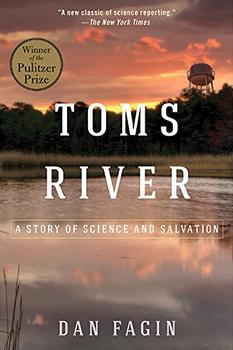
by Dan Fagin
Published 2015
The riveting true story of sixty years in the life of a small town ravaged by industrial pollution, Toms River melds hard-hitting investigative reporting, a fascinating scientific detective story, and an unforgettable cast of characters into a sweeping narrative.
by Dana Goodyear
Published 2014
Anything That Moves is a highly entertaining, revelatory look into the raucous, strange, fascinatingly complex world of contemporary American food culture, and the places where the extreme is bleeding into the mainstream.


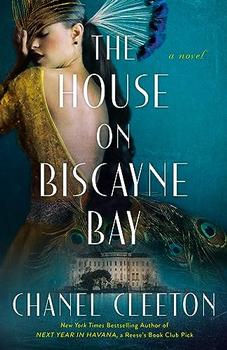
The House on Biscayne Bay
by Chanel Cleeton
As death stalks a gothic mansion in Miami, the lives of two women intertwine as the past and present collide.
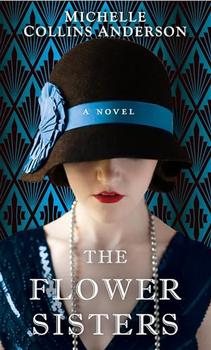
The Flower Sisters
by Michelle Collins Anderson
From the new Fannie Flagg of the Ozarks, a richly-woven story of family, forgiveness, and reinvention.
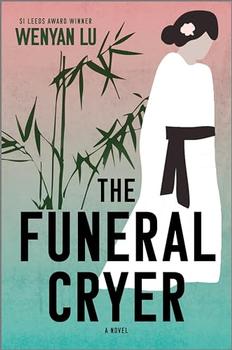
The Funeral Cryer by Wenyan Lu
Debut novelist Wenyan Lu brings us this witty yet profound story about one woman's midlife reawakening in contemporary rural China.
Your guide toexceptional books
BookBrowse seeks out and recommends the best in contemporary fiction and nonfiction—books that not only engage and entertain but also deepen our understanding of ourselves and the world around us.