Summary | Excerpt | Reviews | Beyond the book | Read-Alikes | Genres & Themes | Author Bio
Critics' Opinion:
Readers' Opinion:
First Published:
Jan 2013, 440 pages
Paperback:
Sep 2014, 392 pages
 Book Reviewed by:
Kim Kovacs
Buy This Book
In this novel by the 2012 Nobel Laureate in Literature, a benign old monk listens to a prospective novice's tale of depravity, violence, and carnivorous excess while a nice little family drama - in which nearly everyone dies - unfurls. But in this tale of sharp hatchets, bad water, and a rusty WWII mortar, we can't help but laugh. Reminiscent of the novels of dark masters of European absurdism like Günter Grass, Witold Gombrowicz, or Jakov Lind, Mo Yan's Pow! is a comic masterpiece.
In this bizarre romp through the Chinese countryside, the author treats us to a cornucopia of cooked animal flesh - ostrich, camel, donkey, dog, as well as the more common varieties. As his dual narratives merge and feather into one another, each informing and illuminating the other, Yan probes the character and lifestyle of modern China. Displaying his many talents, as fabulist, storyteller, scatologist, master of allusion and cliché, and more, Pow! carries the reader along quickly, hungrily, and giddily, up until its surprising dénouement.
Mo Yan has been called one of the great novelists of modern Chinese literature and the New York Times Book Review has hailed his work as harsh and gritty, raunchy and funny. He writes big, sometimes mystifying, sometimes infuriating, but always entertaining novels - and Pow! is no exception.
POW!
An Extract
Ten years ago, a winter morning; a winter morning ten years ago—what times were those? 'How old are you?' asks Wise Monk Lan, who has roamed the four corners of the earth, his whereabouts always a mystery, but who is, for the moment, living in an abandoned little temple. His eyes are open, his voice seems to emerge from a dark hole in the earth. I shudder on that hot, humid day in the seventh lunar month. 'It was 1990, Wise Monk, and I was ten,' I reply, muttering in a changed tone of voice. We are in a Wutong Temple located between two bustling mid-size cities, built, as the story goes, with funds sup- plied by an ancestor of the village head, Lao Lan. Although it nestles up to a well-travelled highway, few people come here to burn incense; visitors are a rarity to this building with its musty, outdated aura. A woman in a green over- coat, her hair pinned behind one ear with a red flower, sprawls through a breach in the temple wall that appears...
Pow! is a worthwhile addition to any library, if for no other reason than its frame of reference, which is so foreign to most Western readers. The viewpoint it provides is likely to be quite enlightening to those unfamiliar with Chinese culture. I highly recommend the book to anyone interested in developing a better understanding of everyday life in this part of the world...continued
Full Review
(820 words)
This review is available to non-members for a limited time. For full access,
become a member today.
(Reviewed by Kim Kovacs).
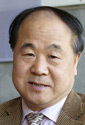 Mo Yan is the pen name of Guan Moye. Born 17 February 1955, Guan was the fourth child of farmers in Gaomi township in Shandong province in the northeast part of China. He says of his childhood:
"When I started forming memories, it was the most difficult time in China's history. Most people were starving at the time. People led a tough life. People starved to death all the time, even in my village. I think that children's memories from such times can be haunting. I remember that there were many children in the village. When the sun came out in winter, we all sat by a wall and bathed in the sun. Our clothes were all torn and ripped. We were barely covered. We also had bloated stomachs, because of lack of nutrients. Our legs and arms ...
This "beyond the book" feature is available to non-members for a limited time. Join today for full access.

If you liked Pow!, try these:
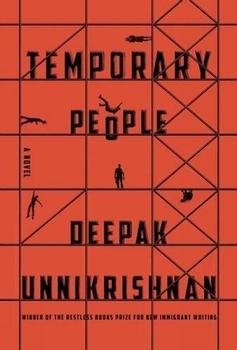
by Deepak Unnikrishnan
Published 2017
Until now, the humanitarian crisis of the so-called "guest workers" of the Gulf has barely been addressed in fiction. With his stunning, mind-altering debut novel Temporary People, Deepak Unnikrishnan delves into their histories, myths, struggles, and triumphs.
by Wenguang Huang
Published 2013
Three generations of a family living under one roof reflect the dramatic transformations of an entire society in this memoir of life in 20th century China.


The Flower Sisters
by Michelle Collins Anderson
From the new Fannie Flagg of the Ozarks, a richly-woven story of family, forgiveness, and reinvention.
The House on Biscayne Bay
by Chanel Cleeton
As death stalks a gothic mansion in Miami, the lives of two women intertwine as the past and present collide.

The Funeral Cryer by Wenyan Lu
Debut novelist Wenyan Lu brings us this witty yet profound story about one woman's midlife reawakening in contemporary rural China.
Your guide toexceptional books
BookBrowse seeks out and recommends the best in contemporary fiction and nonfiction—books that not only engage and entertain but also deepen our understanding of ourselves and the world around us.