Summary | Excerpt | Reviews | Beyond the book | Read-Alikes | Genres & Themes | Author Bio
 Book Reviewed by:
Kim Kovacs
Buy This Book
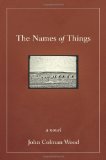
Set in a windswept wilderness menaced by hyenas and lions, anthropologist John Colman Wood's debut novel is an exquisite, haunting exploration of the meaning of love and the rituals of grief.
The anthropologist's wife, an artist, didn't want to follow her husband to the remote desert of northeast Africa to live with camel-herding nomads. But wanting to be with him, she endured the trip, only to fall desperately ill years later with a disease that leaves her husband with more questions than answers.
When the anthropologist discovers a deception that shatters his grief and guilt, he begins to reevaluate his love for his wife as well as his friendship with one of the nomads he studied. He returns to Africa to make sense of what happened, traveling into the far reaches of the Chalbi Desert, where he must sift through the layers of his memories and reconcile them with what he now knows.
Set in a windswept wilderness menaced by hyenas and lions, The Names of Things weaves together the stories of an anthropologist's journey into the desert, his firsthand accounts of the nomads' death rituals, and his struggle to find the names of things for which no words exist. Anthropologist John Colman Wood's debut novel is an exquisite, haunting exploration of the meaning of love and the rituals of grief.
I
The present
He and the boy had been walking, save a couple of hours in the
hottest part of afternoon, since the quarter moon rose at two
o’clock that morning. From the settlement of Maikona on the edge
of the Chalbi Desert, they skirted the Dida Galgalo plains, where you
could look in every direction and not see one tree or even a bush, only
lava rubble the color of rotted apples and grass between rocks, yellow
as packing straw. The emptiness comforted him. The flat horizon,
swept daily by unceasing wind, calmed his mind. He missed the place.
He missed the people. But he also wanted the desiccation, the osmotic
suck, to wipe his memories clean and blow them away.
They’d left at two o’clock in the morning because the trip at a
camel’s pace would take them eighteen hours, and they wanted to arrive
when the camp was still awake. Two o’clock was also when the
moon came up, slim as it was, and they needed its light to load the
camels with jerry ...
The Names of Things is a beautifully written book permeated with a sense of sadness and regret, set against the backdrop of the desolate Kenyan landscape. There are two main reasons why I find myself recommending this novel. First, the author's ability to vividly describe a setting is among the finest I've encountered. Second, while Wood maintains in his afterword that The Names of Things is fictional, the story feels intensely real and personal...continued
Full Review
(635 words)
This review is available to non-members for a limited time. For full access,
become a member today.
(Reviewed by Kim Kovacs).
The Names of Things is set in the Chalbi, a desert in northern Kenya near the border with Ethiopia (marked "A" on the map below).
 The Chalbi, which means "bare and salty" in the local language, was once part of Lake Turkana, the largest permanent desert lake in the world. It is an immense flat expanse of clay and white salt stretching approximately 62,000 square miles (100,000 square kilometers), surrounded by volcanoes and ancient lava flows.
Kenya's only true desert, the Chalbi is one of the hottest and most arid regions in the world. The area receives less than five inches of rain in a standard year, but even that is sporadic; some years only a trace of rainfall reaches the desert floor. Whatever little rain falls arrives during ...
This "beyond the book" feature is available to non-members for a limited time. Join today for full access.

If you liked The Names of Things, try these:
by Richard Crompton
Published 2014
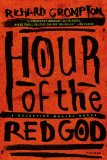
The Maasai believe in two gods. Enkai Narok, the Black God, is benign. Enkai Nanyokie, the Red God, is the god of anger, vengeance, and death.
by Dinaw Mengestu
Published 2011
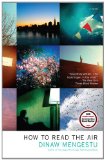
A heartbreaking literary masterwork about love, family, and the power of imagination, which confirms Mengestu's reputation as one of the brightest talents of his generation.



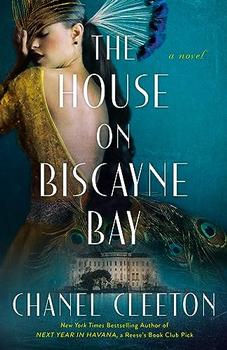
The House on Biscayne Bay
by Chanel Cleeton
As death stalks a gothic mansion in Miami, the lives of two women intertwine as the past and present collide.
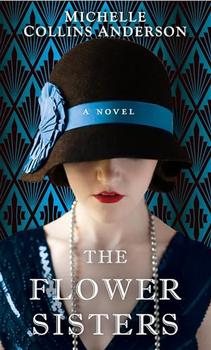
The Flower Sisters
by Michelle Collins Anderson
From the new Fannie Flagg of the Ozarks, a richly-woven story of family, forgiveness, and reinvention.

The Funeral Cryer by Wenyan Lu
Debut novelist Wenyan Lu brings us this witty yet profound story about one woman's midlife reawakening in contemporary rural China.
Your guide toexceptional books
BookBrowse seeks out and recommends the best in contemporary fiction and nonfiction—books that not only engage and entertain but also deepen our understanding of ourselves and the world around us.