
-
Your next favorite book
is waiting.
Summary | Excerpt | Reading Guide | Reviews | Beyond the book | Read-Alikes | Genres & Themes | Author Bio

The Classic Kitchen Maid's Memoir That Inspired Upstairs, Downstairs and Downton Abbey
by Margaret Powell Book Reviewed by:
Brilliantly evoking the long-vanished world of masters and servants, Margaret Powell's classic memoir of her time in service is the remarkable true story of an indomitable woman who, though she served in the great houses of England, never stopped aiming high.
Brilliantly evoking the long-vanished world of masters and servants portrayed in Downton Abbey and Upstairs, Downstairs, Margaret Powell's classic memoir of her time in service, Below Stairs, is the remarkable true story of an indomitable woman who, though she served in the great houses of England, never stopped aiming high. Powell first arrived at the servants' entrance of one of those great houses in the 1920s. As a kitchen maid - the lowest of the low - she entered an entirely new world; one of stoves to be blacked, vegetables to be scrubbed, mistresses to be appeased, and bootlaces to be ironed. Work started at 5:30am and went on until after dark. It was a far cry from her childhood on the beaches of Hove, where money and food were scarce, but warmth and laughter never were. Yet from the gentleman with a penchant for stroking the housemaids' curlers, to raucous tea-dances with errand boys, to the heartbreaking story of Agnes the pregnant under-parlormaid, fired for being seduced by her mistress's nephew, Margaret's tales of her time in service are told with wit, warmth, and a sharp eye for the prejudices of her situation. Margaret Powell's true story of a life spent in service is a fascinating "downstairs" portrait of the glittering, long-gone worlds behind the closed doors of Downton Abbey and 165 Eaton Place.
1
I was born in 1907 in Hove, the second child of a family of
seven. My earliest recollection is that other children seemed
to be better off than we were. But our parents cared so much
for us. One particular thing that I always remember was that
every Sunday morning my father used to bring us a comic
and a bag of sweets. You used to be able to get a comic for a
halfpenny plain and a penny coloured. Sometimes now when
I look back at it, I wonder how he managed to do it when he
was out of work and there was no money at all coming in.
My father was a painter and decorator. Sort of general oddjob
man. He could do almost anything: repair roofs, or do a
bit of plastering; but painting and paper-hanging were his
main work. Yet in the neighbourhood where we lived, there
was hardly any work in the winter. People didn't want their
houses done up then; they couldn't be painted outside and
they didn't want the bother of having it all done up inside.
So the winters were the ...
Oh sure, the life of a kitchen-maid was all about drudgery and humiliation, but Margaret Powell lets you know right away that there is more to her character than beaten-down servitude... Powell's feistiness does more than simply enliven her account of life in domestic service during the interwar period in England. It sharpens her observations to a fine point and turns her anecdotes into acute critiques of the class system and its hypocrisies...continued
Full Review
 (778 words)
(Reviewed by Amy Reading).
In Britain in the early twentieth century, occupational options were few for women. Up until World War I, domestic service constituted the largest single employment for English women, even ahead of factory work. The 1901 census shows that approximately 40.5% of the working adult female population worked in service, to which must be added a significant number of girls, some as young as ten. The profession was wholly unregulated. A typical maid would work 80 hours a week, far more than the 56 hours that a factory worker might put in.
The number of servants a family employed was the key index to their social status, and even middle-class families would have had several, but early in the twentieth century, that began to shift. In 1904, a ...
If you liked Below Stairs, try these:
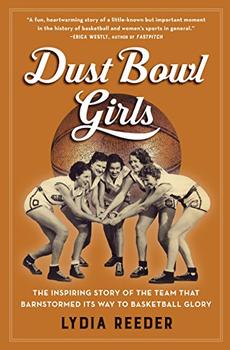
by Lydia Reeder
Published 2017
The Boys in the Boat meets A League of Their Own in this true story of a Depression-era championship women's team.
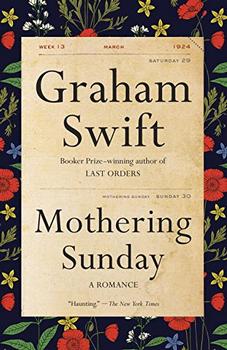
by Graham Swift
Published 2017
A luminous, intensely moving tale that begins with a secret lovers' assignation in the spring of 1924, then unfolds to reveal the whole of a remarkable life.

by Jo Baker
Published 2014
Pride and Prejudice was only half the story. Jo Baker dares to take us beyond the drawing rooms of Jane Austen's classic and creates a vivid, fascinating, fully realized world that is wholly her own.





Be careful about reading health books. You may die of a misprint.
Click Here to find out who said this, as well as discovering other famous literary quotes!

Can you name the title?
Test your book knowledge with our daily trivia challenge!