Summary | Excerpt | Reviews | Beyond the book | Read-Alikes | Genres & Themes | Author Bio
Predators, Parasites, and Partners That Shape Who We Are Today
by Rob Dunn
Critics' Opinion:
Readers' Opinion:
First Published:
Jun 2011, 304 pages
Paperback:
Dec 2014, 304 pages
 Book Reviewed by:
Donna Chavez
Buy This Book
A biologist shows the influence of wild species on our well-being and the world and how nature still clings to us - and always will.
We evolved in a wilderness of parasites, mutualists, and pathogens, but we no longer see ourselves as being part of nature and the broader community of life. In the name of progress and clean living, we scrub much of nature off our bodies and try to remove whole kinds of life - parasites, bacteria, mutualists, and predators - to allow ourselves to live free of wild danger. Nature, in this new world, is the landscape outside, a kind of living painting that is pleasant to contemplate but nice to have escaped.
The truth, though, according to biologist Rob Dunn, is that while "clean living" has benefited us in some ways, it has also made us sicker in others. We are trapped in bodies that evolved to deal with the dependable presence of hundreds of other species. As Dunn reveals, our modern disconnect from the web of life has resulted in unprecedented effects that immunologists, evolutionary biologists, psychologists, and other scientists are only beginning to understand. Diabetes, autism, allergies, many anxiety disorders, autoimmune diseases, and even tooth, jaw, and vision problems are increasingly plaguing bodies that have been removed from the ecological context in which they existed for millennia.
In this eye-opening, thoroughly researched, and well-reasoned book, Dunn considers the crossroads at which we find ourselves. Through the stories of visionaries, Dunn argues that we can create a richer nature, one in which we choose to surround ourselves with species that benefit us, not just those that, despite us, survive.
We were hunted, which is why all of us are afraid some of the time and some of us are afraid all of the time
Our parasites and mutualists influenced our bodies. It is the predators, though, that messed with our minds. We come from a long line of prey; we have been eaten since we were fish. For most of our history, we were more like the pronghorn than the cheetah, more likely to flee than to chase. So it is that time and natural selection had, until very recently, favored the wary over the brave. You can experience your body's wariness to the threat of a predator when someone jumps out at you from a dark hiding spot. You can feel this past when you watch a scary movie or even by reading about someone else's scary experience, for example the day in 1907 when a girl in India named Bakhul and her girlfriends went to gather the leaves of walnut trees to feed to the cows. Bakhul had climbed high into the branches to reach the tenderest shoots, the cows' favorites.
...
Some readers may feel that the message biologist and noted science writer Rob Dunn conveys is somewhat unsavory, but no one can deny his delivery is outstanding. In other words, you won't want to shoot this messenger just because his assertions have a certain "ew" factor. With a brio and rakish good humor only a biologist can bring to the table, Dunn details exactly how "biological" we human beings are - even as we try our darnedest to separate ourselves from the microscopic, symbiotic critters he calls "mutualists."..continued
Full Review
(536 words)
This review is available to non-members for a limited time. For full access,
become a member today.
(Reviewed by Donna Chavez).
 Edward O. Wilson, University Research Professor Emeritus, Harvard University
The Wild Life of Our Bodies is an extraordinary book about a previously little explored subject. With clarity and charm the author takes the reader into the overlap of medicine, ecology, and evolutionary biology to reveal an important domain of the human condition.
Edward O. Wilson, University Research Professor Emeritus, Harvard University
The Wild Life of Our Bodies is an extraordinary book about a previously little explored subject. With clarity and charm the author takes the reader into the overlap of medicine, ecology, and evolutionary biology to reveal an important domain of the human condition. In an article in The Daily Telegraph, Dr. Roy Sleator, a lecturer at Cork Institute of Technology in Ireland, states that, "We are, in essence, only 10 percent human. The rest is pure microbe." In a June 2011 report, National Public Radio's Science Desk Correspondent, Robert Krulwich, agrees. Yes, he says, our bodies do indeed consist of roughly ten times more microbial cells than human cells. And they are, for the most part, not just handy but essential to our existence. Especially the ones inside our intestinal tract.
Krulwich goes on to report the recent discovery that different people the world over have varying sets of intestinal microbes. These sets of microbes have been found to determine whether or not we are susceptible to ...
This "beyond the book" feature is available to non-members for a limited time. Join today for full access.

If you liked The Wild Life of Our Bodies, try these:
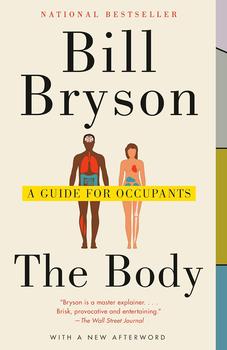
by Bill Bryson
Published 2021
Bill Bryson, bestselling author of A Short History of Nearly Everything, takes us on a head-to-toe tour of the marvel that is the human body. As addictive as it is comprehensive, this is Bryson at his very best, a must-read owner's manual for everybody.

by Michael E. McCullough
Published 2020
A sweeping psychological history of human goodness -- from the foundations of evolution to the modern political and social challenges humanity is now facing.

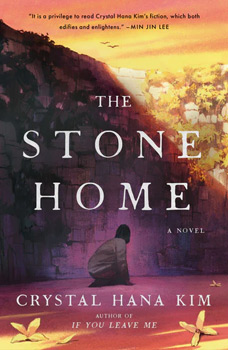
The Stone Home
by Crystal Hana Kim
A moving family drama and coming-of-age story revealing a dark corner of South Korean history.
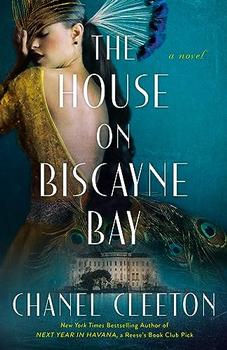
The House on Biscayne Bay
by Chanel Cleeton
As death stalks a gothic mansion in Miami, the lives of two women intertwine as the past and present collide.
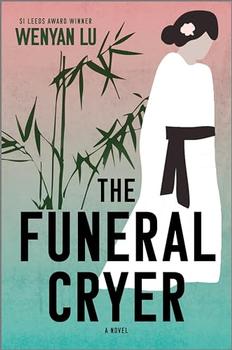
The Funeral Cryer by Wenyan Lu
Debut novelist Wenyan Lu brings us this witty yet profound story about one woman's midlife reawakening in contemporary rural China.
Your guide toexceptional books
BookBrowse seeks out and recommends the best in contemporary fiction and nonfiction—books that not only engage and entertain but also deepen our understanding of ourselves and the world around us.