Summary | Excerpt | Reading Guide | Reviews | Beyond the book | Read-Alikes | Genres & Themes | Author Bio
Critics' Opinion:
Readers' Opinion:
First Published:
Sep 2010, 304 pages
Paperback:
Sep 2011, 304 pages
 Book Reviewed by:
BookBrowse Review Team
Buy This Book
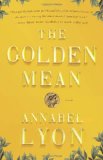
A startlingly original first novel by "this generation's answer to Alice Munro" (The Vancouver Sun) - a bold reimagining of one of history's most intriguing relationships: between legendary philosopher Aristotle and his most famous pupil, the young Alexander the Great.
A startlingly original first novel by “this generation's answer to Alice Munro” (The Vancouver Sun)—a bold reimagining of one of history's most intriguing relationships: between legendary philosopher Aristotle and his most famous pupil, the young Alexander the Great.
342 BC: Aristotle is reluctant to set aside his own ambitions in order to tutor Alexander, the rebellious son of his boyhood friend Philip of Macedon. But the philosopher soon comes to realize that teaching this charming, surprising, sometimes horrifying teenager—heir to the Macedonian throne, forced onto the battlefield before his time—is a necessity amid the ever more sinister intrigues of Philip's court.
Told in the brilliantly rendered voice of Aristotle—keenly intelligent, often darkly funny—The Golden Mean brings ancient Greece to vivid life via the story of this remarkable friendship between two towering figures, innovator and conqueror, whose views of the world still resonate today.
One
The rain falls in black cords, lashing my animals, my men, and my wife, Pythias, who last night lay with her legs spread while I took notes on the mouth of her sex, who weeps silent tears of exhaustion now, on this tenth day of our journey. On the ship she seemed comfortable enough, but this last overland stage is beyond all her experience and it shows. Her mare stumbles; she's let the reins go loose again, allowing the animal to sleepwalk. She rides awkwardly, weighed down by her sodden finery. Earlier I suggested she remain on one of the carts but she resisted, such a rare occurrence that I smiled, and she, embarrassed, looked away. Callisthenes, my nephew, offered to walk the last distance, and with some difficulty we helped her onto his big bay. She clutched at the reins the first time the animal shifted beneath her.
"Are you steady?" I asked, as around us the caravan began to move.
"Of course."
Touching. Men are good with horses where I come from, where we're ...
Readers of historical fiction will enjoy The Golden Mean, drawn in by the prospect of learning more about the early lives of Aristotle and Alexander. Even readers not interested in classical history, though, would find the richly complex characters and situations engaging, as the story could almost take place in the present. All necessary background information is given in the novel, so readers do not need any prior knowledge. The novel drops hints about the greatness these two historical figures will each achieve, but Lyon captures them before that moment, while they're still forming, and while their successes are far from assured...continued
Full Review
(883 words)
This review is available to non-members for a limited time. For full access,
become a member today.
(Reviewed by BookBrowse Review Team).
Alexander III of Macedon (356–323 BC), popularly known as Alexander the Great, was one of history's most successful military commanders. He is reputed to have never lost a battle, and his tactics are still studied in military academies. He successfully challenged the Persian Empire, the largest, most powerful kingdom of the time, and conquered its vast territory after a series of battles and the death of the emperor, Darius III. By the time he died at the age of 32, Alexander had seized an immense amount of land stretching from Greece and the Balkans to parts of India and Afghanistan, as well as Egypt (map).
Alexander's most enduring legacy, however, lies in spreading Greek culture and civilization to the ...
This "beyond the book" feature is available to non-members for a limited time. Join today for full access.

If you liked The Golden Mean, try these:
The Rise and Fall of Ancient Egypt
by Toby Wilkinson
Published 2013
In this landmark work, one of the world’s most renowned Egyptologists tells the epic story of this great civilization, from its birth as the first nation-state to its final absorption into the Roman Empire—three thousand years of wild drama, bold spectacle, and unforgettable characters.

by Madeline Miller
Published 2012
Built on the groundwork of the Iliad, Madeline Miller's page-turning, profoundly moving, and blisteringly paced retelling of the epic Trojan War marks the launch of a dazzling career.


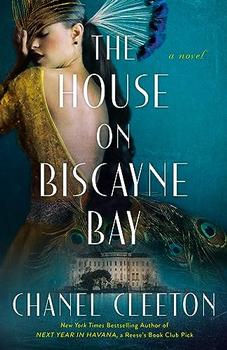
The House on Biscayne Bay
by Chanel Cleeton
As death stalks a gothic mansion in Miami, the lives of two women intertwine as the past and present collide.
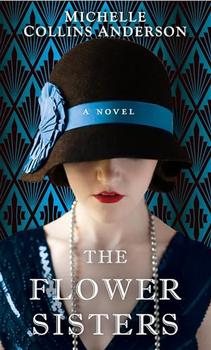
The Flower Sisters
by Michelle Collins Anderson
From the new Fannie Flagg of the Ozarks, a richly-woven story of family, forgiveness, and reinvention.
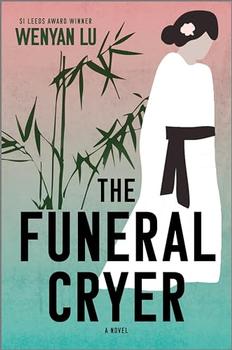
The Funeral Cryer by Wenyan Lu
Debut novelist Wenyan Lu brings us this witty yet profound story about one woman's midlife reawakening in contemporary rural China.
Your guide toexceptional books
BookBrowse seeks out and recommends the best in contemporary fiction and nonfiction—books that not only engage and entertain but also deepen our understanding of ourselves and the world around us.