Summary | Excerpt | Reviews | Beyond the book | Read-Alikes | Genres & Themes | Author Bio
Critics' Opinion:
Readers' Opinion:
First Published:
Aug 2010, 320 pages
Paperback:
Jul 2011, 320 pages
 Book Reviewed by:
Elena Spagnolie
Buy This Book
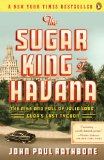
The son of a Cuban exile recounts the remarkable and contradictory life of famed sugar baron Julio Lobo, the richest man in prerevolutionary Cuba and the last of the island's haute bourgeoisie.
Fifty years after the Cuban revolution, the legendary wealth of the sugar magnate Julio Lobo remains emblematic of a certain way of life that came to an abrupt end when Fidel Castro marched into Havana. Known in his day as the King of Sugar, Lobo was for decades the most powerful force in the world sugar market, controlling vast swathes of the island's sugar interests. Born in 1898, the year of Cuba's independence, Lobo's extraordinary life mirrors, in almost lurid technicolor, the many rises and final fall of the troubled Cuban republic.
The details of Lobo's life are fit for Hollywood. He twice cornered the international sugar market and had the largest collection of Napoleonica outside of France, including the emperor's back teeth and death mask. He once faced a firing squad only to be pardoned at the last moment, and later survived a gangland shooting. He courted movie stars from Bette Davis to Joan Fontaine and filled the swimming pool at his sprawling estate with perfume when Esther Williams came to visit.
As Rathbone observes, such are the legends of which revolutions are made, and later justified. But Lobo was also a progressive and a philanthropist, and his genius was so widely acknowledged that Che Guevara personally offered him the position of minister of sugar in the Communist regime. When Lobo declined - knowing that their worldviews could never be compatible - his properties were nationalized, most of his fortune vanished overnight, and he left the island, never to return to his beloved Cuba.
Financial Times journalist John Paul Rathbone has been fascinated by this intoxicating, whirligig, and contradictory pre-revolutionary period his entire life. His mother was also a member of Havana's storied haute bourgeoisie and a friend of Lobo's daughters. Woven into Lobo's tale is her family's experience of republic, revolution, and exile, as well as the author's own struggle to come to grips with Cuba's, and his family's, turbulent history.
Prodigiously researched and imaginatively written, The Sugar King of Havana is a captivating portrait of the glittering end of an era, but also of a more hopeful Cuban past, one that might even provide a window into the island's future.
INTRODUCTION
Cuba has known many rich men since Christopher Columbus first introduced sugarcane to the island. At the start of the twentieth century, one Cuban sugar baron tiled the floors of his Havana palace with Italian marble bedded down in sand imported from the Nile.
Tomás Terry, the most successful sugar planter of Cuba's colonial years, left $25 million on his death in 1886 - not bad considering that the then richest man in the world, William Backhouse Astor, left just $50 million.
Yet Cuba does not have to look back a century or more to find extreme riches. In Havana today to have Croesus-like wealth is referred to as serrico como un Julio Lobo - to be as rich as a Julio Lobo. After almost five decades of communism, Lobo's fabled wealth has become folkloric, and he has become emblematic of a way of life that existed in Havana before the dictator Fulgencio Batista fled the island on New Year's Eve 1958. Julio Lobo was the richest man in Cuba before Castro's ...
What makes this book especially unique is Rathbone's personal relationship to the material... His work takes on a sense of personal importance and inadvertently shows how Cuban exile has the potential to create feelings of displacement in subsequent generations. There is a beautiful, lost quality to his narrative, his quest to piece together his heritage... But there is also a noticeable idealization of Julio Lobo - perhaps, too, a part of Rathbone's nostalgia - that keeps Lobo's story from appearing as deep or as complex as it might have actually been... At other times, Rathbone's lyricism feels a bit unnecessary for a work of nonfiction, and undermines the strength of his extensive research... Even still, Rathbone does an excellent job weaving together Lobo's story, his mother's and his own, and his descriptions of the effects of Cuban politics on the upper class are more than vivid. There is a sense of loss and reminiscence in his voice that is familiar to me, as I have heard it in my father's voice when talking about the Cuba of his childhood as well...continued
Full Review
(676 words)
This review is available to non-members for a limited time. For full access,
become a member today.
(Reviewed by Elena Spagnolie).
In The Sugar King of Havana John Paul Rathbone describes one of the most successful and cunning business moves of Julio Lobo's career - a manipulation of FDR's Good Neighbor Policy which, according to Eduardo Kaplan of The Wall Street Journal, "placed [Lobo] in a different league."
As part of the Good Neighbor Policy, FDR enacted The Jones-Costigan Act in May of 1934. This act set up an agreement between the U.S., its sugar-producing "insular territories" (such as Hawaii and The Philippines) and overseas sugar producers - Cuba (headed by Lobo) being of particular importance here. Among other things, this agreement allowed Washington to assess the sugar needs of the US and institute a quota system in which each ...
This "beyond the book" feature is available to non-members for a limited time. Join today for full access.

If you liked The Sugar King of Havana, try these:

by Mark Kurlansky
Published 2018
A city of tropical heat, sweat, ramshackle beauty, and its very own cadence--a city that always surprises--Havana is brought to pulsing life by New York Times bestselling author Mark Kurlansky.

by Mal Peet
Published 2013
Can love survive a lifetime? With its urgent sense of history, sweeping emotion, and winning young narrator, Mal Peet's latest is an unforgettable, timely exploration of life during wartime.


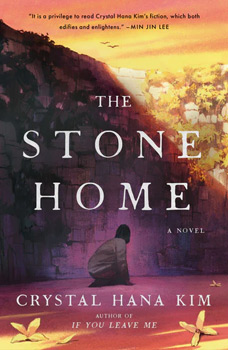
The Stone Home
by Crystal Hana Kim
A moving family drama and coming-of-age story revealing a dark corner of South Korean history.

The House on Biscayne Bay
by Chanel Cleeton
As death stalks a gothic mansion in Miami, the lives of two women intertwine as the past and present collide.

The Funeral Cryer by Wenyan Lu
Debut novelist Wenyan Lu brings us this witty yet profound story about one woman's midlife reawakening in contemporary rural China.
Your guide toexceptional books
BookBrowse seeks out and recommends the best in contemporary fiction and nonfiction—books that not only engage and entertain but also deepen our understanding of ourselves and the world around us.