Summary | Excerpt | Reviews | Beyond the book | Read-Alikes | Genres & Themes | Author Bio

Critics' Opinion:
Readers' Opinion:
First Published:
Mar 2010, 448 pages
Paperback:
Mar 2011, 448 pages
 Book Reviewed by:
Norah Piehl
Buy This Book
From the acclaimed author of the New York Times bestseller The Post-Birthday World comes a searing, ruthlessly honest new novel about a marriage both stressed and strengthened by the demands of serious illness.
Shep Knacker has long saved for "The Afterlife": an idyllic retreat to the Third World where his nest egg can last forever. Traffic jams on the Brooklyn-Queens Expressway will be replaced with "talking, thinking, seeing, and being"—and enough sleep. When he sells his home repair business for a cool million dollars, his dream finally seems within reach. Yet Glynis, his wife of twenty-six years, has concocted endless excuses why it's never the right time to go. Weary of working as a peon for the jerk who bought his company, Shep announces he's leaving for a Tanzanian island, with or without her.
Just returned from a doctor's appointment, Glynis has some news of her own: Shep can't go anywhere because she desperately needs his health insurance. But their policy only partially covers the staggering bills for her treatments, and Shep's nest egg for The Afterlife soon cracks under the strain.
Enriched with three medical subplots that also explore the human costs of American health care, So Much for That follows the profound transformation of a marriage, for which grave illness proves an unexpected opportunity for tenderness, renewed intimacy, and dry humor. In defiance of her dark subject matter, Shriver writes a page-turner that presses the question: How much is one life worth?
Chapter One
Shepherd Armstrong Knacker
Merrill Lynch Account Number 934-23F917
December 01, 2004 – December 31, 2004
Net Portfolio Value: $731,778.56
What do you pack for the rest of your life?
On research trips -- he and Glynis had never called them "vacations" -- Shep had always packed too much, covering for every contingency: rain gear, a sweater on the off chance that the weather in Puerto Escondido was unseasonably cold. In the face of infinite contingencies, his impulse was to take nothing.
There was no rational reason to be creeping these halls stealthily like a thief come to burgle his own home -- padding heel to toe on the floorboards, flinching when they creaked. He had double-checked that Glynis was out through early evening (for an "appointment"; it bothered him that she did not say with whom or where). Calling on a weak pretense of asking about dinner plans when their son hadn't eaten a proper meal with his parents for the last year, he had confirmed that...
Given the acrid tone and complex implications of the current debates on health care, it's clear that these issues will remain with us for a long time to come; by melding the political with the personal, Shriver's novel, in the way of the very best topical fiction, will bring the matter home, to people's dining room tables and living room sofas, as families and book clubs and friends debate - using the tools of fiction - the issue that will define our times...continued
Full Review
(641 words)
This review is available to non-members for a limited time. For full access,
become a member today.
(Reviewed by Norah Piehl).
Two devastating diseases precipitate the health care crises of So Much for That. Glynis develops mesothelioma, a type of invasive cancer that is associated with exposure to asbestos. This type of cancer typically starts in the lungs but can affect the entire mesothelium - the tissue that lines many internal organs. Not only is mesothelioma notoriously difficult to treat, it's also hard to pinpoint its exact cause, since its onset typically happens 30 to 50 years after initial exposure to asbestos. In Shriver's novel, Glynis, an artist who works with metal, was exposed to the hazardous substance in the studio as an art student, although she initially blames her husband Shep for introducing the toxin through his work in the home construction ...
This "beyond the book" feature is available to non-members for a limited time. Join today for full access.

If you liked So Much for That, try these:

by Emily Chenoweth
Published 2011
In a single week, a family leaves behind its past and a daughter awakens to the future in Emily Chenoweth’s intimate and beautifully crafted debut novel.

by Adam Haslett
Published 2011
The eagerly anticipated debut novel from the author of the Pulitzer Prize finalist You Are Not a Stranger Here: a deeply affecting portrait of the modern gilded age, the first decade of the twenty-first century.




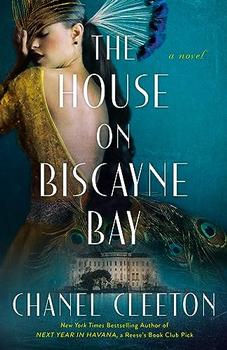
The House on Biscayne Bay
by Chanel Cleeton
As death stalks a gothic mansion in Miami, the lives of two women intertwine as the past and present collide.

The Flower Sisters
by Michelle Collins Anderson
From the new Fannie Flagg of the Ozarks, a richly-woven story of family, forgiveness, and reinvention.

The Funeral Cryer by Wenyan Lu
Debut novelist Wenyan Lu brings us this witty yet profound story about one woman's midlife reawakening in contemporary rural China.
Your guide toexceptional books
BookBrowse seeks out and recommends the best in contemporary fiction and nonfiction—books that not only engage and entertain but also deepen our understanding of ourselves and the world around us.