Summary | Excerpt | Reading Guide | Reviews | Beyond the book | Read-Alikes | Genres & Themes | Author Bio
Critics' Opinion:
Readers' Opinion:
First Published:
Feb 2010, 128 pages
Paperback:
Dec 2010, 128 pages
 Book Reviewed by:
Amy Reading
Buy This Book
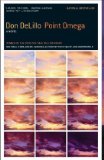
Don DeLillo looks into the mind and heart of a "defense intellectual," one of the men involved in the management of the country's war machine.
Don DeLillo has been "wierdly prophetic about twenty-first-century America" (The New York Times Book Review). In his earlier novels, he has written about conspiracy theory, the Cold War and global terrorism. Now, in Point Omega, he looks into the mind and heart of a "defense intellectual," one of the men involved in the management of the country's war machine.
Richard Elster was a scholar — an outsider — when he was called to a meeting with government war planners, asked to apply "ideas and principles to such matters as troop deployment and counterinsurgency."
We see Elster at the end of his service. He has retreated to the desert, "somewhere south of nowhere," in search of space and geologic time. There he is joined by a filmmaker, Jim Finley, intent on documenting his experience. Finley wants to persuade Elster to make a one-take film, Elster its single character — "Just a man and a wall."
Weeks later, Elster's daughter Jessica visits — an "otherworldly" woman from New York, who dramatically alters the dynamic of the story. The three of them talk, train their binoculars on the landscape and build an odd, tender intimacy, something like a family. Then a devastating event throws everything into question.
In this compact and powerful novel, it is finally a lingering human mystery that haunts the landscape of desert and mind.
1
The true life is not reducible to words spoken or written, not by anyone, ever. The true life takes place when we're alone, thinking, feeling, lost in memory, dreamingly selfaware, the submicroscopic moments. He said this more than once, Elster did, in more than one way. His life happened, he said, when he sat staring at a blank wall, thinking about dinner.
An eight-hundred-page biography is nothing more than dead conjecture, he said.
I almost believed him when he said such things. He said we do this all the time, all of us, we become ourselves beneath the running thoughts and dim images, wondering idly when we'll die. This is how we live and think whether we know it or not. These are the unsorted thoughts we have looking out the train window, small dull smears of meditative panic.
The sun was burning down. This is what he wanted, to feel the deep heat beating into his body, feel the body itself, reclaim the body from what he called the nausea of News and Traffic.
This was desert, out ...
Introduction
Documentary filmmaker Jim Finley is divorced and adrift in New York City and looking for a subject for his next film. When he learns about Richard Elster, a scholar who was an advisor to the military for the War on Terror, he thinks he has found it. He follows the reclusive Elster out to a desert cabin in an attempt to convince him to be in a new film. The men spend their time discussing philosophy and politics, spinning their mental wheels, until the arrival of Elster's daughter Jessie. Sent by her mother, who dislikes Jessie's new boyfriend, Jessie changes the dynamic and sets Finley on edge with a confused attraction. When she suddenly disappears, it throws the men into a tailspin that ...
This is an aerated novel that wants to be a condensed, stylized short story, or maybe even a play... It is a novel that is supposed to be finished in the reader's head, completed by all the connections the reader finds between the long aftershocks of Bush's war on terror and the modern-day obsession with images and information flickering across screens large and small... I do wish it were longer - that is, I wish DeLillo had more omnivorously taken in the contemporary moment and fed it into the gears of his literary intelligence, because his spare rooms and stark screens are too concept-driven, too slight for the monumentality of his observations... But I will take what I can get from the master...continued
Full Review
(981 words)
This review is available to non-members for a limited time. For full access,
become a member today.
(Reviewed by Amy Reading).
What does Don DeLillo share with Marilyn Manson and Dilbert?
Answer: An interest in the omega point, a theory developed by the French Jesuit Pierre Teilhard de Chardin in his book The Phenomenon of Man, which was written in 1938 but was so contested by the Catholic church that it wasn't published until just after his death in 1955.
Teilhard was both a Jesuit priest and a paleontologist, so right there you can begin to sense the tensions within his work. He applied the theory of evolution to a larger understanding of the forward momentum, the perfectibility of the cosmos, and The Phenomenon of Man sought to account for the central role of human consciousness in the accomplishment of spiritual transcendence.
Drawing from ...
This "beyond the book" feature is available to non-members for a limited time. Join today for full access.

If you liked Point Omega, try these:
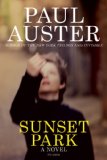
by Paul Auster
Published 2011
Luminous, passionate, expansive, an emotional tour de force, Sunset Park follows the hopes and fears of a cast of unforgettable characters brought together by the mysterious Miles Heller during the dark months of the 2008 economic collapse.
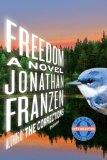
by Jonathan Franzen
Published 2011
Freedom comically and tragically captures the temptations and burdens of liberty: the thrills of teenage lust, the shaken compromises of middle age, the wages of suburban sprawl, the heavy weight of empire. An indelible and deeply moving portrait of our time.


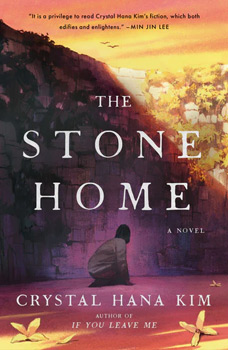
The Stone Home
by Crystal Hana Kim
A moving family drama and coming-of-age story revealing a dark corner of South Korean history.

The House on Biscayne Bay
by Chanel Cleeton
As death stalks a gothic mansion in Miami, the lives of two women intertwine as the past and present collide.

The Funeral Cryer by Wenyan Lu
Debut novelist Wenyan Lu brings us this witty yet profound story about one woman's midlife reawakening in contemporary rural China.
Your guide toexceptional books
BookBrowse seeks out and recommends the best in contemporary fiction and nonfiction—books that not only engage and entertain but also deepen our understanding of ourselves and the world around us.