Summary | Excerpt | Reviews | Beyond the book | Read-Alikes | Genres & Themes | Author Bio
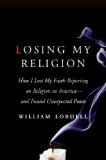
How I Lost My Faith Reporting on Religion in America—and Found Unexpected Peace
 Book Reviewed by:
Donna Chavez
Buy This Book
William Lobdell's journey of faith—and doubt—may be the most compelling spiritual memoir of our time. It is a book about life's deepest questions that speaks to everyone: Lobdell understands the longings and satisfactions of the faithful, as well as the unrelenting power of doubt.
William Lobdell's journey of faith—and doubt—may be the most compelling spiritual memoir of our time. Lobdell became a born-again Christian in his late 20s when personal problems—including a failed marriage—drove him to his knees in prayer. As a newly minted evangelical, Lobdell—a veteran journalist—noticed that religion wasn't covered well in the mainstream media, and he prayed for the Lord to put him on the religion beat at a major newspaper. In 1998, his prayers were answered when the Los Angeles Times asked him to write about faith.
Yet what happened over the next eight years was a roller-coaster of inspiration, confusion, doubt, and soul-searching as his reporting and experiences slowly chipped away at his faith. While reporting on hundreds of stories, he witnessed a disturbing gap between the tenets of various religions and the behaviors of the faithful and their leaders. He investigated religious institutions that acted less ethically than corrupt Wall St. firms. He found few differences between the morals of Christians and atheists. As this evidence piled up, he started to fear that God didn't exist. He explored every doubt, every question—until, finally, his faith collapsed. After the paper agreed to reassign him, he wrote a personal essay in the summer of 2007 that became an international sensation for its honest exploration of doubt.
Losing My Religion is a book about life's deepest questions that speaks to everyone: Lobdell understands the longings and satisfactions of the faithful, as well as the unrelenting power of doubt. How he faced that power, and wrestled with it, is must reading for people of faith and nonbelievers alike.
Chapter One
"You Need God"
"For I know the plans I have for you," declares the Lord, "plans to prosper you and not to harm you, plans to give you hope and a future."
—Jeremiah 29:11
By age 27, I had screwed up my life. I had married my volatile high school sweetheart five years earlier, mostly because it seemed easier than breaking up. When I left her, I didn't follow through with the divorce. Dealing with her in court would be messy, so I just bailed. In the meantime, I happily jumped into an adolescence delayed by my fidelity to the first girl I'd ever loved. Before long, I managed to get a girlfriend pregnant. I loved my newfound bachelorhood, and I was petrified by the prospect of another marriage and my first child (leaving aside the fact that my divorce to my first wife couldn't be finalized for at least six months).
I ran away as fast as I could, concluding that I had only a few months left in the wild before the baby arrived and a lifetime of ...
One way I can tell whether a nonfiction book has met its goal is if, after finishing it, I want to call the author and invite him/her to lunch. I have to say that nothing would make me happier than spending a quiet spring afternoon sipping a nice sauvignon blanc and chatting with Bill Lobdell. I feel just that close to him. More than that, I feel we are kindred spirits; battered souls on a quest to make sense of a confusing world. Better yet, I think there are more people who have a lot more in common with Lobdell (if truth be told) than might be ready to admit it. Because who among us does not have a personal story of love gained and lost? And what is religion if not organized love targeted toward a spiritual entity? In view of that, who has sought enlightenment and something to believe – really believe – in, only to feel sand-bagged when the recipient of our faith turned out to have feet of clay?..continued
Full Review
(814 words)
This review is available to non-members for a limited time. For full access,
become a member today.
(Reviewed by Donna Chavez).
The tide of sexual abuse cases against Catholic Church officials took its toll on
William Lobdell, causing him to abandon his faith altogether. Surprisingly,
however, this may not be a widespread effect. According to a
recent survey,
while membership in most religious groups has fallen during the last two
decades,
the Catholic Church - whose halo was severely tarnished by the scandals - lost
fewer members than mainline Protestants* and Baptists.
The Church may not have suffered significant losses in the number of faithful
who call themselves Catholic but, almost a decade since news of that first
lawsuit hit the headlines, they are still being hit where it hurts - in the pocketbook. As Newsday reporter Bart Jones
...
This "beyond the book" feature is available to non-members for a limited time. Join today for full access.

If you liked Losing My Religion, try these:
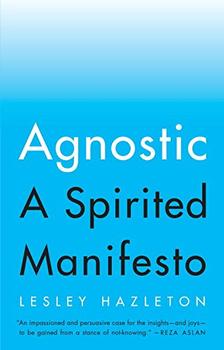
by Lesley Hazleton
Published 2017
A widely admired writer on religion celebrates agnosticism as the most vibrant, engaging - and ultimately the most honest - stance toward the mysteries of existence.
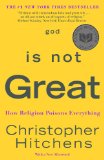
by Christopher Hitchens
Published 2009
Hitchens frames the argument for a more secular life based on science and reason, in which hell is replaced by the Hubble Telescope's awesome view of the universe, and Moses and the burning bush give way to the beauty and symmetry of the double helix.

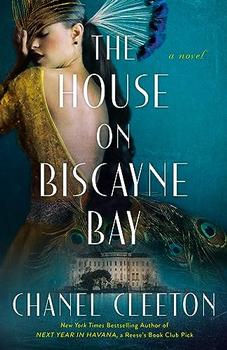
The House on Biscayne Bay
by Chanel Cleeton
As death stalks a gothic mansion in Miami, the lives of two women intertwine as the past and present collide.
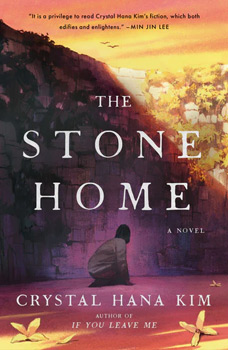
The Stone Home
by Crystal Hana Kim
A moving family drama and coming-of-age story revealing a dark corner of South Korean history.
The truth does not change according to our ability to stomach it
Click Here to find out who said this, as well as discovering other famous literary quotes!
Your guide toexceptional books
BookBrowse seeks out and recommends the best in contemporary fiction and nonfiction—books that not only engage and entertain but also deepen our understanding of ourselves and the world around us.