Summary | Excerpt | Reviews | Beyond the book | Read-Alikes | Genres & Themes | Author Bio
Critics' Opinion:
Readers' Opinion:
First Published:
Oct 2008, 304 pages
Paperback:
Jul 2009, 304 pages
 Book Reviewed by:
Beth Hemke Shapiro
Buy This Book
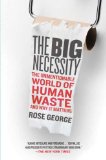
An utterly original exploration of the world of human waste that will surprise, outrage—and entertain
Produced behind closed doors, disposed of discreetly, and hidden by euphemism, bodily waste is something common to all and as natural as breathing, yet we prefer not to talk about it. But we should—even those of us who take care of our business in pristine, sanitary conditions. For it’s not only in developing countries that human waste is a major public health threat: population growth is taxing even the most advanced sewage systems, and the disease spread by waste kills more people worldwide every year than any other single cause of death. Even in America, 1.95 million people have no access to an indoor toilet. Yet the subject remains unmentionable.
The Big Necessity takes aim at the taboo, revealing everything that matters about how people do—and don’t—deal with their own waste. Moving from the deep underground sewers of Paris, London, and New York—an infrastructure disaster waiting to happen—to an Indian slum where ten toilets are shared by 60,000 people, Rose George stops along the way to explore the potential saviors: China’s five million biogas digesters, which produce energy from waste; the heroes of third world sanitation movements; the inventor of the humble Car Loo; and the U.S. Army’s personal lasers used by soldiers to zap their feces in the field.
With razor-sharp wit and crusading urgency, mixing levity with gravity, Rose George has turned the subject we like to avoid into a cause with the most serious of consequences.
Excerpt
The Big Necessity
Of all the peoples of the world, the Chinese are probably the most at home with their excrement. They know its value. For 4,000 years they have used raw human feces to fertilize fields. China's use of "night soil," as the Chinese rightly call a manure that is collected after dark, is probably the reason that its soils are still healthy after four millennia of intensive agriculture, while other great civilizations—the Maya, for one—floundered when their soils turned to dust.
Sanitation professionals sometimes divide the world into fecal-phobic and fecal-philiac cultures. India is the former (though only when the dung is not from cows); China is definitely and blithely the latter. Nor is the place of excrement confined to the fields. It has featured prominently in Chinese public life and literature for at least a thousand years.
In the Communist era, excrement took on political importance, because Party policy decided ...
Anthropologists should be having a field day with bathrooms, according to the author. "A place where all sorts of human needs and habits intersect: fear, disgust, conversation, grooming, sex." In short, she boldly maintains, "To be uninterested in the public toilet is to be uninterested in life." After following the author's investigative escapades of the London sewers and checking out toilets connected to biogas digesters in China, readers will be left wondering about hygiene in other parts of the world and the resulting societal effects. What is happening with human bodily excrement in Egypt? In Venezuela? The topic becomes increasingly relevant the smaller our global world becomes, and here's hoping that Rose George keeps it right in front of us...continued
Full Review
(524 words)
This review is available to non-members for a limited time. For full access,
become a member today.
(Reviewed by Beth Hemke Shapiro).
 Mary Roach, author of Stiff
In Rose George’s hometown in England, impoverished immigrants took up residence in the new public latrines. (‘Fighting over the more spacious disabled cubicle was fierce.’) Which is worse? Living in a toilet or living without one? George bravely—and sometimes literally—submerges herself in the tragedy and occasional comedy of global sanitation. Sludge, biogas, New York City sewage: I ate it up and wanted more! The most unforgettable book to pass through the publishing pipeline in years. Simon Winchester, author of The Man Who Loved China
This fascinating, wise, and scrupulously drawn portrait of the world and its waste will last long as a seriously important book. Like a literary treatment farm, it manages to turn the completely unpalatable into something utterly irresistible. Rose George, a brave, compassionate, and ceaselessly impeccable reporter—and, when needed, a very funny one too—has performed for us all who care a very great service. A big necessity, indeed.
Mary Roach, author of Stiff
In Rose George’s hometown in England, impoverished immigrants took up residence in the new public latrines. (‘Fighting over the more spacious disabled cubicle was fierce.’) Which is worse? Living in a toilet or living without one? George bravely—and sometimes literally—submerges herself in the tragedy and occasional comedy of global sanitation. Sludge, biogas, New York City sewage: I ate it up and wanted more! The most unforgettable book to pass through the publishing pipeline in years. Simon Winchester, author of The Man Who Loved China
This fascinating, wise, and scrupulously drawn portrait of the world and its waste will last long as a seriously important book. Like a literary treatment farm, it manages to turn the completely unpalatable into something utterly irresistible. Rose George, a brave, compassionate, and ceaselessly impeccable reporter—and, when needed, a very funny one too—has performed for us all who care a very great service. A big necessity, indeed.In The Big Necessity Rose George introduces readers to biogas digesters in rural China. Biogas digesters (often shortened to biodigesters) are permanent structures, usually constructed of cement, in which waste (human, animal and agricultural leftovers) decompose in the lower section causing the micro-organisms to release methane that is collected in the upper section.
There’s evidence that biogas was used to heat bath water in Assyria around 10 BC. The first modern-day biodigester was built in a leper colony in Bombay India in 1859. China began using biogas technology back in the late nineteenth century. By the end of 2005 there were about 17 million digesters, predominantly in rural areas, with about 50 million Chinese reaping the ...
This "beyond the book" feature is available to non-members for a limited time. Join today for full access.

If you liked The Big Necessity, try these:
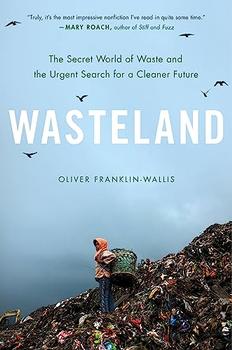
by Oliver Franklin-Wallis
Published 2023
An award-winning investigative journalist takes a deep dive into the global waste crisis, exposing the hidden world that enables our modern economy—and finds out the dirty truth behind a simple question: what really happens to what we throw away?
by Elizabeth Royte
Published 2006
A brilliant exploration into the soiled heart of the American trash can.



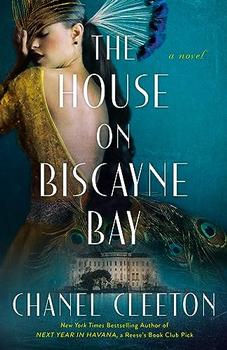
The House on Biscayne Bay
by Chanel Cleeton
As death stalks a gothic mansion in Miami, the lives of two women intertwine as the past and present collide.

The Flower Sisters
by Michelle Collins Anderson
From the new Fannie Flagg of the Ozarks, a richly-woven story of family, forgiveness, and reinvention.
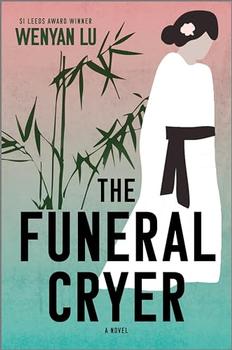
The Funeral Cryer by Wenyan Lu
Debut novelist Wenyan Lu brings us this witty yet profound story about one woman's midlife reawakening in contemporary rural China.
Your guide toexceptional books
BookBrowse seeks out and recommends the best in contemporary fiction and nonfiction—books that not only engage and entertain but also deepen our understanding of ourselves and the world around us.