Summary | Excerpt | Reviews | Beyond the book | Read-Alikes | Genres & Themes | Author Bio
Critics' Opinion:
Readers' Opinion:
First Published:
Mar 2008, 544 pages
Paperback:
Mar 2009, 544 pages
 Book Reviewed by:
Donna Chavez
Buy This Book
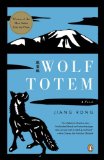
An epic Chinese tale in the vein of The Last Emperor, Wolf Totem depicts the dying culture of the Mongols - the ancestors of the Mongol hordes who at one time terrorized the world - and the parallel extinction of the animal they believe to be sacred: the fierce and otherworldly Mongolian wolf.
Published under a pen name, Wolf Totem was a phenomenon in China, breaking all sales records there and earning the distinction of being the second most read book after Mao's little red book. There has been much international excitement too - to date, rights have been sold in thirteen countries. Wolf Totem is set in 1960s China - the time of the Great Leap Forward, on the eve of the Cultural Revolution.
Searching for spirituality, Beijing intellectual Chen Zhen travels to the pristine grasslands of Inner Mongolia to live among the nomadic Mongols-a proud, brave, and ancient race of people who coexist in perfect harmony with their unspeakably beautiful but cruel natural surroundings. Their philosophy of maintaining a balance with nature is the ground stone of their religion, a kind of cult of the wolf.
The fierce wolves that haunt the steppes of the unforgiving grassland searching for food are locked with the nomads in a profoundly spiritual battle for survival-a life-and-death dance that has gone on between them for thousands of years. The Mongols believe that the wolf is a great and worthy foe that they are divinely instructed to contend with, but also to worship and to learn from. Chen's own encounters with the otherworldly wolves awake a latent primitive instinct in him, and his fascination with them blossoms into obsession, then reverence.
After many years, the peace is shattered with the arrival of Chen's kinfolk, Han Chinese, sent from the cities to bring modernity to the grasslands. They immediately launch a campaign to exterminate the wolves, sending the balance that has been maintained with religious dedication for thousands of years into a spiral leading to extinction-first the wolves, then the Mongol culture, finally the land. As a result of the eradication of the wolves, rats become a plague and wild sheep graze until the meadows turn to dust. Mongolian dust storms glide over Beijing, sometimes blocking out the moon.
Part period epic, part fable for modern days, Wolf Totem is a stinging social commentary on the dangers of China's overaccelerated economic growth as well as a fascinating immersion into the heart of Chinese culture.
1
As Chen Zhen looked through the telescope from his hiding place
in the snow cave, he saw the steely gaze of a Mongolian grassland
wolf. The fine hairs on his body rose up like porcupine quills,
virtually pulling his shirt away from his skin. Old Man Bilgee was there
beside him. This time Chen did not feel as if his soul had been driven
out of his body, but sweat oozed from his pores. He had been on the
grassland two years but still had not lost his fear of Mongolian wolves,
especially in packs. Now he was face to face with a large pack deep in
the mountains, far from camp, his misty breath quivering in the air.
Neither he nor Bilgee was armed— no rifles, no knives, no lasso poles,
not even something as simple as a pair of metal stirrups. All they had
were two herding clubs, and if the wolves picked up their scent, their
sky burial would come early.
Chen exhaled nervously as he turned to look at the old man, who
was watching the wolf encirclement ...
There is so much to glean from Jiang Rong's sprawling semi-autobiographical novel that it's tempting to suggest a second read, if not the whole book, at least parts of it. Although Jiang has taken criticism in other reviews for underdeveloped characters, there is no need to develop them further. So what if, aside from Chen, Bilgee, Little Cub and the landscape, the others are distinctly 2-D? The story is told. The points are made. Powerfully. Jiang's recollections of his time on the steppes of Inner Mongolia are tinged with the sweetness of youth remembered. His environmental, ethnic and political statements stand as bold as the wolf himself. There is no finer way to prepare for the Olympics than by introducing oneself to the culture of China and Inner Mongolia...continued
Full Review
(688 words)
This review is available to non-members for a limited time. For full access,
become a member today.
(Reviewed by Donna Chavez).
Although many in the USA will associate totems - objects, animals or plants revered as a symbol of a tribe and often used in rituals - with Native Americans, totems are found in many cultures throughout the world, tracing far back into prehistory. Google the word and you'll find websites such asanimaltotem.com, devoted to helping one find ones personal animal or insect totem.
As a Han Chinese with a background in the teachings of Confucius, Chen Zhen has difficulty understanding the importance his Mongol hosts place on the wolf as a totem or symbol of reverence. Especially since the wolf would seem to be their mortal enemy – packs of them prey on herds of Mongol sheep, cattle and horses, threatening their livelihood. However, as Bilgee ...
This "beyond the book" feature is available to non-members for a limited time. Join today for full access.

If you liked Wolf Totem, try these:

by Louise Callaghan
Published 2021
Father of Lions is the powerful true story of the evacuation of the Mosul Zoo, featuring Abu Laith the zookeeper, Simba the lion cub, Lula the bear, and countless others, faithfully depicted by acclaimed, award-winning journalist Louise Callaghan in her trade publishing debut.
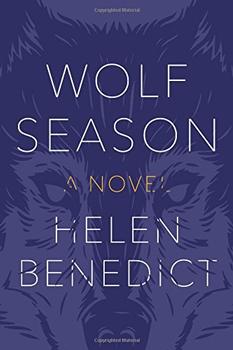
by Helen Benedict
Published 2017
After a hurricane devastates a small town in upstate New York, the lives of three women and their young children are irrevocably changed.
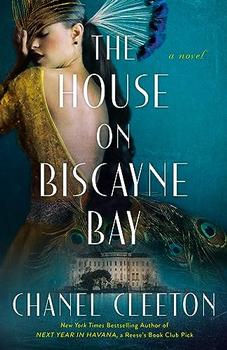
The House on Biscayne Bay
by Chanel Cleeton
As death stalks a gothic mansion in Miami, the lives of two women intertwine as the past and present collide.
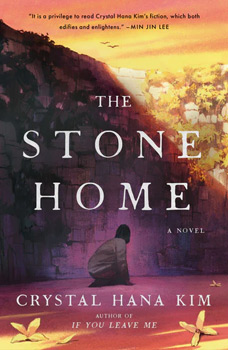
The Stone Home
by Crystal Hana Kim
A moving family drama and coming-of-age story revealing a dark corner of South Korean history.
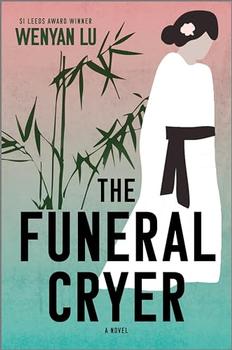
The Funeral Cryer by Wenyan Lu
Debut novelist Wenyan Lu brings us this witty yet profound story about one woman's midlife reawakening in contemporary rural China.
Your guide toexceptional books
BookBrowse seeks out and recommends the best in contemporary fiction and nonfiction—books that not only engage and entertain but also deepen our understanding of ourselves and the world around us.