Summary | Excerpt | Reviews | Beyond the book | Read-Alikes | Genres & Themes | Author Bio
Critics' Opinion:
Readers' Opinion:
First Published:
Jul 2007, 336 pages
Paperback:
Aug 2008, 368 pages
 Book Reviewed by:
BookBrowse Review Team
Buy This Book
In The World Without Us, Alan Weisman offers an utterly original approach to questions of humanity’s impact on the planet: he asks us to envision our Earth, without us.
In this far-reaching narrative, Weisman explains how our massive infrastructure would collapse and finally vanish without human presence; which everyday items may become immortalized as fossils; how copper pipes and wiring would be crushed into mere seams of reddish rock; why some of our earliest buildings might be the last architecture left; and how plastic, bronze sculpture, radio waves, and some man-made molecules may be our most lasting gifts to the universe.
The World Without Us reveals how, just days after humans disappear, floods in New York’s subways would start eroding the city’s foundations, and how, as the world’s cities crumble, asphalt jungles would give way to real ones. It describes the distinct ways that organic and chemically treated farms would revert to wild, how billions more birds would flourish, and how cockroaches in unheated cities would perish without us. Drawing on the expertise of engineers, atmospheric scientists, art conservators, zoologists, oil refiners, marine biologists, astrophysicists, religious leaders from rabbis to the Dali Lama, and paleontologists---who describe a prehuman world inhabited by megafauna like giant sloths that stood taller than mammoths---Weisman illustrates what the planet might be like today, if not for us.
From places already devoid of humans (a last fragment of primeval European forest; the Korean DMZ; Chernobyl), Weisman reveals Earth’s tremendous capacity for self-healing. As he shows which human devastations are indelible, and which examples of our highest art and culture would endure longest, Weisman’s narrative ultimately drives toward a radical but persuasive solution that needn't depend on our demise. It is narrative nonfiction at its finest, and in posing an irresistible concept with both gravity and a highly readable touch, it looks deeply at our effects on the planet in a way that no other book has.
Chapter 9: Polymers are Forever
The port of Plymouth in southwestern England is no longer
listed among the scenic towns of the British Isles, although prior to World War
II it would have qualified. During six nights of March and April 1941, Nazi
bombs destroyed 75,000 buildings in what is remembered as the Plymouth Blitz.
When the annihilated city center was rebuilt, a modern concrete grid was
superimposed on Plymouth's crooked cobbled lanes, burying its medieval past in
memory.
But the main history of Plymouth lies at its edge, in the
natural harbor formed at the confluence of two rivers, the Plym and the Tamar,
where they join the English Channel and the Atlantic Ocean. This is the Plymouth
from which the Pilgrims departed; they named their American landfall across the
sea in its honor. All three of Captain Cook's Pacific expeditions began here, as
did Sir Francis Drake's circumnavigation of the globe. And, on December 27,
1831, H.M.S. Beagle set sail from ...
According to the CIA Factbook, in 2007, for every 8 people who died, 20 were born. Depending on who's estimating that means that the world's population is growing at the rate of about 1 million people every 4 days.
Let's stop for a moment to contemplate this mind-boggling figure. Each week, the global population is increasing by more people than live in the entire of Philadelphia. Each month, the global population increases by almost that of New York.
Somewhere between when my father was born in the 1920s and today, the world's population has increased three-fold from less than 2 billion to over 6 billion. Sheer numbers combined with "advances" in technology have changed humanity from an intelligent mammal subject to the forces of nature but capable of shaping its immediate environment, to a bona fide force of nature that is changing the face of the entire planet, albeit inadvertently.
Free of rabid rantings and written in an immensely accessible style, Weisman has produced a well-balanced and fascinating book crafted to inform, not to panic. There are a myriad of books that examine one or another aspect of man's impact on the earth (rain forest depletion, global warming, water shortages et al) but few offer such a wide-ranging and entertaining overview as The World Without Us which, by imagining a world freed from the pest of humanity, offers a unique perspective on the environmental havoc we are causing...continued
Full Review
(690 words)
This review is available to non-members for a limited time. For full access,
become a member today.
(Reviewed by BookBrowse Review Team).
Did you know?
This "beyond the book" feature is available to non-members for a limited time. Join today for full access.

If you liked The World Without Us, try these:
by Claire Vaye Watkins
Published 2016
The much-anticipated first novel from a Story Prize-winning "5 Under 35" fiction writer; Named a Hot Fall Read by Vogue, Mashable, Vanity Fair, Pop Sugar, Kirkus, Hello Giggles, and Los Angeles Magazine.
by P.D. Smith
Published 2012
With erudite prose and carefully chosen illustrations, this unique work of metatourism explores what cities are and how they work. It covers history, customs and language, districts, transport, money, work, shops and markets, and tourist sites, creating a fantastically detailed portrait of the city through history and into the future.

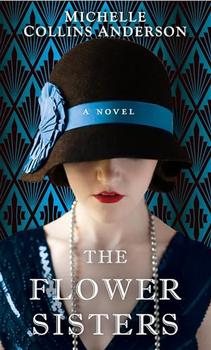
The Flower Sisters
by Michelle Collins Anderson
From the new Fannie Flagg of the Ozarks, a richly-woven story of family, forgiveness, and reinvention.
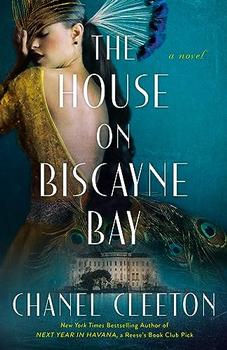
The House on Biscayne Bay
by Chanel Cleeton
As death stalks a gothic mansion in Miami, the lives of two women intertwine as the past and present collide.
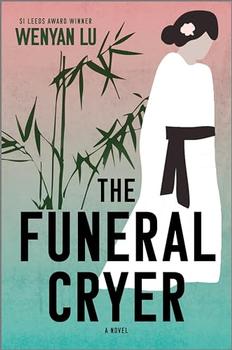
The Funeral Cryer by Wenyan Lu
Debut novelist Wenyan Lu brings us this witty yet profound story about one woman's midlife reawakening in contemporary rural China.
Your guide toexceptional books
BookBrowse seeks out and recommends the best in contemporary fiction and nonfiction—books that not only engage and entertain but also deepen our understanding of ourselves and the world around us.