Summary | Excerpt | Reviews | Beyond the book | Read-Alikes | Genres & Themes | Author Bio
Critics' Opinion:
Readers' Opinion:
First Published:
Oct 2007, 208 pages
Paperback:
Sep 2009, 208 pages
 Book Reviewed by:
Amy Reading
Buy This Book
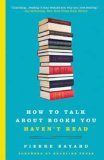
The runaway French bestseller hailed by the New York Times as “a survivor’s guide to life in the chattering classes.”
If civilized people are expected to have read all important works of literature, and thousands more books are published every year, what are we supposed to do in those awkward social situations in which we’re forced to talk about books we haven’t read? In this delightfully witty, provocative book, a huge hit in France that has drawn attention from critics around the world, literature professor and psychoanalyst Pierre Bayard argues that it’s actually more important to know a book’s role in our collective library than its details. Using examples from such writers as Graham Greene, Oscar Wilde, Montaigne, and Umberto Eco, and even the movie Groundhog Day, he describes the many varieties of “non-reading” and the horribly sticky social situations that might confront us, and then offers his advice on what to do. Practical, funny, and thought-provoking, How to Talk About Books You Haven’t Read is in the end a love letter to books, offering a whole new perspective on how we read and absorb them. It’s the book that readers everywhere will be talking about—and despite themselves, reading—this holiday season.
Ways of Reading: Books You Don't Know
(in which the reader will see, as demonstrated by a character of Musil's, that reading any particular book is a waste of time compared to keeping our perspective about books overall)
There is more than one way not to read, the most radical of which is not to
open a book at all. For any given reader, however dedicated he might be, such
total abstention necessarily holds true for virtually everything that has been
published, and thus in fact this constitutes our primary way of relating to
books. We must not forget that even a prodigious reader never has access to more
than an infinitesimal fraction of the books that exist. As a result, unless he
abstains definitively from all conversation and all writing, he will find
himself forever obliged to express his thoughts on books he hasn't read.
If we take this attitude to the extreme, we arrive at the case of the absolute
non-reader, who never opens a book and yet knows them and ...
By all rights, I shouldn’t have to read this book. After all, Pierre Bayard begins with an epigraph from Oscar Wilde: "I never read a book I must review; it prejudices you so." But I did read it, swiftly, ferociously, and with a pen in hand. Many times I underlined a sentence I admired, such as this one: "He who pokes his nose into a book is abandoning true cultivation, and perhaps even reading itself." But just as often, I underlined in fierce disagreement. This book isn’t, finally, about books, but about book conversation, and I had a particularly lively one with it...continued
Full Review
(646 words)
This review is available to non-members for a limited time. For full access,
become a member today.
(Reviewed by Amy Reading).
 Clare Messud, author of The Emperor’s Children
I read and adored Pierre Bayard’s book. It's funny, smart, and so true—a wonderful combination of slick French philosophizing and tongue-in-cheek wit, and an honest appraisal of what it means, or doesn't mean, to read.
Clare Messud, author of The Emperor’s Children
I read and adored Pierre Bayard’s book. It's funny, smart, and so true—a wonderful combination of slick French philosophizing and tongue-in-cheek wit, and an honest appraisal of what it means, or doesn't mean, to read. Pierre Bayard was born in 1954. He is a professor of literature
at the University of Paris VIII, as well a practicing psychoanalyst. He has
written over a dozen books, most of which have not been translated into English.
Pierre Bayard was born in 1954. He is a professor of literature
at the University of Paris VIII, as well a practicing psychoanalyst. He has
written over a dozen books, most of which have not been translated into English.
Bayard's best-known work in English prior to How to Talk
about Books You Haven't Read is a work of literary detection entitled Who
Killed Roger Ackroyd?, published in 2000. In this book, Bayard dares to
suggest that Hercule Poirot's solution to one of Agatha Christie's best-loved
mysteries, The Murder of Roger Ackroyd, is incorrect and that Christie
has deliberately deceived the casual reader. On his way to fingering the real
murderer, Bayard conducts a sustained investigation into the nature of detective...
This "beyond the book" feature is available to non-members for a limited time. Join today for full access.

If you liked How to Talk About Books You Haven't Read, try these:
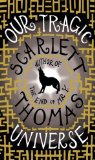
by Scarlett Thomas
Published 2011
Smart, entrancing, and boiling over with Thomas's trademark big ideas, Our Tragic Universe is a book about how relationships are created and destroyed, how we can rewrite our futures (if not our histories), and how stories just might save our lives.
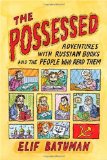
by Elif Batuman
Published 2010
The true but unlikely stories of lives devoted — Absurdly! Melancholically! Beautifully! — to the Russian classics.
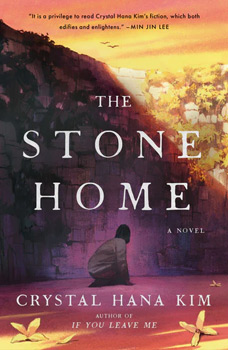
The Stone Home
by Crystal Hana Kim
A moving family drama and coming-of-age story revealing a dark corner of South Korean history.
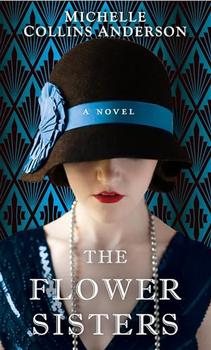
The Flower Sisters
by Michelle Collins Anderson
From the new Fannie Flagg of the Ozarks, a richly-woven story of family, forgiveness, and reinvention.
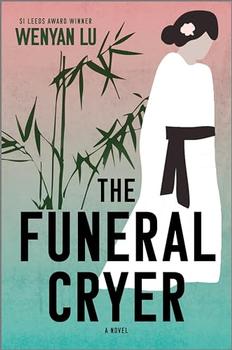
The Funeral Cryer by Wenyan Lu
Debut novelist Wenyan Lu brings us this witty yet profound story about one woman's midlife reawakening in contemporary rural China.
Your guide toexceptional books
BookBrowse seeks out and recommends the best in contemporary fiction and nonfiction—books that not only engage and entertain but also deepen our understanding of ourselves and the world around us.