Summary | Excerpt | Reviews | Beyond the book | Read-Alikes | Genres & Themes | Author Bio
Critics' Opinion:
Readers' Opinion:
First Published:
Mar 2007, 320 pages
Paperback:
Apr 2008, 336 pages
 Book Reviewed by:
BookBrowse Review Team
Buy This Book
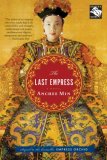
The last decades of the nineteenth century were a violent period in China’s history, ultimately ending in the demise of the Ch’ing dynasty. The only constant during this tumultuous time was the power wielded by the resilient, ever-resourceful Tzu Hsi, Lady Yehonala -- or Empress Orchid.
The last decades of the nineteenth century were a violent period in China’s history marked by humiliating foreign incursions and domestic rebellion, ultimately ending in the demise of the Ch’ing dynasty. The only constant during this tumultuous time was the power wielded by one person, the resilient, ever-resourceful Tzu Hsi, Lady Yehonala -- or Empress Orchid, as readers came to know her in Anchee Min’s critically acclaimed novel covering the first part of her life.
The Last Empress is the story of Orchid’s dramatic transition from a strong-willed, instinctive young woman to a wise and politically savvy leader who ruled China for more than four decades. Moving from the intimacy of the concubine quarters into the spotlight of the world stage, Orchid must face not only the perilous condition of her empire but also a series of devastating personal losses, as first her son and then her adopted son succumb to early death. Yearning only to step aside, and yet growing constantly into her role, only she—allied with the progressives, but loyal to the conservative Manchu clan of her dynasty—can hold the nation’s rival factions together.
Anchee Min offers a powerful revisionist portrait based on extensive research of one of the most important figures in Chinese history. Viciously maligned by the western press of the time as the “Dragon Lady,” a manipulative, blood-thirsty woman who held onto power at all costs, the woman Min gives us is a compelling, very human leader who assumed power reluctantly, and who sacrificed all she had to protect those she loved and an empire that was doomed to die.
The Beginning
In 1852, a beautiful seventeen-year-old girl from an important but
impoverished family of the Yehonala clan arrived in Peking as a minor
concubine to the young Emperor, Hsien Feng. Tzu Hsi, known as Orchid as
a girl, was one among hundreds of concubines whose sole purpose was to
bear the Emperor a son.
It was not a good time to enter the Forbidden City, a vast complex
of palaces and gardens run by thousands of eunuchs and encircled by a wall
in the center of Peking. The Ch’ing Dynasty was losing its vitality and the
court had become an insular, xenophobic place. A few decades earlier, China
had lost the first Opium War, and it had done little since to strengthen its
defenses or improve its diplomatic ties to other nations.
Within the walls of the Forbidden City the consequences of a
misstep were often deadly. As one of hundreds of women vying for the
attention of the Emperor, Orchid discovered that she must take matters into
her own ...
.... The result is a strangely dry and emotionless novel which makes it difficult to feel a connection with any of the many secondary characters, because their time on stage is so short. Having said that, The Last Empress has much to offer. Not least of which are vivid details of Imperial court life and an enlightening revisionist portrait of the woman that the Western press maligned as the "Dragon Lady"...continued
Full Review
(791 words)
This review is available to non-members for a limited time. For full access,
become a member today.
(Reviewed by BookBrowse Review Team).
Dowager Empress Tzu Hsi (spelled Cixi in Pinyin; pronouced Tsoo Shee) had a bad reputation while she lived and after she died. However, in recent decades the tide of historical opinion has been shifting. Much of the West's view of Cixi comes from the writings ofEdmund Backhouse (1873-1944) who claimed to have had close contact with the Empress over many years and portrayed her as a ruthless, extravagant, psychopathic nymphomaniac. However, in 1974 Backhouse was revealed to be an unmitigated fraud. Unfortunately, by that time, false information about the Empress had been in circulation in the West for many decades; with similar misinformation circulating in China, where it suited the Confucian view of history to blame the woman whenever ...
This "beyond the book" feature is available to non-members for a limited time. Join today for full access.

If you liked The Last Empress, try these:
by Lisa See
Published 2008
Steeped in traditions and ritual, this story brings to life another time and place – even the intricate realm of the afterworld, with its protocols, pathways, and stages of existence. Ultimately, Lisa See’s new novel addresses universal themes: the bonds of friendship, the power of words, and the age-old desire of women to be heard.
by Jung Chang, Jon Halliday
Published 2006
This is an entirely fresh look at Mao in both content and approach. It will astonish historians and the general reader alike.


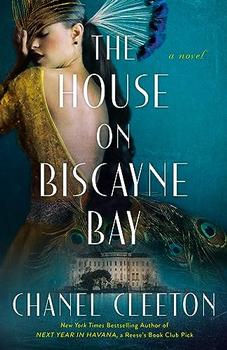
The House on Biscayne Bay
by Chanel Cleeton
As death stalks a gothic mansion in Miami, the lives of two women intertwine as the past and present collide.
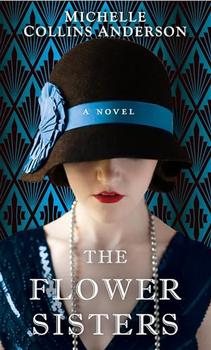
The Flower Sisters
by Michelle Collins Anderson
From the new Fannie Flagg of the Ozarks, a richly-woven story of family, forgiveness, and reinvention.
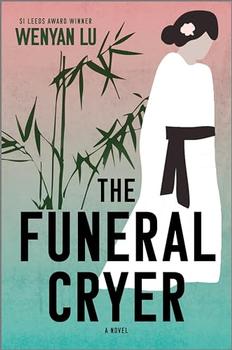
The Funeral Cryer by Wenyan Lu
Debut novelist Wenyan Lu brings us this witty yet profound story about one woman's midlife reawakening in contemporary rural China.
Your guide toexceptional books
BookBrowse seeks out and recommends the best in contemporary fiction and nonfiction—books that not only engage and entertain but also deepen our understanding of ourselves and the world around us.