Summary | Excerpt | Reviews | Beyond the book | Read-Alikes | Genres & Themes | Author Bio
Critics' Opinion:
Readers' Opinion:
First Published:
Jan 2007, 256 pages
Paperback:
Jan 2008, 256 pages
 Book Reviewed by:
BookBrowse Review Team
Buy This Book
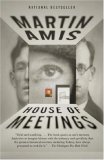
In 1946, two brothers and a Jewish girl fall into alignment in Moscow. The fraternal conflict then continues in Norlag, a slave-labor camp above the Arctic Circle, where a tryst in the coveted House of Meetings will haunt all three lovers long after the brothers are released.
An extraordinary novel that ratifies Martin Amis’s standing as “a force unto himself,” as The Washington Post has attested: “There is, quite simply, no one else like him.”
House of Meetings is a love story, gothic in timbre and triangular in shape. In 1946, two brothers and a Jewish girl fall into alignment in pogrom-poised Moscow. The fraternal conflict then marinates in Norlag, a slave-labor camp above the Arctic Circle, where a tryst in the coveted House of Meetings will haunt all three lovers long after the brothers are released. And for the narrator, the sole survivor, the reverberations continue into the new century.
Harrowing, endlessly surprising, epic in breadth yet intensely intimate, House of Meetings reveals once again that “Amis is a stone-solid genius . . . a dazzling star of wit and insight” (The Wall Street Journal).
1.
The Yenisei, September 1, 2004
My little brother came to camp in 1948 (I was already there), at the height of the war between the brutes and the bitches . . .
Now that wouldn't be a bad opening sentence for the narrative proper, and I am impatient to write it. But not yet. "Not yet, not yet, my precious!" This is what the poet Auden used to say to the lyrics, the sprawling epistles, that seemed to be lobbying him for premature birth. It is too early, now, for the war between the brutes and the bitches. There will be war in these pages, inevitably: I fought in fifteen battles, and, in the seventh, I was almost castrated by a secondary missile (a three-pound iron bolt), which lodged itself in my inner thigh. When you get a wound as bad as that, for the first hour you don't know whether you're a man or a woman (or whether you're old or young, or who your father was or what your name is). Even so, an inch or two further up, as they say, and there would have been no story to tell--...
Despite the book jacket's promise of a love story, it becomes clear early on that this is not going to be a love story in any traditional sense; even the narrator qualifies his statement by saying that it's a story of Russian love, indicating that we shouldn't expect anything remotely soppy and loving within these pages. In essence The House of Meetings is an extension, in novel form, of Amis's 2002 nonfiction work Koba the Dread: Laughter and the Twenty Million, a reference to Stalin and the estimated 20 million who died under the Bolshevik regime between 1917 and 1933...continued
Full Review
(1350 words)
This review is available to non-members for a limited time. For full access,
become a member today.
(Reviewed by BookBrowse Review Team).
The Soviet system of forced labor camps known as the Gulag spanned nearly four decades of Soviet history and affected millions of individuals. GULAG is an acronym of Glavnoe Upravlenie Lagereian which, depending on the source, translates as "The Main Directorate for Corrective Labor Camps" or "Main Camp Administration". The earliest camps were established in 1919, by 1939 about 1.6 million were incarcerated. Over time, the word "Gulag" has come to signify not only the administration of the concentration camps but also the system of Soviet slave labor itself, in all its forms including labor camps, punishment camps, criminal and political camps, women's camps, children's camps and transit camps.
Prisoners included murderers, thieves and ...
This "beyond the book" feature is available to non-members for a limited time. Join today for full access.

If you liked House of Meetings, try these:
by Owen Matthews
Published 2009
An indelible portrait of Russia over seven decades and an unforgettable memoir about how we struggle to define ourselves in opposition to our ancestry only to find ourselves aligning with it.

by Simon Sebag Montefiore
Published 2008
A revelatory account that finally unveils the shadowy journey from obscurity to power of the Georgian cobbler’s son who became the Red Tsar—the man who, along with Hitler, remains the modern personification of evil.



The Flower Sisters
by Michelle Collins Anderson
From the new Fannie Flagg of the Ozarks, a richly-woven story of family, forgiveness, and reinvention.
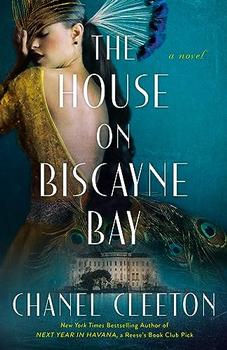
The House on Biscayne Bay
by Chanel Cleeton
As death stalks a gothic mansion in Miami, the lives of two women intertwine as the past and present collide.

The Funeral Cryer by Wenyan Lu
Debut novelist Wenyan Lu brings us this witty yet profound story about one woman's midlife reawakening in contemporary rural China.
Your guide toexceptional books
BookBrowse seeks out and recommends the best in contemporary fiction and nonfiction—books that not only engage and entertain but also deepen our understanding of ourselves and the world around us.