Summary | Excerpt | Reviews | Beyond the book | Read-Alikes | Genres & Themes | Author Bio
Critics' Opinion:
Readers' Opinion:
First Published:
Jul 2006, 496 pages
Paperback:
Jul 2007, 512 pages
 Book Reviewed by:
BookBrowse Review Team
Buy This Book
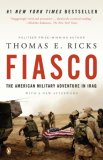
A masterful and explosive description of the planning and execution of the American military invasion and occupation of Iraq, based on the unprecedented candor of key participants.
Pulitzer Prize-winning Washington Post senior Pentagon correspondent Thomas E. Ricks's Fiasco is masterful and explosive reckoning with the planning and execution of the American military invasion and occupation of Iraq, based on the unprecedented candor of key participants.
The American military is a tightly sealed community, and few outsiders have reason to know that a great many senior officers view the Iraq war with incredulity and dismay. But many officers have shared their anger with renowned military reporter Thomas E. Ricks, and in Fiasco, Ricks combines these astonishing on-the-record military accounts with his own extraordinary on-the-ground reportage to create a spellbinding account of an epic disaster.
As many in the military publicly acknowledge here for the first time, the guerrilla insurgency that exploded several months after Saddam's fall was not foreordained. In fact, to a shocking degree, it was created by the folly of the war's architects. But the officers who did raise their voices against the miscalculations, shortsightedness, and general failure of the war effort were generally crushed, their careers often ended. A willful blindness gripped political and military leaders, and dissent was not tolerated.
There are a number of heroes in Fiasco—inspiring leaders from the highest levels of the Army and Marine hierarchies to the men and women whose skill and bravery led to battlefield success in towns from Fallujah to Tall Afar—but again and again, strategic incoherence rendered tactical success meaningless. There was never any question that the U.S. military would topple Saddam Hussein, but as Fiasco shows there was also never any real thought about what would come next. This blindness has ensured the Iraq war a place in history as nothing less than a fiasco. Fair, vivid, and devastating, Fiasco is a book whose tragic verdict feels definitive.
1. A BAD ENDING
SPRING 1991
President George W. Bush’s decision to invade Iraq in 2003 ultimately may
come to be seen as one of the most profligate actions in the history of American
foreign policy. The consequences of his choice won’t be clear for decades, but
it already is abundantly apparent in mid-2006 that the U.S. government went to
war in Iraq with scant solid international support and on the basis of incorrect
information—about weapons of mass destruction and a supposed nexus between
Saddam Hussein and al Qaeda’s terrorism—and then occupied the country
negligently. Thousands of U.S. troops and an untold number of Iraqis have
died. Hundreds of billions of dollars have been spent, many of them squandered.
Democracy may yet come to Iraq and the region, but so too may civil war or a regional
conflagration, which in turn could lead to spiraling oil prices and a global
economic shock.
This book’s subtitle terms the U.S. effort in ...
What makes Fiasco stand out from the crowd of recently published books about the current situation in Iraq is the comprehensiveness and coherence of Ricks's reporting, and the dozens of military sources he cites (many going on the record for the first time) backed up by the thousands of pages of internal documents - Ricks says he read over 30,000 pages of documents, including diaries, unit logs, official briefings, email correspondence and US military documents. The 2007 paperback includes a postscript that looks back on the year since the book's release...continued
Full Review
(282 words)
This review is available to non-members for a limited time. For full access,
become a member today.
(Reviewed by BookBrowse Review Team).
Thomas E. Ricks has been The Washington Post's senior Pentagon
correspondent since 2000. Until the end
of 1999, he held the same beat at The Wall Street Journal, where he was a
reporter for seventeen years. A member of two Pulitzer Prize-winning teams for
national reporting, he has reported on U.S. military activities in Somalia,
Haiti, Korea, Bosnia, Kosovo, Macedonia, Kuwait, Turkey, Afghanistan, and Iraq.
He is the author of Making the Corps and A Soldier's Duty.
Between 2003 and 2006 he made five trips to Iraq. He says that on his
first trip in April/May 2003 he could walk the streets of Baghdad at night,
albeit with caution; even in the summer of 2003 he felt safe driving to Tikrit,
but "to do either of those things...
This "beyond the book" feature is available to non-members for a limited time. Join today for full access.

If you liked Fiasco, try these:
by Ron Childress
Published 2016
Winner of the prestigious PEN/Bellwether Prize for Socially Engaged Fiction, And West Is West is an inspired novel about two young people who learn, the hard way, about the devastating power of new technology to isolate us from the consequences of our actions.
by Laura McBride
Published 2015
Three lives are bound together by a split-second mistake, and a child's fate hangs in the balance.
What happens next will test—and restore—your faith in humanity.

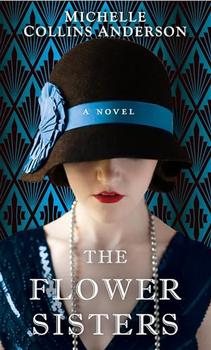
The Flower Sisters
by Michelle Collins Anderson
From the new Fannie Flagg of the Ozarks, a richly-woven story of family, forgiveness, and reinvention.
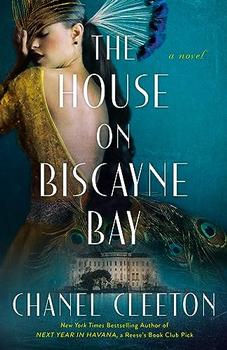
The House on Biscayne Bay
by Chanel Cleeton
As death stalks a gothic mansion in Miami, the lives of two women intertwine as the past and present collide.
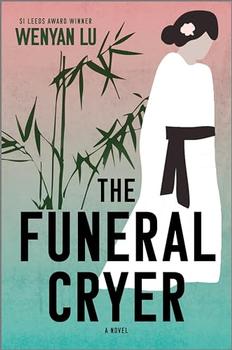
The Funeral Cryer by Wenyan Lu
Debut novelist Wenyan Lu brings us this witty yet profound story about one woman's midlife reawakening in contemporary rural China.
Your guide toexceptional books
BookBrowse seeks out and recommends the best in contemporary fiction and nonfiction—books that not only engage and entertain but also deepen our understanding of ourselves and the world around us.