Summary | Excerpt | Reviews | Beyond the book | Read-Alikes | Genres & Themes | Author Bio
Critics' Opinion:
Readers' Opinion:
First Published:
Mar 2006, 320 pages
Paperback:
Mar 2007, 336 pages
 Book Reviewed by:
BookBrowse Review Team
Buy This Book
By 2025 water scarcity will cut global food production by more than the current U.S. grain harvest. Science correspondent Fred Pearce provides our most complete portrait yet of the growing world water crisis and its ramifications.
Throughout history, rivers have been our foremost source of fresh water both for agriculture and for individual consumption, but now economists say that by 2025 water scarcity will cut global food production by more than the current U.S. grain harvest. In this groundbreaking book, veteran science correspondent Fred Pearce focuses on the dire state of the world's rivers to provide our most complete portrait yet of the growing world water crisis and its ramifications for us all.
Pearce traveled to more than thirty countries while researching When the Rivers Run Dry, examining the current state of crucial water sources like the Indus River in Pakistan, the Colorado River in the United States, and the Yellow and Yangzte rivers in China. Pearce deftly weaves together the complicated scientific, economic, and historic dimensions of the water crisis, showing us its complex origins-from waste to wrong-headed engineering projects to high-yield crop varieties that have saved developing countries from starvation but are now emptying their water reserves. He reveals the most daunting water issues we face today, among them the threat of flooding in China's Yellow River, where rising silt levels will prevent dykes from containing floodwaters; the impoverishment of Pakistan's Sindh, a once-fertile farming valley now destroyed by the 14 million tons of salt that the much-depleted Indus deposits annually on the land but cannot remove; the disappearing Colorado River, whose reservoirs were once the lifeblood of seven states but which could dry up as soon as 2007; and the poisoned springs of Palestine and the Jordan River, where Israeli control of the water supply has only fed conflict between Israelis and Palestinians.
The situation is dire, but not without remedy. Pearce argues that the solution to the growing worldwide water shortage is not more and bigger dams but greater efficiency and a new water ethic based on managing the water cycle for maximum social benefit rather than narrow self-interest.
They serve a strong brew at the Alamo coffee-house in Presidio, a small farming town near the US-Mexican border. They need to. Times are tough, says Terry Bishop, looking up from his second mugful. This land, next to the Rio Grande in Texas, has probably been continuously farmed for longer than anywhere in America, he says. Six hundred years minimum. It has been home to scalp-hunters and a penal colony; it has seen Comanche raids, Spanish missionaries, marauding Mexican revolutionaries and a population boom during a recent aliens amnesty. All that time, it has been farmed. But soon it will be back to sagebrush and salt cedar. Climbing the levee by the river at the end of his last field, Bishop shows me the problem. The once mighty Rio Grande is now reduced to a sluggish brown trickle.
In its middle stretches, the river often dries up entirely in the summer. All the water has been taken out by cities and farmers upstream.
"The river's been disappearing since the 50s," says Bishop,...
You might well think that the only rivers that
should be of concern to us are the ones in our own back yard but to think that
doesn't take into account our "virtual water" consumption. For example, an
average American might use about 40 gallons of water a day for drinking, washing
and cleaning, perhaps double that if they live in the suburbs with a yard to
water. However that is a tiny fraction of the water we actually consume
because it takes 250-650 gallons of water to grow a pound of rice, 130 gallons
to grow a pound of wheat, 65 gallons to grow a pound of potatoes, 3,000 gallons
to make a quarter-pound burger (assuming the cow is grain fed) and 500-1,000
gallons to create a quart of milk. Pearce estimates that the average meat-eating, beer-swilling American consumes
100-times his own weight in water every day! As for the clothes on our
backs - it takes 25 bathtubs of water to grow the 9 ounces of cotton to create
one t-shirt! So, when we drink our Central American coffee, and consume
our Thai rice or wear Pakistani cotton we are influencing the hydrology of those
regions. If all the water used to irrigate the crops fell from the sky as rain or was taken from rivers or underground sources in sustainable amounts we'd be in good shape, but sadly and increasingly, that is not the case.
Of course, life isn't as simple as stop consuming and the problems will go away.
The good news is that water is never destroyed - whatever we do to it,
somewhere, sometime it will return - every day more than 800 million acre-feet
of rain fall on the earth - the challenge is not having enough water but
ensuring that the water is where we need it. Pearce's view is that we don't need more and bigger dams but instead need to manage the water cycle
better by returning to the ancient ways of "harvesting the water where it falls"
and utilizing high-tech irrigation methods to provide "more crop per drop",
and above all, we need to "manage the water cycle for maximum social benefit
rather than narrow self-interest".
He calls for a second agricultural
revolution - we've had the green revolution which increased harvests to feed a
growing world population but at the expense of water supplies (the new
high-producing crops tend to use more water than traditional varieties). Now we
need a blue revolution before the gains of the past generations are wiped out. Easy say but difficult to
put into practice!
All in all, this is a very interesting book that explores and addresses the
water issues facing the world. The only
factor that this, and most books about specific environment issues, seems to
avoid discussing entirely is the overwhelming factor that is at the heart of all
of our environmental issues - there are just too many people on our little
planet!..continued
Full Review
(804 words)
This review is available to non-members for a limited time. For full access,
become a member today.
(Reviewed by BookBrowse Review Team).
 James Speth, dean, Yale School of Forestry and Environmental Studies
Fred Pearce is an artist with a pen, writing beautifully and movingly about an emerging crisis that will galvanize the world's attention. Combine the water issue Pearce so cogently presents with the threat of global climate disruption and you have what's waiting for us if we don't respond-the perfect storm of the environment.
James Speth, dean, Yale School of Forestry and Environmental Studies
Fred Pearce is an artist with a pen, writing beautifully and movingly about an emerging crisis that will galvanize the world's attention. Combine the water issue Pearce so cogently presents with the threat of global climate disruption and you have what's waiting for us if we don't respond-the perfect storm of the environment.Did you know?
This "beyond the book" feature is available to non-members for a limited time. Join today for full access.

If you liked When the Rivers Run Dry, try these:
by Tim Butcher
Published 2009
An utterly absorbing narrative that chronicles Tim Butcher’s forty-four-day journey along the Congo River, Blood River is an unforgettable story of exploration and survival.
by Charles Clover
Published 2008
"Here is the world’s fishing industry laid bare, gutted and filleted for all to see: the greed, the folly, the waste and destruction. You will never look at a fish supper in the same way again." - The Economist.

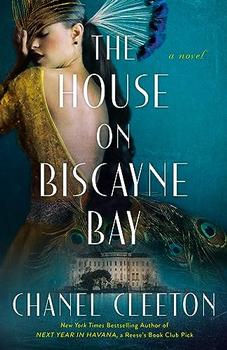
The House on Biscayne Bay
by Chanel Cleeton
As death stalks a gothic mansion in Miami, the lives of two women intertwine as the past and present collide.
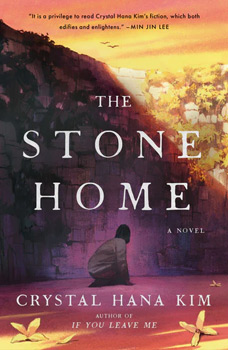
The Stone Home
by Crystal Hana Kim
A moving family drama and coming-of-age story revealing a dark corner of South Korean history.
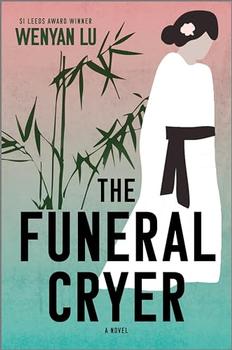
The Funeral Cryer by Wenyan Lu
Debut novelist Wenyan Lu brings us this witty yet profound story about one woman's midlife reawakening in contemporary rural China.
Your guide toexceptional books
BookBrowse seeks out and recommends the best in contemporary fiction and nonfiction—books that not only engage and entertain but also deepen our understanding of ourselves and the world around us.