Summary | Excerpt | Reviews | Beyond the book | Read-Alikes | Genres & Themes | Author Bio
The Secret History of Forced Sterilization and America's Quest for Racial Purity

Critics' Opinion:
Readers' Opinion:
First Published:
Feb 2006, 416 pages
Paperback:
Apr 2007, 416 pages
 Book Reviewed by:
BookBrowse Review Team
Buy This Book
Charts the little-known history of eugenics in America—a movement that began in the early twentieth century and resulted in the forced sterilization of more than 65,000 Americans.
In Better
for All the World, Harry Bruinius charts the little-known history of
eugenics in America—a movement that began in the early twentieth century
and resulted in the forced sterilization of more than 65,000 Americans.
Bruinius tells the stories of Emma and Carrie Buck, two women trapped in
poverty and caught up in a new scientific quest for racial purity.
Buck v. Bell became a test case brought before the Supreme Court,
which voted 8–1 to make sterilization a constitutionally valid way for
the state to prevent anyone deemed "unfit" from having children.
The court's majority opinion was written by Oliver Wendell Holmes: "It
is better for all the world," Holmes wrote, "if instead of waiting to
execute degenerate offspring for crime, or to let them starve for their
imbecility, society can prevent those who are manifestly unfit from
continuing their kind. The principle that sustains compulsory
vaccination is broad enough to cover cutting the Fallopian tubes. . . .
Three generations of imbeciles are enough."
Eugenicists believed that the human race must begin to take control not
just of human reproduction, but of ethnic intermingling. With the
natural and objective methods of science they hoped to breed only the
biologically best of the races and prevent the propagation of the worst.
The result: marriage restriction, anti-miscegenation, and immigration
laws.
In Better for All the World, Harry Bruinius shows how reformers
across the nation transformed haphazard, locally run systems of charity
and welfare—mostly church handouts and town asylums—into government-run
systems of welfare that aspired to make America a place where social and
moral purity could reign, free from the "hereditary defectives" of the
past.
Those who supported the programs included Theodore Roosevelt; Margaret
Sanger; Alexander Graham Bell; the heads of the Harriman, Carnegie, and
Rockefeller foundations; and scholars from Harvard, Yale, and Stanford.
Bruinius writes how many of the leaders of the eugenics movement were
New England Protestants who used an evangelical tone that harked back to
their Puritan forebears, and who proclaimed their goal to keep the
"American stock" pure by excising the causes of immoral behavior.
Drawing on personal letters, diaries, and documents never before used,
the author writes of the three scientists who developed the theories and
practices of eugenics: Francis Galton, cousin of Charles Darwin, who
coined the word "eugenics" to describe the science of better breeding;
Charles Davenport, the first influential eugenic thinker in America,
professor at Harvard University and the University of Chicago, direct
descendant of Reverend John Davenport, the founder of the city of New
Haven; and Harry Laughlin, Davenport's protégé, the nation's foremost
expert in eugenic sterilization and also a leader in the movement to
stop the tide of immigrants coming to this country.
The author makes clear how America's quest for racial purity influenced
Nazi Germany: one of its first laws, the Prevention of Genetically
Diseased Offspring, followed the work of California's Human Betterment
Foundation and Harry Laughlin's Model Law. In less than two years, more
than 150,000 German citizens were sterilized, preparing the way for the
genocide to come. In 1936, the Nazi regime awarded Laughlin an honorary
doctorate from Heidelberg University for his contributions to "racial
hygiene." During the Nuremberg Trials, the Allied prosecutors were
doubtful they could convict Nazi doctors of "crimes against
humanity"—since those accused had carried out acts based on theories of
eugenics that had been practiced for decades in the United States.
A Simple and Painless Procedure
On a cloudy afternoon on October 19, 1927, as a chilly autumn wind swept
down off the Blue Ridge Mountains, rattling the windows of the infirmary
at the Virginia Colony for Epileptics and Feeble-minded, Dr. John H.
Bell jotted a few notes about an operation he had performed earlier that
day. He was the superintendent of this sprawling institution, a campus
of regimented brick dormitories and rolling farmland set amid the bluffs
overlooking Lynchburg, and one of the country's finest. The morning's
procedure was simple, and dozens of such operations had taken place here
over the years. But for this patient he wrote with particular care,
since it was a case that might draw a bit of attention.
"Patient sterilized this morning under authority of Act of Assembly in
1926, providing for the sterilization of mental ...
Bruinius's account, enlivened with many novelistic touches, is backed up by well-documented hard data, including the legislative records that show how 30 states implemented forced sterilization programs; and how many individuals and groups including Theodore Roosevelt, Woodrow Wilson, Margaret Sanger, Alexander Graham Bell, the Carnegie and Rockefeller foundations, Ivy League scholars, temperance advocates, suffragists, and liberal American churches and synagogues all got behind the campaign, inspired by the idea that America could be a place where moral purity and social harmony reigned...continued
Full Review
(326 words)
This review is available to non-members for a limited time. For full access,
become a member today.
(Reviewed by BookBrowse Review Team).
Interesting Links
This "beyond the book" feature is available to non-members for a limited time. Join today for full access.

If you liked Better for All the World, try these:
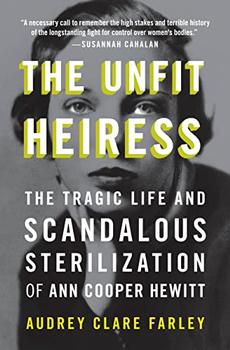
by Audrey Farley
Published 2023
For readers of The Immortal Life of Henrietta Lacks and The Phantom of Fifth Avenue, a page-turning drama of fortunes, eugenics and women's reproductive rights framed by the sordid court battle between Ann Cooper Hewitt and her socialite mother.
by Jonathan Eig
Published 2014
The fascinating story of one of the most important scientific discoveries of the twentieth century.



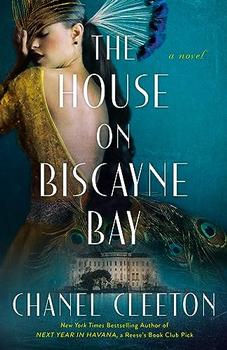
The House on Biscayne Bay
by Chanel Cleeton
As death stalks a gothic mansion in Miami, the lives of two women intertwine as the past and present collide.
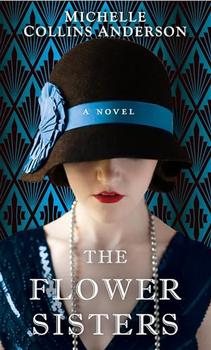
The Flower Sisters
by Michelle Collins Anderson
From the new Fannie Flagg of the Ozarks, a richly-woven story of family, forgiveness, and reinvention.

The Funeral Cryer by Wenyan Lu
Debut novelist Wenyan Lu brings us this witty yet profound story about one woman's midlife reawakening in contemporary rural China.
Your guide toexceptional books
BookBrowse seeks out and recommends the best in contemporary fiction and nonfiction—books that not only engage and entertain but also deepen our understanding of ourselves and the world around us.