Summary | Excerpt | Reading Guide | Reviews | Beyond the book | Read-Alikes | Genres & Themes | Author Bio

Critics' Opinion:
Readers' Opinion:
First Published:
Feb 2006, 384 pages
Paperback:
Feb 2007, 392 pages
 Book Reviewed by:
BookBrowse Review Team
Buy This Book
A story of desire and deception, sin and religion, loyalty and friendship that paints a portrait of one of the world's greatest cities, Renaissance Venice, at its most potent moment in history.
My lady, Fiammetta Bianchini, was plucking her eyebrows and biting color into
her lips when the unthinkable happened and the Holy Roman Emperor's army blew a
hole in the wall of God's eternal city, letting in a flood of half-starved,
half-crazed troops bent on pillage and punishment.
Thus begins In the Company of the Courtesan, Sarah Dunant's epic novel of
life in Renaissance Italy. Escaping the sack of Rome in 1527, with their
stomachs churning on the jewels they have swallowed, the courtesan Fiammetta and
her dwarf companion, Bucino, head for Venice, the shimmering city born out of
water to become a miracle of east-west trade: rich and rancid, pious and
profitable, beautiful and squalid.
With a mix of courage and cunning they infiltrate Venetian society. Together
they make the perfect partnership: the sharp-tongued, sharp-witted dwarf, and
his vibrant mistress, trained from birth to charm, entertain, and satisfy men
who have the money to support her.
Yet as their fortunes rise, this perfect partnership comes under threat, from
the searing passion of a lover who wants more than his allotted nights to the
attentions of an admiring Turk in search of human novelties for his sultan's
court. But Fiammetta and Bucino's greatest challenge comes from a young crippled
woman, a blind healer who insinuates herself into their lives and hearts with
devastating consequences for them all.
A story of desire and deception, sin and religion, loyalty and friendship, In
the Company of the Courtesan paints a portrait of one of the world's greatest
cities at its most potent moment in history: It is a picture that remains vivid
long after the final page.
Chapter one
Rome, 1527
My lady, Fiammetta Bianchini, was plucking her eyebrows and biting color
into her lips when the unthinkable happened and the Holy Roman emperor's
army blew a hole in the wall of God's eternal city, letting in a flood
of half-starved, half-crazed troops bent on pillage and punishment.
Italy was a living chessboard for the ambitions of half of Europe in
those days. The threat of war was as regular as the harvest, alliances
made in winter were broken by spring, and there were places where women
bore another child by a different invading father every other year. In
the great and glorious city of Rome, we had grown soft living under
God's protection, but such was the instability of the times that even
the holiest of fathers made unholy alliances, and a pope with Medici
blood in his veins was always more prone to politics ...
If your view of historical novels has been jaded by too many bland offerings, In The Company of The Courtesan maybe just the book to get you to reassess the genre - and if you love historicals, this is definitely one you'll want to take a close look at...continued
Full Review
(368 words)
This review is available to non-members for a limited time. For full access,
become a member today.
(Reviewed by BookBrowse Review Team).
The Renaissance period (from the French word 'rebirth', Il Rinascimento in Italian) was a period of scientific and cultural changes. The Renaissance was triggered by a new interest in the ancient classical texts and a desire to learn how they could be applied to the arts and sciences - the result was a rebirth of European culture as a whole.
There is no one event that started or ended the period but the general consensus is that it began in the 14th century in northern Italy, and spread north through Europe during the 15th century. The English Renaissance began during the Elizabethan period (16th century). Although much of the new thinking originated in Italy, it was not all one way - during the 15th century innovation also spread southward...
This "beyond the book" feature is available to non-members for a limited time. Join today for full access.

If you liked In The Company of the Courtesan, try these:
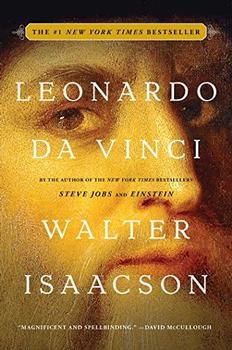
by Walter Isaacson
Published 2018
He was history's most creative genius. What secrets can he teach us? The author of the acclaimed bestsellers Steve Jobs, Einstein, and Benjamin Franklin brings Leonardo da Vinci to life in this exciting new biography.

The Confessions of Catherine de Medici
by C.W. Gortner
Published 2011
From the fairy-tale châteaux of the Loire Valley to the battlefields of the wars of religion to the mob-filled streets of Paris, The Confessions of Catherine de Medici is the extraordinary untold journey of one of the most maligned and misunderstood women ever to be queen.





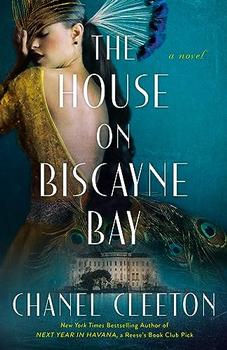
The House on Biscayne Bay
by Chanel Cleeton
As death stalks a gothic mansion in Miami, the lives of two women intertwine as the past and present collide.
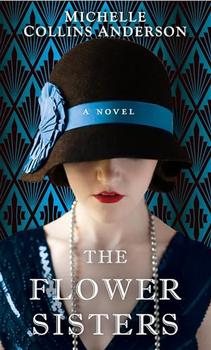
The Flower Sisters
by Michelle Collins Anderson
From the new Fannie Flagg of the Ozarks, a richly-woven story of family, forgiveness, and reinvention.

The Funeral Cryer by Wenyan Lu
Debut novelist Wenyan Lu brings us this witty yet profound story about one woman's midlife reawakening in contemporary rural China.
Your guide toexceptional books
BookBrowse seeks out and recommends the best in contemporary fiction and nonfiction—books that not only engage and entertain but also deepen our understanding of ourselves and the world around us.