
-
Your next favorite book
is waiting.
Summary | Excerpt | Reading Guide | Reviews | Beyond the book | Read-Alikes | Genres & Themes | Author Bio
 Book Reviewed by:
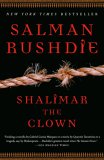
From one of the leading literary figures of our time, a gripping international tale of love and revenge, and the ancient and modern conflicts from which they spring.
From
one of the leading literary figures of our time, a gripping international tale
of love and revenge, and the ancient and modern conflicts from which they
spring.
Los Angeles, 1991. Ambassador Maximilian Ophuls, one of the makers of the modern
world, is murdered in broad daylight on his illegitimate daughter India's
doorstep, slaughtered by a knife wielded by his Kashmiri Muslim driver, a
mysterious figure who calls himself Shalimar the clown. The dead man is a
charismatic World War Two Resistance hero, a man of formidable intellectual
ability, a former US ambassador to India and subsequently America's
counter-terrorism chief. The murder looks at first like a political
assassination, but turns out to be passionately personal.
This is the story of Max Ophuls, his killer and his daughter — and of a fourth
character, the woman who links them, whose story finally explains them all. It
is an epic narrative that moves from California to Kashmir, from Nazi-occupied
Europe to the world of modern terrorism. Along the way there is kindness, and
magic capable of producing miracles; there is also war — ugly, unavoidable and
seemingly interminable. And there is always love, gained and lost, uncommonly
beautiful and mortally dangerous.
Everything is unsettled. Everything is connected. Lives are uprooted, names keep
changing — nothing is permanent. The story of anywhere is also the story of
everywhere else. Spanning the globe and darting through history, Rushdie's
narrative captures the heart of the reader and the spirit of a troubled age.
Author statement
'It seems to me, more and more, that the fictional project on which I've been
involved ever since I began Midnight's Children back in 1975 is one of
self-definition. That novel, Shame and The Satanic Verses strike
me as an attempt to come to terms with the various component parts of myself -
countries, memories, histories, families, gods. First the writer invents the
books; then, perhaps, the books invent the writer.
But whenever I say anything about my work I want to contradict myself at once.
To say that beyond self-exploration lies a sense of writing as sacrament, and
maybe that's closer to how I feel: that writing fills the hole left by the
departure of God.
But, again, I love story, and comedy, and dreams. And newness: the novel, as its
name suggests, is about the making of the new.
None of this is quite true; all of it is true enough.'
Chapter 1
At twenty-four the ambassador's daughter slept badly through the warm, unsurprising nights. She woke up frequently and even when sleep did come her body was rarely at rest, thrashing and flailing as if trying to break free of dreadful invisible manacles. At times she cried out in a language she did not speak. Men had told her this, nervously. Not many men had ever been permitted to be present while she slept. The evidence was therefore limited, lacking consensus; however, a pattern emerged. According to one report she sounded guttural, glottal-stoppy, as if she were speaking Arabic. Night-Arabian, she thought, the dreamtongue of Scheherazade. Another version described her words as science-fictional, like Klingon, like a throat being cleared in a galaxy far, far away. Like Sigourney Weaver channeling a demon in Ghostbusters. One night in a spirit of research the ambassador's daughter left a tape recorder running by her bedside but when she heard the ...
Rushdie, one of the most prominent novelists of today, proves that he's still got what it takes 30 years after the publication of his first novel, with this exploration of the clash of faiths and cultures, and the roots of terrorism...continued
Full Review
 (128 words)
(Reviewed by BookBrowse Review Team).
Did you know?
The 1989 fatwa against Salman Rushdie proclaimed by Ayatollah Khomeini (then
leader of Iran) triggered by the publication of The Satantic Verses in
1988/ It was reaffirmed in 2005 by Ayatollah Ali Khamenei, Iran's current spiritual leader, and again in February 2006 when the government-run Matyrs Foundation announced, "The fatwa by Imam Khomeini in regards to the apostate Salman Rushdie will be in effect forever ..... The book The Satanic Verses was the incarnation of the satanic plots of the World Arrogance (United States) and the occupying Zionists which appeared through the sleeves of this apostate". Another of Iran's foundations has offered a USA $2.8 million bounty on Rushdie’s life.
In 1998, ...
If you liked Shalimar The Clown, try these:
by Vikram Chandra
Published 2008
Vikram Chandra's novel draws the reader deep into the life of Inspector Sartaj Singh—and into the criminal underworld of Ganesh Gaitonde, the most wanted gangster in India. It is is a story of friendship and betrayal, of terrible violence, of an astonishing modern city and its dark side.
by Peter Carey
Published 2007
Michael Boone is an ex–"really famous" painter acting as caretaker for his younger brother, a damaged man of childlike emotional volatility. When a mysterious woman comes into their lives, she upsets their delicate equilibrium sets in motion a chain of events that could be the making—or the ruin—of them all.
by Leila Aboulela
Published 2005
A lyric and insightful novel about Islam and an alluring glimpse into a culture Westerners are only just beginning to understand.




Poetry is like fish: if it's fresh, it's good; if it's stale, it's bad; and if you're not certain, try it on the ...
Click Here to find out who said this, as well as discovering other famous literary quotes!

Can you name the title?
Test your book knowledge with our daily trivia challenge!