Summary | Excerpt | Reviews | Beyond the book | Read-Alikes | Genres & Themes | Author Bio
Critics' Opinion:
Readers' Opinion:
First Published:
Aug 2005, 320 pages
Paperback:
Jan 2007, 320 pages
 Book Reviewed by:
BookBrowse Review Team
Buy This Book
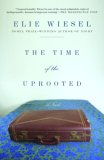
A profoundly moving novel about the healing power of compassion. Aching, unsentimental, deeply affecting, and thought-provoking.
From Elie Wiesel, a profoundly moving novel about the healing power
of compassion.
Gamaliel Friedman is only a child when his family flees Czechoslovakia
in 1939 for the relative safety of Hungary. For him, it will be the
beginning of a life of rootlessness, disguise, and longing. Five years
later, in desperation, Gamaliel's parents entrust him to a young
Christian cabaret singer named Ilonka. With his Jewish identity hidden,
he survives the war, but in 1956, to escape the stranglehold of
communism, he leaves Budapest after painfully parting with Ilonka.
He settles in Vienna, then Paris, and finally, after a failed marriage,
in New York, where he works as a ghostwriter, living through the lives
of others. Eventually, he falls in with a group of exiles: a Spanish
Civil War veteran, a survivor of the Warsaw ghetto, a victim of
Stalinism, a former Israeli intelligence agent, and a rabbi—a mystic
whose belief in the potential for grace in everyday life powerfully
counters Gamaliel's feelings of loss and dispossession. When Gamaliel
is asked to help draw out an elderly, disfigured Hungarian woman who is
barely able to communicate but who may be his beloved Ilonka, he begins
to understand that a real life in the present is possible only if he
will reconcile with his past.
Aching, unsentimental, deeply affecting, and thought-provoking, The
Time of the Uprooted is the work of a master.
Excerpt
The Time of The Uprooted
I'm four years old, or maybe five. It's a Sabbath afternoon. Mother
is lying down in the next room. I'd asked her to read to me from the
book she had by her side, but she has one of her frequent headaches. So
I ask my father to tell me a story, but just then there's a knock at
the door. "Go see who it is," says my father, reluctantly glancing
up from the journal he's keeping. A stranger is at the door.
"May I come in?" he asks. A big bearded man, broad across the
shoulders, with sad eyes—there's something disturbing about him. His
gaze seems heavy with secrets, and glows with a pale and holy fire.
"Who's there?" my father asks, and I reply, "I don't know."
"Call me a wanderer," the stranger says, "a wandering man who's
worn-out and hungry."
"Who do you want to see?" I ask, and he says to me, "You....
Some critics feel that Wiesel's themes of love , loss, faith, politics, survival and, of course, exile, are a little too defuse; but one cannot deny the impact of his body of work as a whole, which speaks for not only the lost generation but those left behind, to which The Time of the Uprooted is a worthy addition, illustrating the lasting emotional impact of the Holocaust...continued
Full Review
(117 words)
This review is available to non-members for a limited time. For full access,
become a member today.
(Reviewed by BookBrowse Review Team).
Elie Wiesel was born in 1928 in Sighet, Transylvania,
which is now part of Romania. He was fifteen years
old when he and his family were deported by the
Nazis to Auschwitz. His mother and younger sister
perished, his two older sisters survived. Elie and
his father were later transported to Buchenwald,
where his father died shortly before the camp was
liberated in April 1945.
After the war, he studied in Paris and
later became a journalist. During an interview
with the distinguished French writer, Francois
Mauriac, he was persuaded to write about his
...
This "beyond the book" feature is available to non-members for a limited time. Join today for full access.

If you liked The Time of The Uprooted, try these:
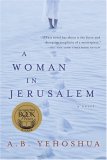
by A B. Yehoshua
Published 2007
A tale about a beautiful woman - an anonymous victim of a suicide bombing in Jerusalem - whose luminous smile, graceful neck and bright eyes are so beguiling that even in death she can lead a man to fall in love with her.

by Dara Horn
Published 2006
With astonishing grace and simplicity, Dara Horn interweaves a real art heist, history, biography, theology, and Yiddish literature. Richly satisfying, utterly unique, her novel opens the door to "the world to come"—not life after death, but the world we create through our actions right now.




The Flower Sisters
by Michelle Collins Anderson
From the new Fannie Flagg of the Ozarks, a richly-woven story of family, forgiveness, and reinvention.

The House on Biscayne Bay
by Chanel Cleeton
As death stalks a gothic mansion in Miami, the lives of two women intertwine as the past and present collide.

The Funeral Cryer by Wenyan Lu
Debut novelist Wenyan Lu brings us this witty yet profound story about one woman's midlife reawakening in contemporary rural China.
Your guide toexceptional books
BookBrowse seeks out and recommends the best in contemporary fiction and nonfiction—books that not only engage and entertain but also deepen our understanding of ourselves and the world around us.