Summary | Excerpt | Reading Guide | Reviews | Beyond the book | Read-Alikes | Genres & Themes | Author Bio
Critics' Opinion:
Readers' Opinion:
First Published:
Jan 2005, 288 pages
Paperback:
Apr 2007, 320 pages
 Book Reviewed by:
BookBrowse Review Team
Buy This Book
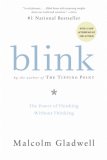
Drawing on cutting-edge neuroscience and psychology and displaying all of the brilliance that made The Tipping Point a classic, Blink changes the way you'll understand every decision you make. Never again will you think about thinking the same way.
Malcolm Gladwell redefined how we understand the world around us. Now, in Blink, he revolutionizes the way we understand the world within. Blink is a book about how we think without thinking, about choices that seem to be made in an instant - in the blink of an eye - that actually aren't as simple as they seem. Why are some people brilliant decision makers, while others are consistently inept? Why do some people follow their instincts and win, while others end up stumbling into error? How do our brains really work - in the office, in the classroom, in the kitchen, and in the bedroom? And why are the best decisions often those that are impossible to explain to others?
In Blink we meet the psychologist who has learned to predict whether a marriage will last, based on a few minutes of observing a couple; the tennis coach who knows when a player will double-fault before the racket even makes contact with the ball; the antiquities experts who recognize a fake at a glance. Here, too, are great failures of "blink": the election of Warren Harding; "New Coke"; and the shooting of Amadou Diallo by police. Blink reveals that great decision makers aren't those who process the most information or spend the most time deliberating, but those who have perfected the art of "thin-slicing" - filtering the very few factors that matter from an overwhelming number of variables.
Drawing on cutting-edge neuroscience and psychology and displaying all of the brilliance that made The Tipping Point a classic, Blink changes the way you understand every decision you make. Never again will you think about thinking the same way.
ONE
The Theory of Thin Slices: How a Little Bit of Knowledge Goes a Long Way
Some years ago, a young couple came to the University of Washington to visit the laboratory of a psychologist named John Gottman. They were in their twenties, blond and blue-eyed with stylishly tousled haircuts and funky glasses. Later, some of the people who worked in the lab would say they were the kind of couple that is easy to like—intelligent and attractive and funny in a droll, ironic kind of way—and that much is immediately obvious from the videotape Gottman made of their visit. The husband, whom I'll call Bill, had an endearingly playful manner. His wife, Susan, had a sharp, deadpan wit.
They were led into a small room on the second floor of the nondescript two-story building that housed Gottman's operations, and they sat down about five feet apart on two office chairs mounted on raised platforms. They both had electrodes and sensors clipped to their fingers and ears, which ...
Blink combines one part popular science, one part market research and one part self-help in a book that, if it were a meal, would be heavy on the canapés but light on the main course...continued
Full Review
(525 words)
This review is available to non-members for a limited time. For full access,
become a member today.
(Reviewed by BookBrowse Review Team).
Malcolm Gladwell has been a staff writer
with The New Yorker magazine
since 1996. He is the author of two
books,
The Tipping Point: How Little Things
Make a Big Difference, (2000) and
Blink: The Power of Thinking Without
Thinking (2005).
From 1987 to 1996, he was a reporter
with the Washington Post, where he
covered business, science, and then
served as the newspaper's New York City
bureau chief. He graduated from the
University of Toronto, Trinity College,
with a degree in history. He was born in
England, grew up in rural Ontario, and
...
This "beyond the book" feature is available to non-members for a limited time. Join today for full access.

If you liked Blink, try these:
by Oliver Burkeman
Published 2013
A witty, fascinating, and counterintuitive read that turns decades of self-help advice on its head and forces us to rethink completely our attitudes toward failure, uncertainty, and death.
by Daniel Kahneman
Published 2013
Engaging the reader in a lively conversation about how we think, Thinking, Fast and Slow will transform the way you think about thinking.

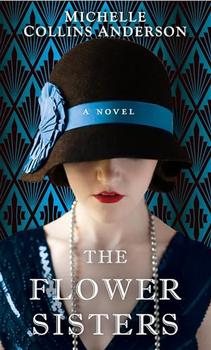
The Flower Sisters
by Michelle Collins Anderson
From the new Fannie Flagg of the Ozarks, a richly-woven story of family, forgiveness, and reinvention.
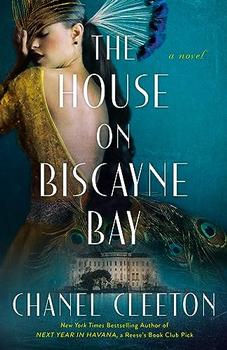
The House on Biscayne Bay
by Chanel Cleeton
As death stalks a gothic mansion in Miami, the lives of two women intertwine as the past and present collide.
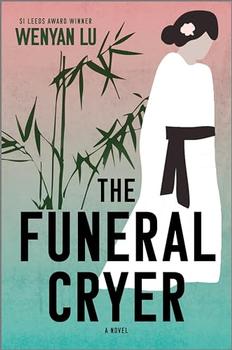
The Funeral Cryer by Wenyan Lu
Debut novelist Wenyan Lu brings us this witty yet profound story about one woman's midlife reawakening in contemporary rural China.
Your guide toexceptional books
BookBrowse seeks out and recommends the best in contemporary fiction and nonfiction—books that not only engage and entertain but also deepen our understanding of ourselves and the world around us.