
-
Your next favorite book
is waiting.
Summary | Excerpt | Reading Guide | Reviews | Read-Alikes | Genres & Themes | Author Bio
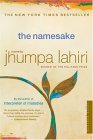
Lahiri enriches the themes that made her collection, The Interpreter of Maladies, an international bestseller: the immigrant experience, the clash of cultures, the conflicts of assimilation and, most poignantly, the tangled ties between generations.
Jhumpa Lahiri's Interpreter of Maladies established this young writer as one the most brilliant of her generation. Her stories are one of the very few debut works -- and only a handful of collections -- to have won the Pulitzer Prize for fiction. Among the many other awards and honors it received were the New Yorker Debut of the Year award, the PEN/Hemingway Award, and the highest critical praise for its grace, acuity, and compassion in detailing lives transported from India to America.
In The Namesake, Lahiri enriches the themes that made her collection an international bestseller: the immigrant experience, the clash of cultures, the conflicts of assimilation, and, most poignantly, the tangled ties between generations. Here again Lahiri displays her deft touch for the perfect detail -- the fleeting moment, the turn of phrase -- that opens whole worlds of emotion.
The Namesake takes the Ganguli family from their tradition-bound life in Calcutta through their fraught transformation into Americans. On the heels of their arranged wedding, Ashoke and Ashima Ganguli settle together in Cambridge, Massachusetts. An engineer by training, Ashoke adapts far less warily than his wife, who resists all things American and pines for her family. When their son is born, the task of naming him betrays the vexed results of bringing old ways to the new world. Named for a Russian writer by his Indian parents in memory of a catastrophe years before, Gogol Ganguli knows only that he suffers the burden of his heritage as well as his odd, antic name.
Lahiri brings great empathy to Gogol as he stumbles along the first-generation path, strewn with conflicting loyalties, comic detours, and wrenching love affairs. With penetrating insight, she reveals not only the defining power of the names and expectations bestowed upon us by our parents, but also the means by which we slowly, sometimes painfully, come to define ourselves. The New York Times has praised Lahiri as "a writer of uncommon elegance and poise." The Namesake is a fine-tuned, intimate, and deeply felt novel of identity.
Chapter 1
1968 On a sticky August evening two weeks before her due date, Ashima Ganguli stands in the kitchen of a Central Square apartment, combining Rice Krispies and Planters peanuts and chopped red onion in a bowl. She adds salt, lemon juice, thin slices of green chili pepper, wishing there were mustard oil to pour into the mix. Ashima has been consuming this concoction throughout her pregnancy, a humble approximation of the snack sold for pennies on Calcutta sidewalks and on railway platforms throughout India, spilling from newspaper cones. Even now that there is barely space inside her, it is the one thing she craves. Tasting from a cupped palm, she frowns; as usual, there’s something missing. She stares blankly at the pegboard behind the countertop where her cooking utensils hang, all slightly coated with grease. She wipes sweat from her face with the free end of her sari. Her swollen feet ache against speckled gray linoleum. Her pelvis aches from the baby’s weight....
*Bildungsroman is a German word meaning 'novel of formation' - that is a novel that follows someone's growth from childhood to maturity.

If you liked The Namesake, try these:
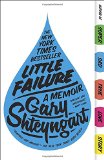
by Gary Shteyngart
Published 2014
A memoir of an immigrant family coming to America, as told by a lifelong misfit who forged from his imagination an essential literary voice and, against all odds, a place in the world.
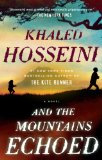
by Khaled Hosseini
Published 2014
Khaled Hosseini has written a new novel about how we love, how we take care of one another, and how the choices we make resonate through generations

by Dagmara Dominczyk
Published 2014
A vibrant, engaging debut novel that follows the friendship of three women from their youthful days in Poland to their complicated, not-quite-successful adult lives.






Common sense is genius dressed in its working clothes.
Click Here to find out who said this, as well as discovering other famous literary quotes!

Can you name the title?
Test your book knowledge with our daily trivia challenge!