Summary | Excerpt | Reviews | Read-Alikes | Genres & Themes | Author Bio
Critics' Opinion:
Readers' Opinion:
First Published:
Dec 2002, 224 pages
Paperback:
Jan 2004, 224 pages
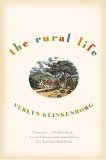
Klinkenborg brings a fresh view to the ordinary beauty of our daily lives in this year-long meditation on the deep joys of country life.
The dogs hear it in the distance before I do, and so do the horses, a dry dislocated thump, thunder from far away. One moment there's no wind, the air still and damp. The next moment the wind is turning corners where there aren't any, lifting and coiling the barnyard dust. Wind flails the leaves on the sugar maples, revealing their silver undersides. It scatters spent hickory flowers in drifts. The sky blackens, and I can almost hear rain begin. But then the wind drops and the front unravels over the western ridge, where the weather comes from. Blue sky intervenes. A clear night threatens once again, Venus hanging peaceful in the dusk.
From The Rural Life
A year-long meditation on the deep joys of country life.
In the pages of The New Yorker, Harper's, the New York Times, and his acclaimed books Making Hay and The Last Fine Time, Verlyn Klinkenborg has mastered a voice of singular lyricism and precision. His subject is the American landscape: not the landscape admired from a scenic overlook, but one taken in from a rusty chair propped against the worn siding of a screened-in porch, or from the window of a pickup driving down an empty highway into the teeth of an approaching storm. He has a keen appreciation of the peculiarly American tableau—a Memorial Day parade, or a boy riding a bike down the middle of a dusty street. Whether reporting from a small farm in upstate New York, a high pasture deep within the Rocky Mountains, or the bricked edge of a city shuddering in the wake of a "sudden Tuesday," Klinkenborg follows the momentum of the seasons in a language as simple, unsentimental, and exacting as life itself.
In the tradition of E. B. White and Henry David Thoreau, Verlyn Klinkenborg gives us in The Rural Life a fresh view of our greatest subject, the ordinary beauty of our daily lives.
JANUARY
Every year about now, I feel the need to keep a journal. I recognize in this urge all my worst instincts as a writer. I walk past the blank books — gifts of nothingness — that pile up in bookstores at this season, and I can almost hear their clean white pages begging to be defaced. They evoke in me the amateur, the high school student, the miserable writerly aspirant I once was — a young man who could almost see the ink flowing onto the woven fibers of the blank page like the watering of some eternal garden. It took a long time, a lot of pens, and many blank books before I realized that I write in the simultaneous expectation that every word I write will live forever and be blotted out instantly.
It's hard to keep a journal under those conditions. It's harder still when it becomes clear that the purpose of a journal — at least of those journals begun in earnest on the first day of January — is not to record, day by day, just a fragment of thought...
 Alec Wilkinson
Klinkenborg has a singular affinity for the natural world and because he is such an accomplished writer... Gregory Long
Klinkenborg has a poetic vision...takes his place among the best American writers about the natural world... Jack Valenti
...no journalist...surpasses his liquid prose, which he offers with such ease and fluency... Michael Korda
At once lyrical and down to earth...brilliantly takes the reader to the very heart of living in the country... Tom Brokaw
...not only a rich and evocative pastoral pilgrimage, it is a national treasure...Klinkenborg is our modern Thoreau...
Alec Wilkinson
Klinkenborg has a singular affinity for the natural world and because he is such an accomplished writer... Gregory Long
Klinkenborg has a poetic vision...takes his place among the best American writers about the natural world... Jack Valenti
...no journalist...surpasses his liquid prose, which he offers with such ease and fluency... Michael Korda
At once lyrical and down to earth...brilliantly takes the reader to the very heart of living in the country... Tom Brokaw
...not only a rich and evocative pastoral pilgrimage, it is a national treasure...Klinkenborg is our modern Thoreau...
If you liked The Rural Life, try these:
by Fredrik Sjoberg
Published 2016
A mesmerizing memoir of extraordinary brilliance by an entomologist, The Fly Trap chronicles Fredrik Sjöberg's life collecting hoverflies on a remote island in Sweden
by Annie Proulx
Published 2011
Proulx's first work of nonfiction in more than twenty years, Bird Cloud is the story of designing and constructing her dream house. It is also an enthralling natural history and archaeology of the region, and a family history, going back to nineteenth-century Mississippi riverboat captains and Canadian settlers.

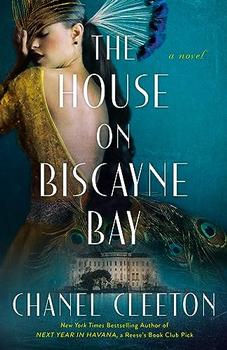
The House on Biscayne Bay
by Chanel Cleeton
As death stalks a gothic mansion in Miami, the lives of two women intertwine as the past and present collide.
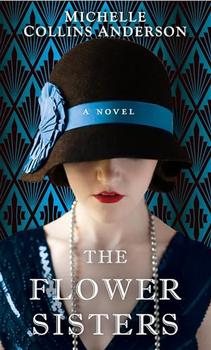
The Flower Sisters
by Michelle Collins Anderson
From the new Fannie Flagg of the Ozarks, a richly-woven story of family, forgiveness, and reinvention.
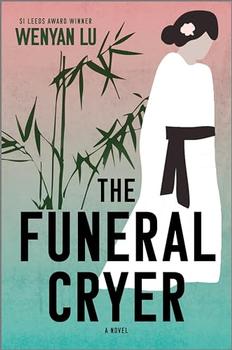
The Funeral Cryer by Wenyan Lu
Debut novelist Wenyan Lu brings us this witty yet profound story about one woman's midlife reawakening in contemporary rural China.
Your guide toexceptional books
BookBrowse seeks out and recommends the best in contemporary fiction and nonfiction—books that not only engage and entertain but also deepen our understanding of ourselves and the world around us.