Please be aware that this discussion guide may contain spoilers!
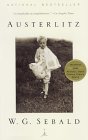
In what ways can Sebald's work be said to create a new genre? Do we
know whether to take Austerlitz as fact or fiction?
Why do you suppose Sebald incorporates photographs into his work? To
what effect?
Where does the name Jacques Austerlitz come from? Why do you think
Sebald chose it?
What is the relationship between past and present throughout the
book? What tricks does Sebald play with the passage of time? What does
Austerlitz have to say on his experience of time?
What sort of mood does Sebald's use of language create throughout
the novel? How does Sebald's language function in the same way that character
and plot do in a more traditional novel?
Some critics have called attention to Sebald's wan sense of
humora "low-key gallows humor." What examples of this humor can you find
in the book?
What type of architecture most appeals to Austerlitz? What do you
make of this fascination?
Various animals appear throughout the novel. What does the novel make
of the relationships between humans and other creatures, and between all
animalshumans includedand their environment? How do animals in the novel
orient themselves, and what does it mean, throughout, to become literally dis-oriented?
What does the novel have to say about the mind's defenses against
great trauma?
At the novel's end, Austerlitz tells the narrator of a Jewish
cemetery located just behind his house in London, behind a wall, whose existence
he'd only discovered during his last days in the city. How does the discovery
of the cemetery replicate Austerlitz's discovery of his heritage, and what
does this link suggest about the connection between physical artifacts and the
workings of memory? In what way could it be said that this cemetery's presence
in the novel honors the durability of the world of European Jewry that Nazi
Germany attempted to expunge?
Unless otherwise stated, this discussion guide is reprinted with the permission of Modern Library.
Any page references refer to a USA edition of the book, usually the trade paperback version, and may vary in other editions.
Stranger than fiction, blending tragedy and farce, How to Create the Perfect Wife is an engrossing tale of the radicalism, and deep contradictions, at the heart of the Enlightenment.
Although heavy on the scientific details, which slowed down the story for me (OK, I admit, I was one of those liberal arts majors who skipped out on...
read more
Loved this book. Magical, quirky, enchanting I could go on. All books do not have to be literary fiction, sometimes it is just so comforting to read...
read more
Can an wiser, older narrator view the past with more wisdom than he might have possessed forty years earlier in the summer he was thirteen? Ordinary...
read more
U.S. ebook sales up in 2012, but rate of growth is slowing(May 16 2013) In 2012, trade book sales (i.e. non academic book sales) rose 6.9%, to $15.049 billion, and e-book sales continued to grow, although the rate of growth...
Full Story