Reading Guide Questions

Please be aware that this discussion guide will contain spoilers!
Introduction
From the Author
The stories and even written texts of the Middle Ages were meant to be group
affairs
- someone would read or recite, and others would
listen; then all were free to discuss. So I am particularly glad that your group
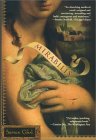
has chosen to read
Mirabilis. I hope you like it....
Villeneuve, France, Anno Domini 1372. The village is under siege and
people are starving when Bonne Mirabilis, wet nurse to the wealthiest and most
enigmatic woman in town, realizes that she alone has the bounty with which to
feed the hungry.
And not by convincing her patroness to open her warehouses.
It's a defiant act of generosity
—when she was twelve years
old, her sainted mother, the two priests suspected of being her father, and all
the village women who believed Bonne's conception had been immaculate were
locked into the church and set afire.
With a masterly sense of history and the visceral spirit of
The Decameron,
newcomer Susann Cokal combines the outrageous and the wondrous into the story of
Bonne, a woman born "God's bastard," on her way to sainthood with the
troop of ascetics, mystics, lovers, and jesters who keep her milk flowing.
Mirabilis is a remarkable and confident debut
- an
endlessly surprising and darkly comic tale about appetite and miracle, all four
humors in abundance, and human ecstasy of every sort
- a
novel that carries the reader into that sweet, rare air between the Ridiculous
and the Sublime.
Discussion Questions
- Although this book is set in medieval France, many of its themes and
questions are modern. For instance, the book addresses the roles of women in
larger society. Is the author offering a critique of current culture?
- How do faith and belief function in this novel, both religious faith and
faith in oneself?
- This is a book about identity. Is the focus on identity one reason the
novel feels modern? How does Bonne redefine herself? What other characters
re-create themselves? Is identity, the quest for self, the central theme of
this novel?
- In this book Mary is highly regarded but not mothers or motherhood itself.
Why?
- Sexuality is a key component of this novel. How does Cokal use sexuality
to explore characterization? How does she use it to explore some of the
other themes in the novel?
- Cokal has succeeded in creating a rich world, full of visceral details
about medieval life and times. Is this an historical novel?
- How do the more minor characters drive the story forward?
- What purpose does the afterword serve?
- Cokal has said that she thought it was interesting that women's bodies can
create food, i.e. milk, and that she wanted to write about how a woman used
her body to survive. But Bonne is never compromised. Her character, and even
her innocence, seem intact at the end of the novel. How is this revealing of
Bonne's role in the novel?
- Is it unethical for Bonne to decide who she feeds?
- In the end, do you believe any of the characters are saints?
- How do prophecy and myth function in the novel?
- Mirabilis is a story within a story; her literacy allows Bonne
literally to write her own story. What does Cokal gain in structuring her
novel this way?
- Mirabilis celebrates the absurd, the physical, miracles. In the
end, what is the miracle the novel describes? Is there only one?
- What in the novel is sacred?
- Godfridus goes mad. How does his madness facilitate his art? How, in
general, does madness free characters and therefore affect the plot?
- In Villeneuve, the ability to read is rare, and a symbol of status. How
does reading become equated with power?
- This novel is about women primarily, specifically about women making their
way in a hostile world. Is this therefore a feminist novel? What makes a
novel "feminist"? Are the criteria similar to those for historical
fiction?
For more information about other Penguin Readers Guides, please call the Penguin
Marketing Department at (800) 778-6425, email at reading@penguinputnam.com
or write to us at: Penguin Books, Marketing Department, Readers' Guides, 375 Hudson Street, New York, NY 10014-3657.
Unless otherwise stated, this discussion guide is reprinted with the permission of Blue Hen Publishing.
Any page references refer to a USA edition of the book, usually the trade paperback version, and may vary in other editions.