Reading Guide Questions

Please be aware that this discussion guide will contain spoilers!
Reading Guides for The Bluest Eye and Paradise
Few writers have been as celebrated or influential as Toni Morrison. The recipient of the 1996 National Book Foundation Medal for Distinguished Contribution to American Letters and of awards from the National Book Critic Circle and the American Academy and Institute of Arts and Letters, she has also won the Pulitzer Prize, and was the first African-American woman to be awarded the Nobel Prize. Cited by many as our greatest living writer, Morrison continues to produce works of highly-accessible fiction that are of literary and social significance. This accessibility is perhaps her greatest gift to her readers, for she presents hard truths and historical fact without didacticism or condescension. Reading a Toni Morrison novel is like sitting through a history lesson delivered by an ancient storyteller. Ghosts, spirits, mythic characters, and magical events drift through her novels as memory suffuses with the present. Points of view change and blend. Conversations are slow and easy, punctuated with the lyrical vernacular of the early South. But she does not let us off easy, for each of Toni Morrison's novels contains brutal facts of inhumanity and injustice.
Although America's history of racism and slavery is central to Morrison's body of work, her novels transcend these issues to envelop truths about the human condition, the problems we all face. Morrison's most recent novel,
Paradise, is a haunting portrait of Ruby, Oklahoma, an all-black town founded by a small group of families hoping to protect themselves from the hatred and sin that plagued their ancestors. But despite their best efforts, Ruby's founding fathers cannot keep out the forces that move all societies forward: change, rebellion, passion, and death. Inevitably, Ruby will show signs that it is a thriving, not a dying community, and the attendant signs of movement -- both negative and positive -- are read as evil inflicted upon Ruby by a community of women who are the inhabitants of a decrepit convent on the outskirts of town. The apocalyptic assault that ensues is the result of bigotry and intolerance as fierce as any encountered by Ruby's past generations. Ultimately,
Paradise teaches us that intolerance, like justice, is blind to race, and that it is in communication, not isolation, that will we find heaven on earth.
Morrison's first novel,
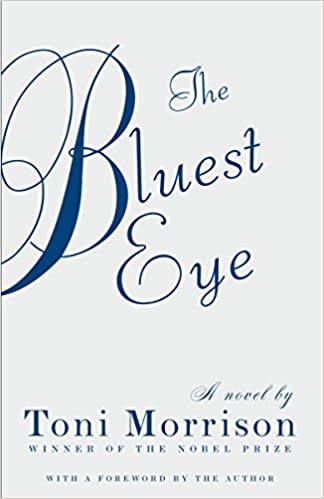
The Bluest Eye (1970), was set in the author's own home town and tells of a young black girl's painful yearning for acceptance and love as she prays for the blue eyes of a white girl. The tragedy of Pecola Breedlove's unhappy life echoes the issues of racial beauty and pride that fueled so much of the 1960s civil rights movement. Nominated for the National Book Award, her next novel,
Sula (1973), immediately established Morrison as a superb portrayer of women as individuals with fierce passions, hatreds, and enormous capacities for love and forgiveness. In
Song of Solomon (1977), Morrison looks to the Bible and ancient mythology to tell the story of a young man's quest to learn the secrets of his past. Monumental in scope, and peopled with characters as unforgettable as any in modern fiction, the novel reaches backward from generation to generation as it unravels its litany of heroism and cruelty, romance and hatred, freedom and bondage. In
Tar Baby (1981), Morrison takes a contemporary approach to the conflicts between white and black, and between men and women. Set in the Caribbean, New York City, and a small Florida town, the novel pulses with the different rhythms of each of its milieus as it sets forth provocative questions about racial and sexual inequality. With
Beloved (1987) came the Pulitzer Prize, and a deeper evocation of the cruelties committed in the name of slavery. The details of Sethe's hard life and the story behind the scar that spreads across her back like a tree, are excruciating to read, yet in Morrison's careful hands the truth unfurls like a bright and horrible flower. In 1998 Beloved was made into a widely-acclaimed major motion picture directed by Jonathan Demme, and produced by and starring Oprah Winfrey. True to its title,
Jazz (1992), offers varying strains of melody as it weaves together the sad and happy lives of a handful of people in 1920s Harlem.
Returning again and again to the paradoxical human condition that allows unimaginable cruelty to coexist in a world of infinite love and faith, Toni Morrison touches us with her remarkable ability to tell a grand story on a small scale, to help us believe in ghosts, spirits, and magic, and to imbue her language with a lyricism and a life all its own.
About the Books
Paradise
From its arresting first sentence to its final, lyrical depiction of heaven on earth and beyond, Toni Morrison's first novel since being awarded the Nobel Prize is a breathless, expansive rumination on our desire for sanctuary and our need for salvation. Brilliantly paralleling the lives of two isolated communities -- the utopian town of Ruby and the crumbling convent that exists alongside it in the middle of Oklahoma's vast, empty plains --
Paradise examines the idea of home: Is it the place where you are born or a place to which you can escape?
The people of Ruby, Oklahoma have dedicated their lives to making their town safe and respectable. Founded by men and women who bear the ancestral scars of history's worst oppression, and who themselves have endured persecution by members of their own race, Ruby is a monument to courage, strength, and the will to overcome. With its tidy homes, flower-filled yards, and prosperous, self-sufficient economy, the town appears utopian and dreamlike. But there are cracks in the surface. Outsiders are tacitly unwelcome; adultery, alcohol, and rebellious behavior are explicitly rejected. Less obvious, but more insidious, is the prejudice against skin color: dark, not light, is the dominant complexion. And in not so subtle ways, the town's founding fathers aim to preserve the purity of their line. It is not surprising, therefore, that the inhabitants of the Convent -- a rehabilitated mansion on the outskirts of town -- appear suspicious in Ruby's scrutinizing eyes. Five women, unmarried, and of unknown origin and questionable character, are living a free-for-all existence in the increasingly decrepit house. And, though few of the townspeople have stepped inside the Convent farther than the kitchen, rumors abound about what happens behind its heavy doors.
Like Ruby, the Convent was founded as a haven to those in need. Unlike the town, its doors are not only unlocked but open. Where Ruby is orderly and predictable, the Convent is dark, mysterious, messy, filled with ghostlike sounds, and redolent of a potpourri of worship: hedonism, Catholicism, witchcraft, and New Age practices. Where Ruby proudly traces its ancestry in a single line, the women of the Convent hail from all over the country. The abandoned mission was not their destination, but another arbitrary stop in their fragmented, haphazard lives. Inevitably, these disparate worlds collide. And where and when this occurs, the results are consummate and absolute: utter sorrow and profound joy; unconditional love and cruel betrayal; life and death.
As Toni Morrison tells the story, the day that a posse of nine men from Ruby carry out their murderous assault upon the Convent is not the culmination of centuries of hate, oppression, suspicion, and prejudice, but of continuation. She seems to be saying we will never learn, and yet she leaves open the possibility of hope. As Reverend Misner presides over Ruby's first funeral, the women of the Convent recline on a beach gleaming with refuse, making it difficult to tell whether they are angels or martyrs. They are as alive as they have ever been, inspiring and encouraging those they left behind, and ready for more of "the endless work they were created to do down here in paradise."
The Bluest Eye
The story of eleven-year-old Pecola Breedlove, the tragic heroine of Toni Morrison's haunting first novel, grew out of her memory of a girlhood friend who wanted blue eyes. Shunned by her town's prosperous black families, as well as its white families, Pecola lives with her alcoholic father and embittered, overworked mother in a shabby, two-room storefront that reeks of the hopeless destitution that overwhelms their lives. In awe of her clean, well-groomed schoolmates, and convinced of her own intense ugliness, Pecola tries to make herself disappear as she wishes fervently, desperately for the blue eyes of a white girl. In her afterword to this novel, Morrison writes of the little girl she knew: "Beauty was not simply something to behold, it was something one could do.
The Bluest Eye was my effort to say something about that; to say something about why she had not, or possibly ever would have, the experience of what she possessed and also why she prayed for so radical an alteration. Implicit in her desire was racial self-loathing. And twenty years later I was still wondering about how one learns that. Who told her? Who made her feel that it was better to be a freak than what she was? Who had looked at her and found her so wanting, so small a weight on the beauty scale? The novel pecks away at the gaze that condemned her."
Sula
Nominated for the National Book Award, this rich and moving novel traces the lives of two black heroines -- from their growing up together in a small Ohio town, through their sharply divergent paths of womanhood, to their ultimate confrontation and reconciliation. The one, Nel Wright, chooses to remain in the place of her birth, to marry, to raise a family, and to become a pillar of the tightly knit black community. The other, Sula Peace, rejects all that Nel has accepted. She escapes to college and submerges herself in city life. When she returns to her roots it is as a rebel, a mocker, and a wanton sexual seductress. Both women must suffer the consequences of their choices; both must decide if they can afford to harbor the love they have for each other; and both combine to create an unforgettable rendering of what it means and costs to exist and survive as a black woman in America. Hailed by critics for its stunning language and its original, honest depiction of the black way of life after the Civil War,
Sula is a lyrical blend of myth and magic, as real as a history lesson, and as enchanting as a fable.
Song of Solomon
"A wise and spacious novel," is how Reynolds Price described
Song of Solomon, Morrison's crowning literary achievement. Her third novel's generous expanse reaches across generations of family and miles of land to tell the story of the descendants of Macon Dead, a one-time slave who carved a bountiful living out of the Pennsylvania forest, only to be executed by an envious white farmer. Morrison opens the novel with the birth of Macon's grandson -- nicknamed Milkman -- and the prosperous but unhappy household in which he comes of age. Surrounded by an incompetent but doting mother, two older sisters, and a domineering father who seems to regret his son's existence, Milkman spends his childhood and adolescence in the shadow of rage and resentment, both within the walls of his house and outside, where his father's greed and wealth serve to alienate the Dead family from the rest of the town's black community. It is only through the kindness of Guitar, his erstwhile bodyguard and companion, and Pilate, his father's eccentric sister, that Milkman finds acceptance and a taste of the joy life has to offer. But as he grows older, with his hunger for love sated by the adoration of his mother, Pilate, and Pilate's granddaughter, Hagar, Milkman begins to writhe beneath the weight of unconditional devotion and the responsibility it brings. He longs to live unfettered, like his father, and so cruelly loosens his ties with the very people who connect him to his roots. When Milkman learns of Pilate's "inheritance" -- bags of gold buried in a cave in Pennsylvania -- he sets out to claim this treasure for himself. It is on this odyssey that Milkman, searching to recover a legacy of wealth, instead uncovers the key to his past in the incredible story of his father's childhood, his grandfather's heroism, and his great-grandfather's glory. Milkman's journey south exposes him to the dangers of his selfishness and repudiation of his roots, but it also teaches him the ability of those roots to heal and empower. In the end, Milkman emerges with hands empty, but his heart full.
Weaving together many of the themes that characterize her work -- the relevance of names, the mysteries of the soul and the mind, and the clashing cultures of the North and South -- Toni Morrison has, in
Song of Solomon, given us a story that is more than a coming-of-age tale. She probes the heart of the dilemma facing many African-Americans struggling to obtain prosperity and independence without severing the ancestral ties that nourish their black identities. But, most importantly, she tells us a story of the human spirit: its strength, its endurance, and its ability to soar.
Tar Baby
Racial pride and repudiation are the central themes in this bewitching novel of parallel lives that tragically intersect. Perched in his lovely home on a Caribbean island, Valerian Street, a wealthy retired businessman, savors the good life in the company of his younger wife, Margaret, his loyal servants, Ondine and Sydney, and their beautiful, sophisticated niece, Jade, for whom Valerian has been a financial and emotional mentor. Preparations for the Christmas holiday are underway in this tropical setting, and the days take on a lazy, decadent rhythm until they are disrupted by the sudden appearance of Son, a dreadlocked, muscular fugitive who has been using the house as a hiding place. Bold and secretive about his past, Son confronts each of the members of the household, questioning relationships that have been taken for granted, and stirring up feelings of resentment as well as hidden secrets that serve to shatter the fragile balance that had allowed this "family" to exist in resolute acceptance of their accustomed roles and identities. In the midst of this turmoil Son and Jade fall passionately in love, escape to New York, and then travel south to Son's hometown in Florida. Son's yearning to reconnect with his family's roots clashes with Jade's willful rejection of the black way of life, and the couple must come to terms with their conflicting identities and their intense mutual attraction. Writing for
The New York Times Book Review, John Irving hailed Morrison's fourth novel as, "deeply perceptive, returning risk and mischief to the contemporary American novel."
Beloved
At the center of Morrison's fifth novel, which earned her the 1988 Pulitzer Prize for fiction, is an almost unspeakable act of horror and heroism: a woman brutally kills her infant daughter rather than allow her to be enslaved. The woman is Sethe, and the novel traces her journey from slavery to freedom during and immediately following the Civil War. When we first meet Sethe she is living in Ohio with her youngest child, Denver, and with the ghost of Beloved, the daughter Sethe buried. When Paul D., an old friend and fellow slave from Kentucky, turns up at her doorstep, Sethe allows herself the luxury of romance and physical affection. Paul D. expels the ghost -- Denver's only companion -- from the house. Soon, when a strange woman shows up claiming the name of Beloved, she is welcomed by everyone but Paul, and it isn't long before she rids her new home of this troublesome man. In the weeks that follow, Beloved takes over the house, providing Denver and Sethe with nourishing and much needed company. Soon, however, this imposing guest finds her way into Sethe's guilty conscience: she wants Sethe to repay her for the life her mother took from her. When Sethe's indomitable spirit begins to waver, it is up to Denver to save her mother from her sister's wrath. Woven into this circular, mesmerizing narrative are the horrible truths of Sethe's past: the incredible cruelties she endured as a slave, and the hardships she suffered in her journey north to freedom. Just as Sethe finds the past too painful to remember, and the future just "a matter of keeping the past at bay," her story is almost too heartwrenching to read. Yet Morrison manages to imbue the wreckage of her characters' lives with compassion, humanity, and humor. Part ghost story, part history lesson, and part folk tale,
Beloved finds beauty in the unbearable, and lets us all see the enduring promise of hope that lies in anyone's future. The film version of
Beloved, directed by Jonathan Demme and produced by and starring Oprah Winfrey, was released in 1998 to wide critical and popular acclaim.
Jazz
"The deep bluesy sadness of this novel wails out of the pagesÉas expressively as a tenor saxophone," writes Digby Diehl of Toni Morrison's novel, Jazz, set in 1926 Harlem, where Joe and Violet Trace have moved to escape the hardships of segregation in the South. A "case man" for the Cleopatra Beauty Products company, Joe is dapper and successful. Violet, an unlicensed beautician, cuts and curls out of her kitchen for pocket money. Though their early years were hard, the couple found happiness in their intense love for each other. But on Lenox Street in their comfortable apartment, Joe and Violet have found prosperity, and lost each other. Violet no longer speaks to her husband, preferring instead the company of the birds she keeps in the front hall, one of whom she's trained to say, "I love you." In her attempts to assuage her intense desire for a child, which she keeps from Joe, Violet sleeps with a doll. Frustrated at the thundering silence of their apartment, and the cessation of their lovemaking, Joe conspires to find "a nice woman to keep company with." And so eighteen-year-old Dorcas enters their lives, and the triangle that forms leads to murder, redemption, and reconciliation.
Its streets throbbing with the music that represents both artistic freedom and moral decline, Harlem in its renaissance offered the black community the opportunity to savor the rewards of financial gain, to flourish in the celebration of black intellectual and creative accomplishment, and to move away from the horrors of the previous decades. But the past has a life of its own, and every character in this capacious novel has his or her own ghosts to contend with. Suffused throughout the novel, like the spirit that cannot be erased by forgetting or quelled by prosperity, is the voice of Jazz, "the dirty, get-on-down music the women sang and the men played and both danced to, close and shameless or apart and wild." It follows Joe through his obsession with Dorcas, and provides solace to Violet as she tries to patch their lives back together. In the end it accompanies the two as they find their way back to love.
Discussion Questions
Paradise - Discuss the controversy over the Oven's inscription. How is the interpretation of "Be the furrow of his brow," different from "Beware the furrow of his brow?" Why do you think the young people of Ruby insist on the former inscription, the older townspeople on the later? What is the significance of the word "furrow?"
- What is the significance of the Oven, which the men of Haven took apart and then rebuilt in Ruby? Why does Morrison treat it as a proper noun? What sorts of images -- positive and negative -- does an oven conjure up, and how do you think these images relate to some of the novel's themes? How does the significance of the Oven to the town change over the years?
- Another striking image is that of the road between Ruby and the Convent. It is straight and long and lonely, yet Morrison places many pivotal scenes along its path. What are some of these scenes? Who walks the road and who drives it? How do men use the road as opposed to women? What is significant about the difference?
- Few of the men of Ruby have even been to the Convent, yet many of them are suspicious of its inhabitants and their way of life, even blaming them for signs of Ruby's decay: wayward young people, family disputes, abortions, and sick children. Why do you think these men make scapegoats of the women in the convent? What historical precedents are there for this kind of treatment between communities?
- In her depiction of Ruby and the Convent, Morrison presents two communities both aiming to protect their citizens from the harm of the outside world. Yet these two communities couldn't be less similar. What's the difference between the sanctuary offered by the convent and the security that was the aim of Ruby's founders?
- What is the importance of stories, myth, and legend in the novel? How are the stories of Ruby's families related and passed down from one generation to the next? How does Morrison use these ancestral stories to tell the novel's central one? Why is Pat Best recording the town's genealogical history, why is she having a hard time getting the townspeople to tell their stories to her, and why, ultimately does she burn the notebooks in which this rich history is recorded? How do you think Pat's version of Ruby's history would compare to Deacon's?
- Discuss Morrison's treatment of religion in the novel. What are the different kinds of religion she portrays? How does religion divide people and bring them together? How does it offer solace to some characters and result in alienation in the lives of others?
- How does Consolata unite and transform the women of the Convent together and, in doing so, affect your feelings toward them? "A coven rather than a convent," one character muses: What do you think of this comment?
- Although Morrison reveals much about the past histories of the convent women, she does so elliptically, rarely referring to them by name. She offers information about these women in a way that forces readers to pay close attention, especially in scenes in which they interact with the people of Ruby. What effect does this technique have on how you get to know the convent women? Do you have a mental image of what they look like? Did it occur to you to wonder which of the women was "the white one?" Why or why not? Why do you think Morrison left their identities so ambiguous and their appearance so vague?
- How would you describe the novel's narrative technique? Even though many sections are told from the point of view of a single character, how does Morrison alter the distance between the reader and these characters? For instance, how close do you get to the minds of Mavis, Pallas, Seneca, or Gigi as opposed to Consolata, Soane, or Deacon? Even though the entire novel is written in the third person, how does the intimacy of the narrative shift between characters and sections, between past and present? Likewise, how does Morrison shift tenses in different sections? What are the effects of these shifts in perspective and tense? Are these shifts seamless or jarring to you?
- What do you think will become of Ruby? How does the funeral for Sweetie's youngest child tie in to what has happened at the Convent? What do you think of Misner's comments that Save-Marie's life, though short, was worthy of any of those mourning her death? Would you describe Paradise as a novel of hope or despair?
The Bluest Eye
- The novel opens with an excerpt from an old-fashioned reading primer. The lines begin to blur and run together -- as they do at the beginning of select chapters. What social commentary is implicit in Morrison's superimposing these bland banalities describing a white family and its activities upon the tragic story of the destruction of a young black girl? How does Morrison's powerful language -- both highly specific and lyrical -- comment on the inadequacy of "correct" English and the way in which it masks and negates entire worlds of beauty and pain?
- "Quiet as it's kept, there were no marigolds in the fall of 1941. We thought, at the time, that it was because Pecola was having her father's baby that the marigolds did not grow." With these lines Morrison's child narrator, Claudia MacTeer, invites the reader into a troubling community secret: the incestuous rape of her 11-year-old friend Pecola Breedlove. What are the advantages of telling Pecola's story from a child's point of view? Claudia would appear to connect the barrenness of the land to Pecola's tragedy. In what ways does Morrison show how Pecola's environment -- and American society as a whole -- are hostile to her very existence?
- The title of the novel refers to Pecola Breedlove's intense desire for blue eyes. She believes herself ugly and unworthy of love and respect, but is convinced that her life would be magically transformed if she possessed blue eyes. How does racial self-loathing corrode the lives of Pecola and her parents, Cholly and Pauline Breedlove? How does racial self-hatred manifest itself in characters like Maureen Peal, Geraldine, and Soaphead Church?
- At a certain point in the novel, Morrison, through her narrator, states that romantic love and physical beauty are "probably the most destructive ideas in the history of human thought." How do the lives of individual characters bear out that statement? To what degree are these two concepts generated from within or imposed on us by society? Where do the characters first encounter ideas of romantic love and beauty -- ideas which will eventually torture and exclude them? What positive visions of beauty and love does the novel offer?
- What role does social class play in the novel? Pecola first comes to stay with the MacTeers because her family has been put "outdoors" owing to her father's drunken violence and carelessness. The threat of "outdoors" focuses families like the MacTeers on upward mobility. "Being a minority in both caste and class we moved about anyway on the hem of life, struggling to consolidate our weaknesses and hang on, or to creep singly up into the folds of the garment." Is divisiveness one result of this upward striving Morrison describes? What are others?
- The novel is set in a Midwestern industrial town, Lorain, Ohio, Morrison's own birthplace. Pauline and Cholly Breedlove are transplanted Southerners and several key scenes in the novel are set in the South. How does Morrison set up comparisons between a Northern black community and the Southern black way of life? What values have been lost in the migration north?
- Consider Morrison's characterization of Cholly Breedlove. While she clearly condemns his actions, she resists dehumanizing him. If rape of one's daughter is an "unimaginable" crime, can one at least trace the events (and resulting emotions) that made it possible for Cholly to commit this brutal act? Is there a connection between the white hunters' "rape" of Cholly and the sexual aggression he eventually turned on his daughter?
- The Bluest Eye was published in 1970. At the time Morrison was writing the novel, the racist society that condemned Pecola Breedlove was still very much in place and Morrison took great risks -- both within the black community and American society as a whole -- to tell this important story. While advances in civil rights and racial attitudes have been made in the intervening years, it is arguable that many of the core issues so vividly evoked in the novel remain. What evidence is there that racial self-hatred continues to ruin lives? What present-day cultural factors could contribute to tragedies like Pecola's?
For information about other Penguin Readers Guides, please call the Penguin Marketing Department at (800) 778-6425, email at reading@penguinputnam.com or write to them at: Penguin Books, Marketing Department CC, Readers' Guides, 375 Hudson Street, New York, NY 10014-3657.
Unless otherwise stated, this discussion guide is reprinted with the permission of Plume.
Any page references refer to a USA edition of the book, usually the trade paperback version, and may vary in other editions.