return to home  
Join   |  Gift   |  Member Login   |  Library Login
BookBrowse Mobile
Follow Us: 
   Reading Guides

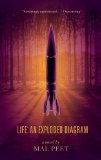
Life by Mal Peet: Questions, plus a reading group guide, with links to reviews, excerpt, author interview and author biography at BookBrowse.com.

Life

Life
An Exploded Diagram
by Mal Peet
Hardcover: Oct 2011,
416 pages.
Paperback: Feb 2013,
400 pages.

Publication information
Author Information
Critics' Opinion:   
Readers' Rating:    Not Yet Rated
About BookBrowse Rankings
Share: 
Buy This Book

Reading Guide Questions

 Printer Friendly Guide

Please be aware that this discussion guide may contain spoilers!

  1. While Clem is the main character in the book, with the majority of the novel related from his point of view, large sections of the story are also given over to histories of his father, George, his mother Ruth, and his grandmother Winn. Why do you think Peet has chosen to include their stories? How important is family history in shaping a character's identity? In what ways has Clem been shaped by the experiences of his family?
  2. "It's not easy keeping history in line. Herding cats by fog is easy by comparison." Peet uses a non-chronological narrative structure, which shifts back and forth between the past and present. Why do you think Peet has chosen to use this structure? Think particularly about its role in creating suspense and highlighting the impact of history on the present on both a personal and political level. How does this non-chronological structure relate to the subtitle of the book?
  3. "Fidel Castro would make a significant contribution to twentieth-century history and to Clem Ackroyd's yet-undreamed-of loss of virginity." The political and the personal are shown as inextricably connected in the novel. What examples can you find to support this? What significance might Clem's name have in terms of illustrating this intersection between the political and the personal?
  4. "I'm fascinated by the way things fit together (and come to pieces)." The motif of fragmentation underscores the novel, with the three sections of the book entitled "Putting Things Together", "Blowing Things Apart" and "Picking Up the Pieces". How else is this motif evident in the structure and style of the novel? Some ideas to consider include the non-linear structure of the narrative, the myriad of narrative perspectives and the frequent shifts between time frames and narrative voice. How effective do you find this structure in capturing the essence of human existence or "life"? Does the story seem fragmented and fractured in your opinion, or has Peet effectively woven these different elements together to create a cohesive whole?
  5. The novel opens with Ruth's chimney being shattered by an RAF Spitfire and ends with the attack on the Twin Towers. What other examples can you find of explosions, or potential explosions in the novel? What ideas is Peet trying to convey through this motif?
  6. "If his parents ... found out that he'd been doing dirty things in the woods with ... Gerard Mortimer's daughter ... It would be like ...He couldn't think of an analogy. A bomb going off, or something." To what extent do the explosions in the novel also operate on a figurative or metaphorical level?
  7. Discuss the role of the Brethren and Enoch's Doomsday prophecies. While Armageddon does not come on the day he originally predicts, Enoch is not deterred and is later encountered by Clem preaching at the Glastonbury Music Festival. Could Enoch's apocalypse represent an unfulfilled explosion on a global scale – a threat of explosion still hanging over the characters and reader at the end of the book? Or is his prophecy fulfilled in the attack on the Twin Towers? Think particularly about the significance of the final lines of the book: "... we in the streets, the Spared, the Elect, began to shout obscenities and the various names of God."
  8. Literary allusions and intertextuality underpin the novel, the most prominent example being the Marvell poem, "To His Coy Mistress", which Clem reads to Frankie. Why do you think Peet has included this poem? Think particularly about its significance in relation to Clem and Frankie's relationship. What other literary references can you find in the novel?
  9. Clem describes his favourite still-life painting, saying "the fruits and the vegetables, those humble and edible objects, have their backs to the void. ... They say, they insist, that they briefly exist. ... Death is the default. There's no avoiding it. It's the background into which we will inevitably melt ... But in the meantime, eat, see, smell, taste, listen, touch." Do you think this is how Clem interpreted the painting when he first encountered it as a schoolboy, or is his adult self instead interpreting the painting retrospectively in light of his experiences since then? What resonances can you see between the painting and the Marvell poem which Clem recites? Explore the way that Frankie is often linked with fruit and fruit imagery in the novel. For instance, she is first encountered during the annual strawberry picking. What do you think Peet is trying to say about their relationship through these references?
  10. What role does art play in the book? Why do you think Clem decides to become an illustrator? Consider in particular his preference for charts and diagrammatic drawings.
  11. Gerard Mortimer hires George to help him, "modernize the landscape. Straighten it out. Rationalize it. Get it machine-ready. Turn this part of Norfolk into clean prairie." How does Gerard's attitude towards the land reflect his personality in a broader sense? Think particularly about his relationship with his family. What might be the significance of Frankie's ambition to restore Franklins to its former state after the death of her father?
  12. George doesn't sentimentalise the war, debasing the traditional myths of patriotism and valour by saying, "they'd fought – he'd fought – for sex." How do his experiences of war shape both his identity, work and family life? In what way does George's domestic life represent another "battleground"? Think particularly about the imagery Peet uses when writing from George's point of view. For instance, Winn "lifting a hand to her chest and stumbling as if a sniper had got her."
  13. While Life explores serious, and often disturbing, subjects, and poses some grave questions about the precariousness of human existence, the novel is fundamentally playful – even satiric – in tone. Wordplay, understatement, self-deprecation and a strong sense of the absurd help bring characters and events to life for the reader. Discuss the role humour plays in the novel. What examples can you find? What do these examples reveal about the attitude of the narrator? If Peet had not used this tone, how would your response to the novel have been different?
  14. "Underneath the cool and the tailored suits and beyond the photo calls, JFK was, physically, a mess. He was ... riddled by disease." Reality versus illusion is an important theme in Life. What examples can you find of this theme? Some ideas could include Clem's clandestine relationship with Frankie, Ruth's secret girlhood ritual of putting on make-up and Ruth and George's pretense at a happy marriage. How might this theme relate to Clem's comment about art: "I loved, love, the surfaces of things. What things actually look like." Could the author be suggesting that Clem is to some extent naïve, or taken in by appearances? Could his work as an illustrator constitute a form of deliberate self-deception?
  15. Clem says, "Nostalgics want to cuddle the past like a puppy. But the past has bloody teeth and bad breath. I look into its mouth like a sorrowing dentist." Do you agree with this statement? Is he in fact nostalgic? Does Clem ever sentimentalise the past, or see it through rose-tinted glasses? Think particularly about his affair with Frankie.


Unless otherwise stated, this discussion guide is reprinted with the permission of Candlewick Press. Any page references refer to a USA edition of the book, usually the trade paperback version, and may vary in other editions.

Become a Member
Click Here
Editor's Choice
  •  Jun 19 
  •  Jun 17 
  •  Jun 15 
If You Find Me
Emily Murdoch

If You Find Me Jacket

There are some things you can't leave behind…
Americanah
Chimamanda Ngozi Adichie

Americanah Jacket

Fearless, gripping, at once darkly funny and tender, spanning three continents and numerous lives, Americanah is a richly told story set in today's globalized world.
We Are All Completely Beside Ourselves
Karen Joy Fowler

We Are All Completely Beside Ourselves Jacket

The story of an American family, middle class in middle America, ordinary in every way but one. But that exception is the beating heart of this extraordinary novel.
The Expats by Chris Pavone
   Most Recent Blog Entries
Top Ten Guidelines For How to Behave in a Book Club
Movies Based on Books: Summer 2013 (May - August)
Jewish Themed Young Adult Books, Not About The Holocaust
rss  RSS   rss  subscribe
Recent Reader Reviews
In the Shadow of the Banyan by Vaddey Ratner
First time novelist Vaddey Ratner captured my heart and senses in this novel based on her childhood in Cambodia. Her story transcends any news story... read more
In the Shadow of the Banyan by Vaddey Ratner
From the first page, I was drawn in by the lyrical writing of the author and mesmerized as the narrator, eight year old Raami, remembered the years... read more
TransAtlantic by Colum McCann
Trite but true, all good things must come to an end. I so wanted to keep reading the wonderful prose, the settings that let one think they are part... read more
RSS RSS feed More...  
Most Viewed This Week
1. Coraline
Neil Gaiman
2. Memoirs of a Geisha
Arthur Golden
3. The Glass Castle
Jeannette Walls
4. The Immortal Life of Henrietta Lacks
Rebecca Skloot
5. Behind the Beautiful Forevers
Katherine Boo
More...
Book Club Recommendations
Where'd You Go, Bernadette
by Maria Semple
Paperback (Apr/13)
The Unlikely Pilgrimage of Harold Fry
by Rachel Joyce
Paperback (Mar/13)
The Unchangeable Spots of Leopards
by Kristopher Jansma
Hardback (Mar/13)
How to Get Filthy Rich in Rising Asia
by Mohsin Hamid
Hardback (Mar/13)
More...
First Impressions
Members read and review books often months before they're published. See what they think in First Impressions!
Her Last Breath
by Linda Castillo
4.5 Stars            (Jun/13)
Crime of Privilege
by Walter Walker
Four Stars            (Jun/13)
Children of the Jacaranda Tree
by Sahar Delijani
4.5 Stars            (Jun/13)
More...
  Latest BookBrowse News
Kenn Nesbitt is new Children's Poet Laureate (Jun 12 2013)
Kenn Nesbitt has been named the new Children's Poet Laureate: Consultant in Children's Poetry to the Poetry Foundation, which noted that the two-year position... Full Story
rss RSS feed More...
 
BookBrowse Poll
Q: We've been discussing guidelines for book club etiquette. Which of these do you think are important?
Read the book
Listen thoughtfully to all members
Take notes while you're reading
Stay on topic when you're speaking
Enjoy yourself
Don’t get drunk
Bring chocolate, everyone likes chocolate!
Eat before you come so you don’t devour the snacks
Compliment others sincerely
Have a good sense of humor
Don’t fret the small stuff
Search: Title or Author
Free Newsletters

Online Book Club
More about
The Execution of Noa P. Singleton
Join the discussion!


Win This Book!
You Only Get Letters From Jail


one of the finest and truest collections of 'American' short stories I have ever read

Enter To Win Now!

wordplay
Solve this clue:
"T M T C, T M T Stay T S"

and be entered
to win....
frame top
New Author
Interviews
Carol Rifka Brunt
Kent Wascom
Jennifer McVeigh
Elizabeth Becker
frame bottom
HOME Book Submissions | Advertising | Library Subscriptions | Reviewing for BookBrowse | Contact Us