Please be aware that this discussion guide may contain spoilers!
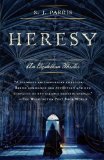
When Giordano Bruno is recruited as a spy by Sir Francis Walsingham, he hesitates. Walsingham tells him whenever you feel the wrench between conscience and duty, your care should always be for the greater good. Yet Bruno's conscience remains troubled throughout by the double life he has to lead. Does this make him a more appealing narrator? To what extent is a spy morally compromised by the fact that he must maintain a deception? Is Walsingham rightis the greater good always more important than individuals?
Europe in the 1580s is divided by religious wars between Catholics and Protestants. Religious loyalty is often stronger than national or family ties. Walsingham tells Bruno that faith and politics are now one and the same. What parallels do you see with our own times? What inspires people to become martyrs?
Bruno is seeking a lost book that he believes will reveal the secret of man's divinity. He believes that with this knowledge he can formulate a philosophy that will overcome religious divisions. Why was this such a radical idea at the time? Four hundred years later, how do we regard Bruno's optimistic dream of the end of conventional religion, with its conflicts and dogma? Does history show that some people will always turn religion to violent ends?
Both Walsingham and Jenkes the book dealer say they find Bruno intriguing because he contains so many contradictions and can't be easily labeled. Did you find him intriguing/enigmatic as a character? What more would you have liked to find out about him?
Sophia Underhill is surprised to hear Bruno say he would appreciate a woman who could form her own opinion and express it. Why is Sophia unusual for a young woman of her time and class? Do you think her attraction to Bruno was genuine? Did your feelings about her change when her secret was revealed?
After the first murder, Bruno is sent an anonymous letter that appears to offer a clue about the killing. Who did you first think might have sent it? What was the purpose of the letter? Why did the sender want Bruno involved?
Many of the book's central characters are real historical figures. Why do you think the author chose to use real characters? Does it affect the way you read the novel to know that some of the events really happened? Would it make you want to read more about that period or the people involved?
Queen Elizabeth I famously said she had no desire to make windows into men's souls. At the end of the book, Bruno is confronted by a character who says that tolerance in matters of belief is equal to saying there is no truth or untruth, right or wrong. Who is right? Does passionate belief in any cause rule out tolerance of other views? Where do we see this most keenly in our own age?
A great deal of the story revolves around lost or forbidden books. Why were books considered so powerful at the time? What other stories have you read where a lost or secret book was at the heart of a mystery? Why does the idea of a forgotten or banned book have such a hold on the imagination?
Were you surprised to discover the identity of the killer? Who had you suspected? At the very end, Bruno remains ambivalent about whether justice has been done - do you agree?
Unless otherwise stated, this discussion guide is reprinted with the permission of Anchor Books.
Any page references refer to a USA edition of the book, usually the trade paperback version, and may vary in other editions.
Stranger than fiction, blending tragedy and farce, How to Create the Perfect Wife is an engrossing tale of the radicalism, and deep contradictions, at the heart of the Enlightenment.
Z, the novel about the life of Zelda Sayre Fitzgerald is at points charming and; like another reviewer, I kept thinking of the movie, "Midnight...
read more
Although heavy on the scientific details, which slowed down the story for me (OK, I admit, I was one of those liberal arts majors who skipped out on...
read more
Loved this book. Magical, quirky, enchanting I could go on. All books do not have to be literary fiction, sometimes it is just so comforting to read...
read more
U.S. ebook sales up in 2012, but rate of growth is slowing(May 16 2013) In 2012, trade book sales (i.e. non academic book sales) rose 6.9%, to $15.049 billion, and e-book sales continued to grow, although the rate of growth...
Full Story