return to home  
Join   |  Gift   |  Member Login   |  Library Login
BookBrowse Mobile
Follow Us: 
   Reading Guides

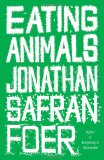
Eating Animals by Jonathan Safran Foer: Questions, plus a reading group guide, with links to reviews, excerpt, author interview and author biography at BookBrowse.com.

Eating Animals

Eating Animals
by Jonathan Safran Foer
Hardcover: Nov 2009,
352 pages.
Paperback: Sep 2010,
368 pages.

Publication information
Author Information
Critics' Opinion:   
Readers' Rating:    Not Yet Rated
About BookBrowse Rankings
Share: 
Buy This Book

Reading Guide Questions

 Printer Friendly Guide

Please be aware that this discussion guide may contain spoilers!

Discussion Guide & Resource Guide

Questions and topics for discussion

  1. Conversations about Eating Animals - and the reasons behind the decisions we make - can be polarizing and often alienating. In "All or Nothing or Something Else," Jonathan Safran Foer writes, "We need a better way to talk about Eating Animals. We need a way that brings meat to the center of public discussion in the same way it is often at the center of our plates" (page 33). What does Foer mean by this? Do you agree with him?
  2. Why do you think that something as essential as what we put in our bodies is so often disregarded or not thought through carefully? What is the potential convenience of such nonchalance and what problems can it lead to?
  3. What are some of the challenges of being a vegan or a vegetarian? Does where you live matter? To what extent do you think economics play into the decision of eating responsibly or of supporting local farms?
  4. We have so many food choices available to us now. Is this, in your opinion, a blessing or a curse?
  5. We sometimes hear in the media about the inhumane treatment of animals in factory farms and about the unhealthy - and sometimes fatal - consequences that such treatment can have for us. In your opinion, how do books such as Eating Animals, The Omnivore's Dilemma by Michael Pollan, and Animal, Vegetable, Miracle by Barbara Kingsolver, or documentaries like Food, Inc., differ from "breaking news" stories and exposés? Why are both modes of information important and how do they contribute to the conversation in different ways? Is one more lasting than the other? If so, explain why.
  6. Were there any facts cited in Eating Animals that shocked you? If so, what were they?
  7. At what point do you think awareness of factory farming will be sufficiently raised in the public eye? Do you think that if people have enough information they'll stop buying factory-farmed meat?
  8. Foer's relationship with eating is grounded in his memories of meals shared with his grandmother and the stories she told about food. Even when she was on the run from Nazis and starving, she would not eat pork. "If nothing matters, there's nothing to save," she tells Foer and his brothers (page 17). Foer concludes Eating Animals with the same thought, after more than twenty years of his own experiences informing his choices about food. Discuss the significance of this sentiment and how its implications can find universal resonance.
  9. How do you feel about making food choices for other people? Discuss Foer's decision to raise his children as vegetarians before they are old enough to understand the ethical reasons behind such a lifestyle. Would you ever make a similar choice?
  10. Discuss the aspects of Eating Animals that you found to be controversial, if any. Were they helpful in opening a dialogue on the subject? Why or why not? Have any of your eating habits changed since reading this book?


Resource guide

Now that you've read Eating Animals, you know that factory farming - which accounts for virtually all meat sold in supermarkets and prepared in restaurants - is almost certainly the single worst thing that humans do to the environment and to animals. Changing the way our food is produced begins with us, with the choices we make every day. Here are eight things you can do to make a difference:

  1. Spread the word. Talk about this issue with your friends, family, and colleagues.
  2. Eat conscientiously - as few animals as possible, ideally none. More than 99 percent of animal products are produced under factory farm conditions ( www.farmforward.com /farming-forward/food -choices).
  3. Support pending state and federal legislation to improve standards for farms. Learn more about legislation aimed to improve conditions for farm animals ( www.hsus.org /farm/camp/ legislation.html) and legislation that addresses the effects of farms on our environment ( www.waterkeeper.org /ht/d/ Contents/cids/275,1383/pid/201) and communities ( www .sustainabletable.org /issues/community/).
  4. Tell Congress that you want to support alternatives to factory farming. Every year, agribusiness receives billions of dollars in subsidies and grants that make factory farming possible ( http:// fdn.actionkit.com/cms/sign/Factory_Farm_Bailout/#1 ).
  5. Have a conversation with the people who produce your food. If you aren't allowed to see where your food comes from, avoid eating it ( www.eatwellguide.org /i.php?pd=Home).
  6. Stay informed about current issues in the fight for more humane and sustainable farming. Sign up to receive newsletters from groups such as Farm Forward ( www.farmforward.com ) and the Humane Society of the United States ( www.hsus.org ).
  7. Support organizations working for change: Farm Forward: www.farmforward.com Farm Sanctuary: www.farmsanctuary.org Food and Water Watch: www.foodandwaterwatch.org Food Democracy Now!: www.fooddemocracynow.org Humane Society of the United States: www.hsus.org People for the Ethical Treatment of Animals: www.peta.org Sierra Club: www.sierraclub.org Sustainable Table: www.sustainabletable.org Waterkeeper Alliance: www.waterkeeperalliance.org
  8. Buy products from the most progressive farmers in America. Sustainable Table's "Eat Well Guide" ( www.eatwellguide.org / i.php?pd=Home) provides an extensive list of small farmers.


Unless otherwise stated, this discussion guide is reprinted with the permission of Back Bay Books. Any page references refer to a USA edition of the book, usually the trade paperback version, and may vary in other editions.


Become a Member
Click Here
Editor's Choice
  •  Jun 19 
  •  Jun 17 
  •  Jun 15 
If You Find Me
Emily Murdoch

If You Find Me Jacket

There are some things you can't leave behind…
Americanah
Chimamanda Ngozi Adichie

Americanah Jacket

Fearless, gripping, at once darkly funny and tender, spanning three continents and numerous lives, Americanah is a richly told story set in today's globalized world.
We Are All Completely Beside Ourselves
Karen Joy Fowler

We Are All Completely Beside Ourselves Jacket

The story of an American family, middle class in middle America, ordinary in every way but one. But that exception is the beating heart of this extraordinary novel.
The Expats by Chris Pavone
   Most Recent Blog Entries
Top Ten Guidelines For How to Behave in a Book Club
Movies Based on Books: Summer 2013 (May - August)
Jewish Themed Young Adult Books, Not About The Holocaust
rss  RSS   rss  subscribe
Recent Reader Reviews
In the Shadow of the Banyan by Vaddey Ratner
First time novelist Vaddey Ratner captured my heart and senses in this novel based on her childhood in Cambodia. Her story transcends any news story... read more
In the Shadow of the Banyan by Vaddey Ratner
From the first page, I was drawn in by the lyrical writing of the author and mesmerized as the narrator, eight year old Raami, remembered the years... read more
TransAtlantic by Colum McCann
Trite but true, all good things must come to an end. I so wanted to keep reading the wonderful prose, the settings that let one think they are part... read more
RSS RSS feed More...  
Most Viewed This Week
1. Coraline
Neil Gaiman
2. Memoirs of a Geisha
Arthur Golden
3. The Glass Castle
Jeannette Walls
4. The Immortal Life of Henrietta Lacks
Rebecca Skloot
5. Behind the Beautiful Forevers
Katherine Boo
More...
Book Club Recommendations
Where'd You Go, Bernadette
by Maria Semple
Paperback (Apr/13)
The Unlikely Pilgrimage of Harold Fry
by Rachel Joyce
Paperback (Mar/13)
The Unchangeable Spots of Leopards
by Kristopher Jansma
Hardback (Mar/13)
How to Get Filthy Rich in Rising Asia
by Mohsin Hamid
Hardback (Mar/13)
More...
First Impressions
Members read and review books often months before they're published. See what they think in First Impressions!
Her Last Breath
by Linda Castillo
4.5 Stars            (Jun/13)
Crime of Privilege
by Walter Walker
Four Stars            (Jun/13)
Children of the Jacaranda Tree
by Sahar Delijani
4.5 Stars            (Jun/13)
More...
  Latest BookBrowse News
Kenn Nesbitt is new Children's Poet Laureate (Jun 12 2013)
Kenn Nesbitt has been named the new Children's Poet Laureate: Consultant in Children's Poetry to the Poetry Foundation, which noted that the two-year position... Full Story
rss RSS feed More...
 
BookBrowse Poll
Q: We've been discussing guidelines for book club etiquette. Which of these do you think are important?
Read the book
Listen thoughtfully to all members
Take notes while you're reading
Stay on topic when you're speaking
Enjoy yourself
Don’t get drunk
Bring chocolate, everyone likes chocolate!
Eat before you come so you don’t devour the snacks
Compliment others sincerely
Have a good sense of humor
Don’t fret the small stuff
Search: Title or Author
Free Newsletters

Online Book Club
More about
The Execution of Noa P. Singleton
Join the discussion!


Win This Book!
You Only Get Letters From Jail


one of the finest and truest collections of 'American' short stories I have ever read

Enter To Win Now!

wordplay
Solve this clue:
"T M T C, T M T Stay T S"

and be entered
to win....
frame top
New Author
Interviews
Carol Rifka Brunt
Kent Wascom
Jennifer McVeigh
Elizabeth Becker
frame bottom
HOME Book Submissions | Advertising | Library Subscriptions | Reviewing for BookBrowse | Contact Us