Book Club Discussion Questions
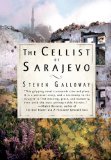
For supplemental discussion material see our Beyond the Book article, Bosnia and the Siege of Sarajevo and our BookBrowse Review of The Cellist of Sarajevo.
Please be aware that this discussion guide will contain spoilers!
Introduction
One of the
Washington Post's Best Books of 2008.
The Cellist of Sarajevo is a gripping portrait of a city under siege,
the small acts of humanity that come to renew it, and from the ashes, the
rising, redemptive grace notes of one musician.
After witnessing a shelling that takes the lives of twenty-two civilians
outside his window, a man decides he will play at the site of the attack for
twenty-two days in tribute, to mark their deaths in a city bombarded
relentlessly by surprise attacks and sniper fire.
Elsewhere in the city, a young man leaves home to gather clean drinking water
for his family—a perilous mission that forces him to weigh the value of
generosity against selfish survivalism.
A third man, older, sets out in search of bread and distraction, and instead
runs into a friend from the past who reminds him of the city he has lost, and
the man he once was.
As each is drawn into the web and center of the mournful adagio, a female
sniper holds the fate of the cellist in her hands. While she protects him with
her life, her own army prepares to challenge the kind of person she has become.
A novel of great intensity and power,
The Cellist of Sarajevo is a
testament to the endurance of the spirit and the subtle ways individuals reclaim
their humanity in a time of war.
Discussion Questions
- What effect does the constant confrontation of war and occupation have
on each narrator? Does suffering, violence and loss ever become normalized
for them? What is it like to live in this kind of anarchy—especially when
symbols of peace and power have been extinguished (the eternal flame from
WWII, the Kosovo Olympic stadium now used as a burial ground)? And what does
it mean to have the color, beauty, and vibrancy of music and flowers (left
behind for the cellist) introduced?
- How has life changed in the city since the arrival of the men on the
hills? What resources, both physical and mental, are the four characters in
the book using to help them survive? What is involved in day-to-day living?
How would you fare under these same conditions—and what would be your
greatest challenges?
- Each chapter in the novel is told through the lens of one of the four
main characters (including the cellist) in the story. How does this strategy
color our reading? How might our experience be different if told in first
person? If it were told in a more journalistic way?
📖
Get the full reading guide
Join BookBrowse free to unlock all 13 discussion questions, author background, themes, and more for The Cellist of Sarajevo.
Join free — it takes 30 seconds
Already a member? Log in →
- How does the author develop themes of identity and belonging throughout the narrative?
- What role does the setting play in shaping the characters' decisions and relationships?
- Discuss how the ending reframes the events of the story. Were you surprised?
Unless otherwise stated, this discussion guide is reprinted with the permission of Riverhead Books.
Any page references refer to a USA edition of the book, usually the trade paperback version, and may vary in other editions.

 Book Reviewed by: