return to home  
Join   |  Gift   |  Member Login   |  Library Login
BookBrowse Mobile
Follow Us: 
   Reading Guides

The Brief Wondrous Life of Oscar Wao by Junot Diaz: Questions, plus a reading group guide, with links to reviews, excerpt, author interview and author biography at BookBrowse.com.

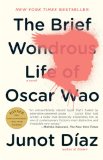
The Brief Wondrous Life of Oscar Wao

The Brief Wondrous Life of Oscar Wao
A Novel
by Junot Diaz
Hardcover: Sep 2007,
352 pages.
Paperback: Sep 2008,
352 pages.

Publication information
First book/First Novel


Author Information
Critics' Opinion:   
Readers' Rating:  
About BookBrowse Rankings
Share: 
Buy This Book

Reading Guide Questions

 Printer Friendly Guide

Please be aware that this discussion guide may contain spoilers!

Introduction

Winner of the Pulitzer Prize for fiction, The Brief Wondrous Life of Oscar Wao tells the story of Oscar, a sweet but disastrously overweight ghetto nerd, a New Jersey romantic who dreams of becoming the Dominican J. R. R. Tolkien and, most of all, of finding love. But he may never get what he wants, thanks to the fukú—the ancient curse that has haunted Oscar's family for generations, dooming them to prison, torture, tragic accidents, and ill-starred romance. Oscar, still dreaming of his first kiss, is only its most recent victim—until the fateful summer that he decides to be its last.

With dazzling energy and insight, Junot Díaz immerses us in the uproarious lives of our hero Oscar, his runaway sister Lola, and their ferocious mother Belicia, and in the family's epic journey from Santo Domingo to New York City's Washington Heights to New Jersey's Bergenline and back again. Rendered with uncommon warmth and humor, The Brief Wondrous Life of Oscar Wao presents an astonishing vision of the contemporary American experience and the endless human capacity to persevere—and to risk it all—in the name of love.

A true literary triumph, this novel confirms Junot Díaz as one of the best and most exciting writers of our time.


Discussion Questions

  1. Throughout the novel, Spanish words and phrases appear unaccompanied by their English translations. What is the effect of this seamless blending of Spanish and English? How would the novel have been different if Díaz had stopped to provide English translations at every turn? Why does Díaz not italicize the Spanish words (the way foreign words are usually italicized in English-language text)?

     
  2. The book centers on the story of Oscar and his family—and yet the majority of the book is narrated by Yunior, who is not part of the family, and only plays a relatively minor role in the events of the story. Yunior even calls himself "The Watcher," underscoring his outsider status in the story. What is the effect of having a relative outsider tell the story of Oscar and his family, rather than having someone in the family tell it? And why do you think Díaz waits for so long at the beginning of the book to reveal who the narrator is?
     
     
  3. Díaz, in the voice of the narrator, often employs footnotes to explain the history or context of a certain passage or sentence in the main text. Why do you think he chose to convey historical facts and anecdotes in footnote form? How would the novel have read differently if the content of the footnotes had been integrated into the main text? What if the footnotes (and the information in them) had been eliminated altogether? 

     
  4. In many ways, Yunior and Oscar are polar opposites. While Yunior can get as many women as he wants, he seems to have little capacity for fidelity or true love. Oscar, by contrast, holds love above all else—and yet cannot find a girlfriend no matter how hard he tries. Is it fair to say that Yunior is Oscar's foil—underscoring everything Oscar is not—and vice versa? Or are they actually more alike than they seem on the surface? 

     
  5. The narrator says "Dominicans are Caribbean and therefore have an extraordinary tolerance for extreme phenomena. How else could we have survived what we survived?" (p. 149). What does he mean by that? Could Oscar's obsession with science fiction and the "speculative genres" be seen as a kind of extension of his ancestors' belief in "extreme phenomena"? Was that his method of coping? 

     
  6. Yunior characterizes himself as a super macho, womanizing jock-type—and yet in narrating the book, his writing is riddled with reference to nerdy topics like the Fantastic Four and Lord of the Rings. In other words, there seems to be a schism between Yunior the character and Yunior the writer. Why do you think that is? What could Díaz be trying to say by making Yunior's character so seemingly contradictory? 

     
  7. For Oscar, his obsession with fantasy and science fiction becomes isolating, separating him from his peers so much so that he almost cannot communicate with them—as if he speaks a different language (and at one point he actually speaks in Elvish). How are other characters in the book—for instance, Belicia growing up in the Dominican Republic, or Abelard under the dictatorship of Trujillo, similarly isolated? And how are their forms of isolation different? 

     
  8. We know from the start that Oscar is destined to die in the course of the book—the title suggests as much, and there are references to his death throughout the book ("Mister. Later [Lola would] want to put that on his gravestone but no one would let her, not even me." (p. 36)). Why do you think Díaz chose to reveal this from the start? How does Díaz manage to create suspense and hold the reader's attention even though we already know the final outcome for Oscar? Did it actually make the book more suspenseful, knowing that Oscar was going to die? 

     
  9. In one of the footnotes the narrator posits that writers and dictators are not simply natural antagonists, as Salman Rushdie has said, but are actually in competition with one another because they are essentially in the same business (p. 97). What does he mean by that? How can a writer be a kind of dictator? Is the telling of a story somehow inherently tyrannical? Do you think Díaz actually believes that he is in some way comparable to Trujillo? If so, does Díaz try to avoid or subvert that in any way? 

     
  10. The author, the primary narrator, and the protagonist of the book are all male, but some of the strongest characters and voices in the book (La Inca, Belicia, Lola) are female. Who do you think makes the strongest, boldest decisions in the book? Given the machismo and swagger of the narrative voice, how does the author express the strength of the female characters? Do you think there is an intentional comment in the contrast between that masculine voice and the strong female characters? 

     
  11. There are a few chapters in the book in which Lola takes over the narration and tells her story in her own words. Why do you think it is important to the novel to let Lola have a chance to speak for herself? Do you think Díaz is as successful in creating a female narrative voice as he is the male one?

     
  12. How much of her own story do you think Belicia shared with her children? How much do you think Belicia knew about her father Abelard's story? 

     
  13. The image of a mongoose with golden eyes and the a man without a face appear at critical moments and to various characters throughout the book. What do these images represent? Why do you think Díaz chose these images in particular? When they do appear, do you think you are supposed to take them literally? For instance, did you believe that a mongoose appeared to Belicia and spoke to her? Did she believe it? 

     
  14. While Oscar's story is central to the novel, the book is not told in his voice, and there are many chapters in which Oscar does not figure at all, and others in which he only plays a fairly minor role. Who do you consider the true protagonist of the novel? Oscar? Yunior? Belicia? The entire de Leon and Cabral family? The fukú? 

     
  15. Oscar is very far from the traditional model of a "hero." Other characters in the book are more traditionally heroic, making bold decisions on behalf of others to protect them—for instance, La Inca rescuing young Belicia, or Abelard trying to protect his daughters. In the end, do you think Oscar is heroic or foolish? And are those other characters—La Inca, Abelard—more or less heroic than Oscar? 

     
  16. During the course of the book, many of the characters try to teach Oscar many things—especially Yunior, who tries to teach him how to lose weight, how to attract women, how to behave in social situations. Do any characters not try to teach Oscar anything, and just accept him as who he is? How much does Oscar actually learn from anyone? And in the end, what does Oscar teach Yunior, and the other characters if anything?


Unless otherwise stated, this discussion guide is reprinted with the permission of Riverhead Books. Any page references refer to a USA edition of the book, usually the trade paperback version, and may vary in other editions.

Become a Member
Click Here
Editor's Choice
  •  May 21 
  •  May 20 
  •  May 18 
Helga's Diary
Helga Weiss

Helga's Diary Jacket

The remarkable diary of a young girl who survived the Holocaust—appearing in English for the first time.
Fever
Mary Beth Keane

Fever Jacket

A bold, mesmerizing novel about the woman known as "Typhoid Mary," the first known healthy carrier of typhoid fever in the burgeoning metropolis of early twentieth century New York.
The Woman Upstairs
Claire Messud

The Woman Upstairs Jacket

The riveting confession of a woman awakened, transformed, and betrayed by passion and desire for a world beyond her own.
Click Here
   Most Recent Blog Entries
Movies Based on Books: Summer 2013 (May - August)
Jewish Young Adult Books That Are Not About The Holocaust
Books to Give This Mother's Day
rss  RSS   rss  subscribe
Recent Reader Reviews
Z: A Novel of Zelda Fitzgerald by Therese Fowler
Z, the novel about the life of Zelda Sayre Fitzgerald is at points charming and; like another reviewer, I kept thinking of the movie, "Midnight... read more
Flight Behavior by Barbara Kingsolver
Although heavy on the scientific details, which slowed down the story for me (OK, I admit, I was one of those liberal arts majors who skipped out on... read more
The House at the End of Hope Street by Menna van Praag
Loved this book. Magical, quirky, enchanting I could go on. All books do not have to be literary fiction, sometimes it is just so comforting to read... read more
RSS RSS feed More...  
Most Viewed This Week
1. Half the Sky
Nicholas D. Kristof, Sheryl WuDunn
2. A Child Called It
Dave Pelzer
3. And the Mountains Echoed
Khaled Hosseini
4. Defending Jacob
William Landay
5. Into The Wild
Jon Krakauer
More...
Book Club Recommendations
Why Be Happy When You Could Be Normal?
by Jeanette Winterson
Paperback (Mar/13)
Eleanor & Park
by Rainbow Rowell
Hardback (Feb/13)
The House Girl
by Tara Conklin
Paperback (Oct/13)
The Painted Girls
by Cathy Marie Buchanan
Hardback (Jan/13)
More...
First Impressions
Members read and review books often months before they're published. See what they think in First Impressions!
The Sisterhood
by Helen Bryan
Four Stars            (Apr/13)
The Last Girl
by Jane Casey
Four Stars            (May/13)
Golden Boy
by Abigail Tarttelin
4.5 Stars            (May/13)
The Caretaker
by A .X. Ahmad
Four Stars            (May/13)
More...
  Latest BookBrowse News
British Parliament asks Amazon to clarify why it pays $9 million in income tax on $23 billion of UK sales. (May 20 2013)
Amazon will be called back to give further evidence to members of the British Parliament "to clarify how its activities in the U.K. justify its low corporate... Full Story
rss RSS feed More...
 
BookBrowse Poll
Q: Which of these Summer movies based on books would you like to see? (Info on each movie here)
The Great Gatsby
Epic
Man of Steel
World War Z
The Lone Ranger
The Wolverine
R.I.P.D.
Percy Jackson
Paranoia
The Mortal Instruments
Select Any That Apply
Search: Title or Author
Free Newsletters
The Light Between Oceans

Online Book Club
More about
The Comfort of Lies
Join the discussion!


Win This Book!
On Sal Mal Lane


"Piercingly intelligent and shatter-your-heart profound."

Enter To Win Now!

wordplay
Solve this clue:
"I Y N P O T Solution, Y P O T P"

and be entered
to win....
frame top
New Author
Interviews
Menna van Praag
Erica Brown
Helga Weiss
Kate Morton
frame bottom
HOME Book Submissions | Advertising | Library Subscriptions | Reviewing for BookBrowse | Contact Us