return to home  
Join   |  Gift   |  Member Login   |  Library Login
BookBrowse Mobile
Follow Us: 
   Reading Guides

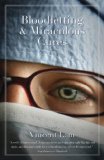
Bloodletting & Miraculous Cures by Vincent Lam: Questions, plus a reading group guide, with links to reviews, excerpt, author interview and author biography at BookBrowse.com.

Bloodletting & Miraculous Cures

Bloodletting & Miraculous Cures
Stories
by Vincent Lam
Hardcover: Sep 2007,
362 pages.
Paperback: Sep 2008,
362 pages.

Publication information
First book/First Novel


Author Information
Critics' Opinion:   
Readers' Rating:  
About BookBrowse Rankings
Share: 
Buy This Book

Reading Guide Questions

 Printer Friendly Guide

Please be aware that this discussion guide may contain spoilers!

  1. In this book, it might not seem that medical school is designed to foster individualism. When are there moments in which the doctors, the professionals, reveal their personal self?
  2. What events root these stories in a particular time? Do you see references to outside news? What about SARS? Does the intense focus of the stories capture the funneled lives of physicians, especially in the E.R. and obstetrics?
  3. What does it mean to be Chinese in Bloodletting & Miraculous Cures? Is it even relevant most of the time? The characters are doctors and people with little sense of their immigrant background. However, when are the few times that being Chinese is made explicit?
  4. In "Take All of Murphy," the anatomy demonstrator tells the medical students, "This fine cadaver is your first patient. Dignity and decorum are crucial. You must be mindful of this gift you are given, and treat your patient nobly" (p. 34). These bodies are volunteers, not body-snatched or "people from the jails or found dead in fights or ditches" (p. 36) as for earlier generations of anatomy students. How do Ming's and Sri's attitudes in this class differ? Why does Sri say, "You should respect a man's symbols" (p. 43)?
  5. Why do you think the Mark 16 segment is part of the "Murphy" story? What other links between religion and medicine do you see in the book? The author, Vincent Lam, has said that "medicine and narrative and spirituality intersect"; presumably, he means in his writing as well as in his life. The proposed baptism of Yeh Yeh in "A Long Migration" is one explicit infusion of religion. See pages 109 and 116 for marvelous passages about this old reprobate weighing the odds of a deathbed conversion. Otherwise do you find it a secular society the doctors inhabit?
  6. Much of the book is about initiation. Is it the reader's initiation as well as the doctors' in this no-holds-barred odyssey into the world of medicine?
  7. Lam is a highly skilled storyteller. How would you describe his writing style? What are the methods he uses to interweave horrific events with small human moments, balancing despair and love, grimness and humor? In "Eli" there is a surreal duet of doctor and patient, both shouting at once, neither, of course, listening (see p. 171). How is that passage a microcosm of the story as a whole? Another effective device Lam uses is the silent response, revealing the thoughts of doctors as they deal with patients. Look at "Afterwards" for Sri's internal dialogue. In another story, "An Insistent Tide," why is Janice vacillating between the beach and her baby's delivery? Dreams, laughing gas, extraordinary pain—how are these ideas connected in Lam's experimental prose?
  8. Several of Lam's stories are so rich that they could be novels in themselves. Which ones would you put in this category? Perhaps "Night Flight"? "Winston"? "How to Get into Medical School, Part II"? Does Fitzgerald's obsession with Ming take on a clinical life of its own? "For months now, Fitzgerald's mind had alternated between studying and allowing his speculations to spin like wheels stuck in a rutted path of Ming and medicine, digging the tracks deeper and deeper" (p. 67). This story includes the apocalyptic bike accident when Fitzgerald is sure he is about to die. Does the reader feel Fitz is spared for something else?
  9. Further in the same story, in his med school interview, ". . . McCarthy asked him what quality he felt was most important in a physician. Trust is most crucial, said Fitzgerald" (p. 73). How is this statement ironic, juxtaposed with the Karl-Fitz event that follows? What is the poetic justice in Fitz's elevator confrontation with Karl? Is this the end of their story? What is the flick of the serpent's tail in Karl's last warning (p. 75)?
  10. How does the absolute end of the Ming-Fitzgerald drama provide one of the moments of grace in the book? "He closed his eyes, and the sun was still bright through his eyelids. . . . His eyes were still closed and Fitzgerald could hear the sprinklers come to life closer and closer to him. He lay on his back and waited for them to swing around and spatter him with cool water" (p. 88). Are there other clear, cleansing moments later for Fitzgerald that are not fueled by alcohol?
  11. Writer Joyce Carol Oates says, "Tragedy always upholds the human spirit because it is an exploration of human nature in terms of its strengths. One simply cannot know strengths unless suffering, misfortune, and violence are explored quite frankly by the writer." Does this concept help us understand the characters and events in Bloodletting & Miraculous Cures? Discuss how some of the patients, doctors, and survivors emerge from suffering and violence.
  12. One of the most provocative stories is "Winston." Is this psycho-mystery resolved at the end? Or does it metamorphose into a new level? Sri says, about Winston, "His thought process is at times tangential" (p. 124). Is the whole story tangential? A kind of circular nonreasoning? Dr. Miniadis is a tour de force, a loony-perverse representative of the "sane." Are you reminded of the 1966 French film "King of Hearts" or "One Flew over the Cuckoo's Nest"? Dr. Miniadis says to Sri, "This is the dilemma, to build a rapport, to allow the legitimacy of experience, but never to speak of what is NOT real as if it were" (p. 126). Is the Halloween party a real Saturnalian blowout? Or does Winston imagine it all? Why is Winston listening in on his upstairs neighbors through a grate on his own floor?
  13. Lam's glossary at the end defines psychosis as a mental disturbance in which the patient loses contact with reality. Starting with Dr. Miniadis, wearing her earphones, listening to Smetana, and beaming manically at her student-doctor, we wonder at her exhortation, "Drink it in! Take full advantage of this educational opportunity" (p. 125). What does Sri make of her term of art, "counter-transference"? Earlier, Sri has said, "Some think of illness as a kind of poison" (p. 121). How does this image pervade his visit to Adrienne? Does it suggest Ionesco and Beckett and the Comedy of the Absurd?
  14. How is "Eli" a terrifying story on many levels? The emergency room has never been more vivid: "The crying of the child, the belligerence of drunkenness, the thin whine of a failed suicide. The noise and presence fills the waiting room, a condensation of the city's private screaming made public" (p. 165). How do we feel about Fitzgerald's complicity with the police? (". . . the game: You do your thing and we'll do ours…cops and robbers and doctors" p. 167). What about his acts of revenge against both patient and officers? Is there enough moral reprehensibility to go around? "Benevolence and cruelty are separated only by a veneer of whim which, in medicine, we understand" (p. 168). Do we see all three sides— patient, police, doctor—reaching a lowest common denominator?
  15. "The evil of blood is like a malevolent thought. Once it touches, the very suspicion of its presence causes it to grow, to distort motive and action, and to propagate its own dark, spreading reach" (p. 181). How do these words invoke the menace of the story "Eli"? What shocking actions succeed this quotation? Are we at all sympathetic? How do you react to the last line, "I didn't look to see the faces of the officers in that car" (p. 186)?
  16. "Afterwards" is a Rashomon story, told from multiple points of view. The vee-fib victim, Mr. Wilhelm, was a sedentary, smoking diabetic. "Sri always felt relief to learn that a deceased person's end was predicted by his life. It made it a happens-to-someone-else event, a bound–to-happen circumstance. There was less to explain, or understand" (p. 192). Does this attitude correlate with what else you know about Sri? Whose are the other points of view in the story?
  17. In "Afterwards," as in some of the other stories, the line is thin between farce and tragedy. Is this the nature of the human condition? What are some of these moments? The prostitute too otherwise engaged to hear the inspectors enter? Mrs. Wilhelm clutching the old fedora? The debate about the nature of "the parlor"? "There is a back room. For ten years your father hasn't touched me. Said it was his diabetes, that he couldn't do it" (p. 197). Where else has Lam widened his scope, giving us the story behind the story?


Unless otherwise stated, this discussion guide is reprinted with the permission of Weinstein Books. Any page references refer to a USA edition of the book, usually the trade paperback version, and may vary in other editions.

Become a Member
Click Here
Editor's Choice
  •  Jun 19 
  •  Jun 17 
  •  Jun 15 
If You Find Me
Emily Murdoch

If You Find Me Jacket

There are some things you can't leave behind…
Americanah
Chimamanda Ngozi Adichie

Americanah Jacket

Fearless, gripping, at once darkly funny and tender, spanning three continents and numerous lives, Americanah is a richly told story set in today's globalized world.
We Are All Completely Beside Ourselves
Karen Joy Fowler

We Are All Completely Beside Ourselves Jacket

The story of an American family, middle class in middle America, ordinary in every way but one. But that exception is the beating heart of this extraordinary novel.
The Expats by Chris Pavone
   Most Recent Blog Entries
Top Ten Guidelines For How to Behave in a Book Club
Movies Based on Books: Summer 2013 (May - August)
Jewish Themed Young Adult Books, Not About The Holocaust
rss  RSS   rss  subscribe
Recent Reader Reviews
In the Shadow of the Banyan by Vaddey Ratner
First time novelist Vaddey Ratner captured my heart and senses in this novel based on her childhood in Cambodia. Her story transcends any news story... read more
In the Shadow of the Banyan by Vaddey Ratner
From the first page, I was drawn in by the lyrical writing of the author and mesmerized as the narrator, eight year old Raami, remembered the years... read more
TransAtlantic by Colum McCann
Trite but true, all good things must come to an end. I so wanted to keep reading the wonderful prose, the settings that let one think they are part... read more
RSS RSS feed More...  
Most Viewed This Week
1. Coraline
Neil Gaiman
2. Memoirs of a Geisha
Arthur Golden
3. The Glass Castle
Jeannette Walls
4. The Immortal Life of Henrietta Lacks
Rebecca Skloot
5. Behind the Beautiful Forevers
Katherine Boo
More...
Book Club Recommendations
Where'd You Go, Bernadette
by Maria Semple
Paperback (Apr/13)
The Unlikely Pilgrimage of Harold Fry
by Rachel Joyce
Paperback (Mar/13)
The Unchangeable Spots of Leopards
by Kristopher Jansma
Hardback (Mar/13)
How to Get Filthy Rich in Rising Asia
by Mohsin Hamid
Hardback (Mar/13)
More...
First Impressions
Members read and review books often months before they're published. See what they think in First Impressions!
Children of the Jacaranda Tree
by Sahar Delijani
4.5 Stars            (Jun/13)
Crime of Privilege
by Walter Walker
Four Stars            (Jun/13)
Her Last Breath
by Linda Castillo
4.5 Stars            (Jun/13)
More...
  Latest BookBrowse News
Kenn Nesbitt is new Children's Poet Laureate (Jun 12 2013)
Kenn Nesbitt has been named the new Children's Poet Laureate: Consultant in Children's Poetry to the Poetry Foundation, which noted that the two-year position... Full Story
rss RSS feed More...
 
BookBrowse Poll
Q: We've been discussing guidelines for book club etiquette. Which of these do you think are important?
Read the book
Listen thoughtfully to all members
Take notes while you're reading
Stay on topic when you're speaking
Enjoy yourself
Don’t get drunk
Bring chocolate, everyone likes chocolate!
Eat before you come so you don’t devour the snacks
Compliment others sincerely
Have a good sense of humor
Don’t fret the small stuff
Search: Title or Author
Free Newsletters

Online Book Club
More about
The Execution of Noa P. Singleton
Join the discussion!


Win This Book!
You Only Get Letters From Jail


one of the finest and truest collections of 'American' short stories I have ever read

Enter To Win Now!

wordplay
Solve this clue:
"T M T C, T M T Stay T S"

and be entered
to win....
frame top
New Author
Interviews
Carol Rifka Brunt
Kent Wascom
Jennifer McVeigh
Elizabeth Becker
frame bottom
HOME Book Submissions | Advertising | Library Subscriptions | Reviewing for BookBrowse | Contact Us