Reading Guide Questions

Please be aware that this discussion guide will contain spoilers!
Discussion Questions:-
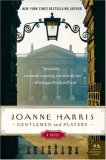
The favorite book of the young Snyde is The Invisible Man. Poe's law is also quoted: “The object that is hidden in plain sight remains unseen longest.” Through childhood and into adulthood, how does Snyde, in fact, become invisible?
-
Early in the novel, young Snyde says, "I felt cheated, as I often did when faced with the threat and assurances of the adult world, which promises so much and delivers so little." What does this say about the character? Give some examples of ways in which the adult world has cheated Snyde. Which do you feel has the longest lasting impact on Snyde as an adolescent? As an adult?
-
Throughout the novel, Snyde remembers days as a student in Sunnybank Park—and the desire then to be a student at St. Oswald's. What do you believe would have happened had Snyde been enrolled at St. Oswald's as a student? Would such a student have thrived academically? Been accepted socially? How might things have played out differently, if at all?
-
While at Sunnybank Park, Snyde had a young student teacher, Miss Potts, who "liked to be popular-to be important." She goes about this by taking an active interest in her students and especially their problems-things the older teachers do not notice. She realizes something is wrong with Snyde. How might things have been different if there had been more teachers who took notice of the pupils' problems early on?
-
"Fallow offends me," Snyde says of St. Oswald's current day groundskeeper. It is not the occupation that offends Snyde, but how Fallow executes his tasks: sluggish, ignoring his duties, not taking pride in his work. The exact opposite of the way Snyde's father worked. What does this contempt of Fallow say about young Snyde's filial feelings?
-
Snyde says of Anderton-Pullitt: "there is one of his kind in every year. Shunned even beyond being bullied." Could Snyde be identifying with Anderton-Pullitt? Which student, if any, at St. Oswald's most resembles the young Snyde? Do any resemble Leon?
-
Early in his life, Snyde developed a feeling of entitlement for "that childhood. The one I deserved," a life of privilege. Where do you think the roots of these sentiments began?
-
"I can identify with a boy like Knight," Snyde says. "I was nothing like him-infinitely tougher, more vicious and more streetwise-but with money and better parents I might have turned out just the same." What does this say about Snyde's decision to use Knight-of all boys-in the plan to destroy St. Oswald's? Is it because Knight is weak or because Knight is a reminder of who Snyde could have been?
-
Straightly comments on how "St. Oswald's has a way of eating those things. The energy; the ambition; the dreams" of its faculty. In light of this, or perhaps in spite of it, Straitley's goal in life is clear: to reach his Century and retire with honor. Why do you suppose this is so important to him?
-
A continual theme throughout the novel is nature vs. nurture. Do you believe a person is born evil or do the circumstances of that person's upbringing cause these traits? When talking about Leon, Straitley seems to believe some kids are just born bad. How is this different from Snyde's belief?
Unless otherwise stated, this discussion guide is reprinted with the permission of Harper Perennial.
Any page references refer to a USA edition of the book, usually the trade paperback version, and may vary in other editions.
 Book Reviewed by: