Reading Guide Questions

Please be aware that this discussion guide will contain spoilers!
- What stylistic differences separate the sections of the novel
set in the 1700s and those set in the present?
- Is this a particularly English story, or could the novel be just
as naturally set in the United States? Why or why not?
- Each major character in the novel experiences the intersection
of discovery, science, and "the vagaries of chance" (p. 374). Joseph
Banks "came to realize later that discovery was not a science" (p.
16). Mary Burnett "did not expect to be noticed. Discovery is not a
science; there is too much chance in it" (p. 17). And Fitz believes
that "the discovery of most things comes down to luck. People often
feel uncomfortable about that. They want discovery to be driven by
something more meaningful than coincidence" (p. 333). Is the author
using scientific discovery as a metaphor here? What various personal
discoveries are made in the course of the story and how much do they
depend on random chance?
- How would you describe Joseph Banks’s character? Is his fury at
Mary’s departure reasonable, despite the fact that the entire plot
is his idea and she only leaves one day prior to the agreed-upon
departure date? Does the following passage suggest that he never
believed she would actually do it: "By running off ahead of him she
had placed him in an impossible position, and as a result he had
been forced to give up his greatest adventure. If he had sailed with
Cook, he reasoned, all would be well. But her rashness had made it
impossible. It was intolerable, and it was not of his making" (p.
298)? Why does the author include the section about Banks’s
equanimity with "the smiling brown people of the southern seas" (p.
102)?
- What does Potts hope to gain by sending the Martha Ainsby letter
to Fitz? What simple trick makes the letter so misleading?
- What does it reveal about Mary that "as she watched her father
edging toward ruin, she was aware of her love for him like a
sharpening pain. The more fallible he revealed himself to be, the
more she loved him" (p. 148) and "she watched him slowly breaking
down, and the pain of her love for him grew sharper. She knew she
would accept any suffering for his sake…" (p. 152). Is this brand of
love naïve or generous? How does her love for Banks compare to her
love for her father?
- Is Banks in love with Mary? Or is he really in love with his
work?
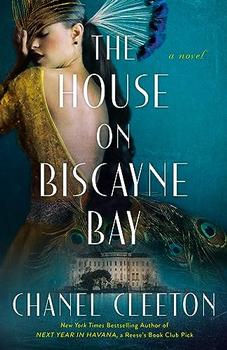
- Fitz traces his grandfather’s notorious quest for an elusive
African peacock as a parallel story to his own. What do the two
tales have in common? How does Fitz find hope in his grandfather’s
story despite its tragic underpinnings?
- Fitz notes the irony inherent in our society’s neurotic
recording of ephemera: "We live in a society that is strangely
superstitious about written records. Even while we’re content to
countenance the tearing down of rain forests and the destruction of
countless unknown organisms every day, we hold on grimly to our
documents and papers. Few of us are immune to this" (pp. 164—65). Do
you agree with his assessment? What benefits to nature, if any, does
this ruthless recording offer?
- After being ensconced at Richmond, why does Mary go out of her
way to remind Joseph that she "is no longer what they call a maiden"
(p. 176)?
- What "unwonted clarity" accompanies Fitz’s anger after his
bedroom is ransacked (p. 193)? What does he do with this revelation?
- The mystery of Fitz’s personal tragedy and the mystery of Mary
Burnett’s disappearance are each revealed to hinge on a child. How?
Why, in each case, does the issue involving the child throw the
romantic relationship off kilter? Did this bridge between the
historical and the modern stories surprise you?
- Can Fitz’s final hoax, designed to put Potts and Anderson out of
their misery, be construed as ethical in any way?
Unless otherwise stated, this discussion guide is reprinted with the permission of Three Rivers.
Any page references refer to a USA edition of the book, usually the trade paperback version, and may vary in other editions.

 Book Reviewed by: