Reading Guide Questions

Please be aware that this discussion guide will contain spoilers!
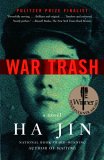
About This Book
When Yu
Yuan, a seventy-three-year-old Chinese man, visits his son and
grandchildren in America he writes a memoir to leave as a legacy for
them.
War Trash is that memoir: it describes the time he spent as
a Communist "volunteer" soldier in the Korean War. He assumed he would
be fending off American and South Korean attacks on the Manchurian
border, but he ends up crossing the Yalu River, suffering starvation and
exposure in an under-supplied army, being gravely wounded by an American
grenade, and then being captured and held in POW camps in South Korea.
Yu Yuan is a quiet man, an intellectual who learned English from a
missionary in his home village. His skill serves him well in prison, as
he is a valued interpreter for the Chinese political leaders and their
American captors. Because he had spent time in the Nationalist military
academy before Mao's rise to power in 1949, his loyalty to the new
Communist China is in question. In the prison camps, the Americans favor
the pro- Nationalist forces loyal to Chiang Kai-shek, who receive far
better food and shelter. While living conditions for the pro-Communist
prisoners are appalling, what they dread most are the "screenings" in
which they will be asked to choose between returning to their homes and
families in Communist China, or being sent to Taiwan. The choice is not
simple: soldiers in Mao's army have been ordered never to surrender, and
death and suicide are considered more honorable than being captured, so
the prisoners face certain shame and punishment if they return home. Yu
Yuan wants to go home at all costs—he is the only child of a widowed
mother and has left his beloved fiancée Julan behind.
Yet by the end of this extraordinary tale—and three years of
captivity—Yuan's whole perspective on his life and his attachments has
changed, and he learns that in more ways than one, he can never go home
again.
Discussion Questions
- The novel
opens with Yuan's description of his tattoo and his plan to have it
removed. He is writing his story, he says, in order that his children
and grandchildren may read it and "feel the full weight of the tattoo on
my belly" [p. 5]. What has it meant, for Yuan, to have his body marked
with political slogans? How is the writing of his memoir related to the
removal of his tattoo?
- Yuan wants his grandson to become a doctor
and wishes he himself had been one: "If I were born again, I would study
medical science devotedly... . Doctors and nurses follow a different
set of ethics, which enables them to transcend political nonsense and
man-made enmity and to act with compassion and human decency" [p. 5]. Is
Yuan's reverence for doctors largely a tribute to Dr. Greene, who
operated on his injured leg? What does the statement suggest about
Yuan's feelings about his life as an English teacher?
- War Trash is narrated entirely in the first person by the
novel's protagonist. How effective is the narrative voice in adding
realism to the story? Do you agree with Russell Banks, who wrote, "You
have to keep reminding yourself that this is a work of fiction and not
an actual memoir" [The New York Times Book Review, October
10, 2004]. How does the intimacy of the narrative affect your
preconceptions about the Korean War and its aftermath?
- Why do the pro-Nationalist soldiers hate the Communist soldiers so
much? Why do most of the prisoners hold on so fiercely to their
factional loyalties, particularly given their remoteness from the
ongoing drama of the war and the uncertainty of their fates upon
returning home? What do the uprising and the kidnapping of General Bell,
and later the battle over the flag at Cheju Island, tell us about the
energies of the prisoners?
- Yuan is an idealist, as Dr. Greene has pointed out [p. 54], and on Koje Island he observes the deterioration of his fellow prisoners as
they fight over food: "When led by the Communists, they had been good
soldiers and seemed high-minded and their lives had possessed a purpose,
but now they were on the verge of becoming animals. How low could an
ordinary man fall when he didn't serve a goal larger than himself?" [p.
69] Yet as time goes by, Yuan finds that those who rigidly devote
themselves to ideological causes also become less human. Does he
continue to believe in the idea of serving a goal larger than himself?
- In explaining why he has been instrumental in discriminating
against the Communist soldiers, Father Woodworth tells Yuan, "I'm not
just a clergyman but also a soldier. I came with both the book and the
sword" [p. 81]. Is it possible to be both a clergyman and a soldier? Why
does Yuan conclude, "My conversation with him upset me profoundly and
shattered my illusion that there might be shelter in God's bosom for
every person" [p. 81]?
- After Yuan's friend Ding Wanlin is tortured by the Americans, the
Communists suspect him of having given up information about Pei and kill
him. What is most painful to Yuan about Wanlin's death?
- When pro-Nationalist leader Wang tells Yuan that the Communists
"use men like ammo," he thinks, "[Wang's] words conjured up the horrible
image I hadn't been able to shake off—that the war was an enormous
furnace fed by the bodies of soldiers" [p. 76]. What events contribute
to Yuan's growing disillusionment with Commissar Pei and the Party
members? What is most unsettling about the ideological fervor of the
Communists?
- Yuan notes, "In the art of inflicting pain, the Chinese and the
Koreans were much more expert than the Americans" [p. 86], and he
describes their various methods. Yet he also describes the Americans'
use of the water jail in their torture of Commissar Pei [p. 85] and
recounts how "a GI shot a prisoner, a latrine man, who had accidentally
tripped and splattered a bucket of night soil onto the jeep the GI was
driving. The man bled to death before the ambulance came" [p. 245]. What
is the tone in which Yuan describes these acts of torture? What is the
experience of reading War Trash in the wake of events in Abu
Ghraib and Guantánamo?
- Wang tells Yuan that he seems like someone who will have "a great
career": "Why can't you go to Taiwan with us? Without an able man among
us, no one here will get anywhere, and again we'll be dumped to the
bottom of society" [pp. 96–97]. What is it about Yuan—aside from his
command of English—that seems to set him apart and makes all factions in
the prison, including the Americans, desire his loyalty?
- The pro-Nationalists tattoo Yuan and Dajian with anti-Communist
slogans, eviscerate a man before their eyes, and later force them at
knifepoint to declare their destination as Taiwan or have their tattoos
removed with a primitive knife. Yuan realizes that they had only
tattooed "those who would be valuable to them and those who were their
deadly enemies" [p. 111]. Having chosen Taiwan in his terror, Yuan
thinks, "Deep down, I wished I could have been as brave as a genuine
Communist, who, crazed and fanatic, viewed death without flinching" [p.
112]. What details contribute most powerfully to the horror of the
scenes on pages 101–12 in which the pro-Nationalists attempt to win
converts?
- What is the significance of Yuan's Bible reading, and why is the
loss of his Bible so difficult for him [p. 128]? How does the
Bible—particularly Ecclesiastes—influence Yuan's philosophical and
spiritual outlook on life [p. 317]?
- After the uprising, an American lieutenant expresses his anger
about the prisoners' having ruined General Bell's career: "He played
baseball with us. He's a powerful pitcher." Yuan replies, "I'm sorry for
him. Also for the hundreds of Koreans killed in Compound 76 and for the
villagers whose homes were burned down" [p. 192]. What does this
exchange tell us about the difference in sensibility between Yuan and
Lieutenant East? How do the Americans and their behavior come across in
Yuan's narrative?
- What kinds of resonance does the title War Trash carry,
particularly in view of the dignity of Yuan's narration? What are the
connotations of the words, and do they extend beyond prisoners like
Yuan?
- Why does Julan refuse to marry Yuan once he returns, given his
devotion to her? Is it possible, since the message comes from Julan's
brother, that her family has insisted that she refuse to see Yuan again?
Compare her brother's message [p. 344] with Yuan's memory of their last
night together, when Julan told him, "From this day on I'm your wife.
Remember, even if I'm dead, my ghost shall be with you" [p. 137].
- Russell Banks writes that while War Trash is a "powerfully
moving ... nearly perfect" novel, it is not an entertaining one: "Jin
does not wish to entertain but to inform and put his readers in a place
where most of us would choose not to linger... . Readers are likely to
finish War Trash feeling like they, too, have escaped this
terrible camp" [The New York Times Book Review, October
10, 2004]. How does the pace of the story contribute to this feeling of
being inside the novel? In forging so powerful a relationship between
the protagonist and the reader, what does Ha Jin achieve?
- If you have read other novels or memoirs in which ordinary people
bear witness to devastating historical events, how would you compare War Trash to them?
What does Yuan's story reveal about
history and ideological struggle? How effectively does the story convey
what it feels like to be used, punished, betrayed, or forgotten by one's
country?
- Ha Jin has said that War Trash will be his last book on
China; he wants to write about the immigrant experience and is working
on a novel set in America. How might the loss of home experienced by
Yuan and the other prisoners compare to the life of the writer in exile?
- How surprising is the fate the former prisoners face upon their
return to China? What is the effect of reading about the three
principles imposed upon the prisoners, the study sessions and the
denunciations they face? How would you define Yuan's philosophical
attitude as he arrives at the end of his story?
Suggested Reading
Susan Choi, The Foreign Student;
Fyodor Dostoevsky,
Memoirs from the House
of the Dead;
Sebastian Faulks, Birdsong;
Paul Fussell, The
Great War and Modern Memory;
Chang-rae Lee, A Gesture Life;
Nelson Mandela, Long Walk to Freedom;
Frank McGuiness,
Someone
Who'll Watch Over Me;
Marilynne Robinson, Gilead;
Dai Sijie,
Balzac and the Little Chinese Seamstress;
Aleksandr I.
Solzhenitsyn, The Gulag Archipelago: 1918–1956 and One
Day in the Life of Ivan Denisovich;
Billy Wilder, Stalag 17;
Tobias Wolff, In Pharaoh's Army.
See also Ha Jin's bibliography
[pp. 351–52].
Unless otherwise stated, this discussion guide is reprinted with the permission of Vintage.
Any page references refer to a USA edition of the book, usually the trade paperback version, and may vary in other editions.