return to home  
Join   |  Gift   |  Member Login   |  Library Login
BookBrowse Mobile
Follow Us: 
   Reading Guides

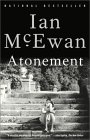
Atonement by Ian McEwan: Questions, plus a reading group guide, with links to reviews, excerpt, author interview and author biography at BookBrowse.com.

Atonement

Atonement
by Ian McEwan
Hardcover: Mar 2002,
448 pages.
Paperback: Feb 2003,
448 pages.

Publication information
Author Information
Critics' Opinion:   
Readers' Rating:  
About BookBrowse Rankings
Share: 
Buy This Book

Reading Guide Questions

 Printer Friendly Guide

Please be aware that this discussion guide may contain spoilers!

  1. What sort of social and cultural setting does the Tallis house create for the novel? What is the mood of the house, as described in chapter 12? What emotions and impulses are being acted upon or repressed by its inhabitants? How does the careful attention to detail affect the pace of Part One, and what is the effect of the acceleration of plot events as it nears its end?
  2. A passion for order, a lively imagination, and a desire for attention seem to be Briony’s strongest traits. In what ways is she still a child? Is her narcissism—her inability to see things from any point of view but her own—unusual in a thirteen-year-old? Why does the scene she witnesses at the fountain change her whole perspective on writing? What is the significance of the passage in which she realizes she needs to work from the idea that "other people are as real as you. And only in a story could you enter these different minds and show how they had an equal value" [p. 38]? Do her actions bear this out?
  3. What kind of a person is Emily Tallis? Why does McEwan decide not to have Jack Tallis make an appearance in the story? Who, if anyone, is the moral authority in this family? What is the parents’ relationship to Robbie Turner, and why does Emily pursue his conviction with such single-mindedness?
  4. What happens between Robbie and Cecilia at the fountain? What symbolic role does Uncle Clem’s precious vase play in the novel? Is it significant that the vase is glued together by Cecilia, and broken finally during the war by Betty as she readies the house to accept evacuees?
  5. Having read Robbie’s note to Cecilia, Briony thinks about its implications for her new idea of herself as a writer: "No more princesses! . . . With the letter, something elemental, brutal, perhaps even criminal had been introduced, some principle of darkness, and even in her excitement over the possibilities, she did not doubt that her sister was in some way threatened and would need her help" [pp. 106–7]. Why is Robbie’s uncensored letter so offensive within the social context in which it is read? Why is Cecilia not offended by it?
  6. The scene in the library is one of the most provocative and moving descriptions of sex in recent fiction. How does the fact that it is narrated from Robbie’s point of view affect how the reader feels about what happens to him shortly afterwards? Is it understandable that Briony, looking on, perceives this act of love as an act of violence?
  7. Why does Briony stick to her story with such unwavering commitment? Does she act entirely in error in a situation she is not old enough to understand, or does she act, in part, on an impulse of malice, revenge, or self-importance? At what point does she develop the empathy to realize what she has done to Cecilia and Robbie?
  8. How does Leon, with his life of "agreeable nullity" [p. 103], compare with Robbie in terms of honor, intelligence, and ambition? What are the qualities that make Robbie such an effective romantic hero? What are the ironies inherent in the comparative situations of the three young men present—Leon, Paul Marshall, and Robbie?
  9. Lola has a critical role in the story’s plot. What are her motivations? Why does she tell Briony that her brothers caused the marks on her wrists and arms [see pp. 109–13]? Why does she allow Briony to take over her story when she is attacked later in the evening [see pp. 153–60]? Why does Briony decide not to confront Lola and Paul Marshall at their wedding five years later?
  10. The novel’s epigraph is taken from Jane Austen’s Northanger Abbey, in which a naïve young woman, caught up in fantasies from the Gothic fiction she loves to read, imagines that her host in an English country house is a villain. In Austen’s novel Catherine Norland’s mistakes are comical and have no serious outcome, while in Atonement, Briony’s fantasies have tragic effects upon those around her. What is McEwan implying about the power of the imagination, and its potential for harm when unleashed into the social world? Is he suggesting, by extension, that Hitler’s pathological imagination was a driving force behind World War II?
  11. In McEwan’s earlier novel Black Dogs, one of the main characters comes to a realization about World War II. He thinks about "the recently concluded war not as a historical, geopolitical fact but as a multiplicity, a near-infinity of private sorrows, as a boundless grief minutely subdivided without diminishment among individuals who covered the continent like dust, like spores whose separate identities would remain unknown, and whose totality showed more sadness than anyone could ever begin to comprehend" [Black Dogs, p. 140]. Does McEwan intend his readers to experience the war similarly in Atonement? What aspects of Atonement make it so powerful as a war novel? What details heighten the emotional impact in the scenes of the Dunkirk retreat and Briony’s experience at the military hospital?
  12. When Robbie, Mace, and Nettle reach the beach at Dunkirk, they intervene in an attack on an RAF man who has become a scapegoat for the soldiers’ sense of betrayal and rage. As in many of his previous novels, McEwan is interested in aggressive human impulses that spin out of control. How does this act of group violence relate to the moral problems that war creates for soldiers, and the events Robbie feels guilty about as he falls asleep at Bray Dunes?
  13. About changing the fates of Robbie and Cecilia in her final version of the book, Briony says, "Who would want to believe that the young lovers never met again, never fulfilled their love? Who would want to believe that, except in the service of the bleakest realism?" [p. 350] McEwan’s Atonement has two endings—one in which the fantasy of love is fulfilled, and one in which that fantasy is stripped away. What is the emotional effect of this double ending? Is Briony right in thinking that "it isn’t weakness or evasion, but a final act of kindness, a stand against oblivion and despair, to let my lovers live and to unite them at the end" [p. 351]?
  14. Why does McEwan return to the novel’s opening with the long-delayed performance of The Trials of Arabella, Briony’s youthful contribution to the optimistic genre of Shakespearean comedy? What sort of closure is this in the context of Briony’s career? What is the significance of the fact that Briony is suffering from vascular dementia, which will result in the loss of her memory, and the loss of her identity?
  15. In her letters to Robbie, Cecilia quotes from W. H. Auden’s 1939 poem, "In Memory of W. B. Yeats," which includes the line, "Poetry makes nothing happen." In part, the novel explores the question of whether the writing of fiction is not much more than the construction of elaborate entertainments—an indulgence in imaginative play—or whether fiction can bear witness to life and to history, telling its own serious truths. Is Briony’s novel effective, in her own conscience, as an act of atonement? Does the completed novel compel the reader to forgive her?


Unless otherwise stated, this discussion guide is reprinted with the permission of Anchor Books. Any page references refer to a USA edition of the book, usually the trade paperback version, and may vary in other editions.

Become a Member
The Expats by Chris Pavone
Editor's Choice
  •  Jun 17 
  •  Jun 15 
  •  Jun 13 
Americanah
Chimamanda Ngozi Adichie

Americanah Jacket

Fearless, gripping, at once darkly funny and tender, spanning three continents and numerous lives, Americanah is a richly told story set in today's globalized world.
We Are All Completely Beside Ourselves
Karen Joy Fowler

We Are All Completely Beside Ourselves Jacket

The story of an American family, middle class in middle America, ordinary in every way but one. But that exception is the beating heart of this extraordinary novel.
TransAtlantic
Colum McCann

TransAtlantic Jacket

The most mature work yet from an incomparable storyteller, TransAtlantic is a profound meditation on identity and history in a wide world that grows somehow smaller and more wondrous with...
Click Here
   Most Recent Blog Entries
Top Ten Guidelines For How to Behave in a Book Club
Movies Based on Books: Summer 2013 (May - August)
Jewish Themed Young Adult Books, Not About The Holocaust
rss  RSS   rss  subscribe
Recent Reader Reviews
In the Shadow of the Banyan by Vaddey Ratner
First time novelist Vaddey Ratner captured my heart and senses in this novel based on her childhood in Cambodia. Her story transcends any news story... read more
In the Shadow of the Banyan by Vaddey Ratner
From the first page, I was drawn in by the lyrical writing of the author and mesmerized as the narrator, eight year old Raami, remembered the years... read more
TransAtlantic by Colum McCann
Trite but true, all good things must come to an end. I so wanted to keep reading the wonderful prose, the settings that let one think they are part... read more
RSS RSS feed More...  
Most Viewed This Week
1. Coraline
Neil Gaiman
2. Memoirs of a Geisha
Arthur Golden
3. The Glass Castle
Jeannette Walls
4. The Immortal Life of Henrietta Lacks
Rebecca Skloot
5. Behind the Beautiful Forevers
Katherine Boo
More...
Book Club Recommendations
A Monster Calls
by Siobhan Dowd, Patrick Ness
Paperback (Mar/13)
The End of the Point
by Elizabeth Graver
Paperback (Feb/14)
Out of The Easy
by Ruta Sepetys
Paperback (Feb/14)
Maggot Moon
by Sally Gardner
Hardback (Feb/13)
More...
First Impressions
Members read and review books often months before they're published. See what they think in First Impressions!
Her Last Breath
by Linda Castillo
4.5 Stars            (Jun/13)
Children of the Jacaranda Tree
by Sahar Delijani
4.5 Stars            (Jun/13)
Crime of Privilege
by Walter Walker
Four Stars            (Jun/13)
More...
  Latest BookBrowse News
Kenn Nesbitt is new Children's Poet Laureate (Jun 12 2013)
Kenn Nesbitt has been named the new Children's Poet Laureate: Consultant in Children's Poetry to the Poetry Foundation, which noted that the two-year position... Full Story
rss RSS feed More...
 
BookBrowse Poll
Q: We've been discussing guidelines for book club etiquette. Which of these do you think are important?
Read the book
Listen thoughtfully to all members
Take notes while you're reading
Stay on topic when you're speaking
Enjoy yourself
Don’t get drunk
Bring chocolate, everyone likes chocolate!
Eat before you come so you don’t devour the snacks
Compliment others sincerely
Have a good sense of humor
Don’t fret the small stuff
Search: Title or Author
Free Newsletters

Online Book Club
More about
The Execution of Noa P. Singleton
Join the discussion!


Win This Book!
You Only Get Letters From Jail


one of the finest and truest collections of 'American' short stories I have ever read

Enter To Win Now!

wordplay
Solve this clue:
"T M T C, T M T Stay T S"

and be entered
to win....
frame top
New Author
Interviews
Carol Rifka Brunt
Kent Wascom
Jennifer McVeigh
Elizabeth Becker
frame bottom
HOME Book Submissions | Advertising | Library Subscriptions | Reviewing for BookBrowse | Contact Us