Book Club Discussion Questions
Please be aware that this discussion guide will contain spoilers!
- Contemplating his divorce, Benedick describes his state of mind: "What
frightened me most was, I could no longer believe in my own life as a story.
Everyone needs a story, a part to play in order to avoid the realization that
life is without significance. How else do any of us survive? It's what makes
life bearable, even interesting. When it becomes neither, people say you've lost
the plot. Or just lost it" [p. 19]. At the end of the novel, when Benedick finds
acting work, he concludes: "It was this, I think, as much as the lithium, that
made me better. It meant that I hadn't been written out of the story of my life.
People say that life has no story, that to believe it does is a symptom of
madness, and I had thought this, too. But I knew I couldn't go on living without
some version of the truth. Every version has its blessing and it curse" [p.
301]. Is Benedick's statement that "everyone needs a story" just the artist
speaking, or is he expressing a universal truth? What is the story of Benedick's
life? What is his version of the truth and how does it evolve?
- How does each fairy tale that Benedick reads reveal more and more about
Laura's life and state of mind? What is the significance of the order of the
tales in North of Nowhere as read by Benedick throughout the novel? Why
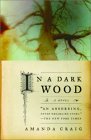
might Craig have chosen to name her novel for Laura's first book, In a Dark
Wood, when it is actually Laura's fairy tales in North of Nowhere
that structure the plot of the novel?
- Ruth tells Benedick: "If you read fairy tales carefully, you'll notice
they are mostly about people who aren't heroes. They don't have special powers,
or gifts. Often they are despised as stupid. They are bullied, beaten up,
robbed, starved. But they find they are stronger than their misfortunes" [p.
25]. Is Ruth correct? If so, can "The Wild Wood" [pp. 200—207] be accurately
characterized as a "fairy tale" or is it something else? How might the genre of
fairy tales be defined or explained? How do fairy tales compare to other
literary genres? Is it correct to assume that fairy tales are children's
literature, and, if so, why?
📖
Get the full reading guide
Join BookBrowse free to unlock all 15 discussion questions, author background, themes, and more for In A Dark Wood.
Join free — it takes 30 seconds
Already a member? Log in →
- How does the author develop themes of identity and belonging throughout the narrative?
- What role does the setting play in shaping the characters' decisions and relationships?
- Discuss how the ending reframes the events of the story. Were you surprised?
Unless otherwise stated, this discussion guide is reprinted with the permission of Anchor Books.
Any page references refer to a USA edition of the book, usually the trade paperback version, and may vary in other editions.