Please be aware that this discussion guide may contain spoilers!
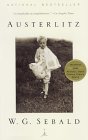
In what ways can Sebald's work be said to create a new genre? Do we
know whether to take Austerlitz as fact or fiction?
Why do you suppose Sebald incorporates photographs into his work? To
what effect?
Where does the name Jacques Austerlitz come from? Why do you think
Sebald chose it?
What is the relationship between past and present throughout the
book? What tricks does Sebald play with the passage of time? What does
Austerlitz have to say on his experience of time?
What sort of mood does Sebald's use of language create throughout
the novel? How does Sebald's language function in the same way that character
and plot do in a more traditional novel?
Some critics have called attention to Sebald's wan sense of
humora "low-key gallows humor." What examples of this humor can you find
in the book?
What type of architecture most appeals to Austerlitz? What do you
make of this fascination?
Various animals appear throughout the novel. What does the novel make
of the relationships between humans and other creatures, and between all
animalshumans includedand their environment? How do animals in the novel
orient themselves, and what does it mean, throughout, to become literally dis-oriented?
What does the novel have to say about the mind's defenses against
great trauma?
At the novel's end, Austerlitz tells the narrator of a Jewish
cemetery located just behind his house in London, behind a wall, whose existence
he'd only discovered during his last days in the city. How does the discovery
of the cemetery replicate Austerlitz's discovery of his heritage, and what
does this link suggest about the connection between physical artifacts and the
workings of memory? In what way could it be said that this cemetery's presence
in the novel honors the durability of the world of European Jewry that Nazi
Germany attempted to expunge?
Unless otherwise stated, this discussion guide is reprinted with the permission of Modern Library.
Any page references refer to a USA edition of the book, usually the trade paperback version, and may vary in other editions.
Fearless, gripping, at once darkly funny and tender, spanning three continents and numerous lives, Americanah is a richly told story set in today's globalized world.
The story of an American family, middle class in middle America, ordinary in every way but one. But that exception is the beating heart of this extraordinary novel.
First time novelist Vaddey Ratner captured my heart and senses in this novel based on her childhood in Cambodia. Her story transcends any news story...
read more
From the first page, I was drawn in by the lyrical writing of the author and mesmerized as the narrator, eight year old Raami, remembered the years...
read more
Trite but true, all good things must come to an end. I so wanted to keep reading the wonderful prose, the settings that let one think they are part...
read more
Kenn Nesbitt is new Children's Poet Laureate(Jun 12 2013) Kenn Nesbitt has been named the new Children's Poet Laureate: Consultant in Children's Poetry to the Poetry Foundation, which noted that the two-year position...
Full Story