Please be aware that this discussion guide may contain spoilers!
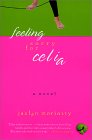
Who grows and changes more over the course of the novel, Celia or
Elizabeth? How and why?
How does the structure of Feeling Sorry for Celia with letters,
postcards, and messages from societies such as "The Cold Hard Truth
Association" affect the reading experience? How does this structure reflect
the experience of being a teenager?
What is the significance of Elizabeth's letters from "The Association of
Teenagers" throughout the story?
Compare the development of Elizabeth's friendship with Celia to that of
her friendship with Christina. Do you think that Elizabeth would have become
friends with Christina if they had met in person?
Some readers feel sorry for Elizabeth. Does she feel that way about
herself? What about the characters around her?
After Celia begins dating Saxon, she writes Elizabeth a letter: "I feel as
if I have lost you. You are a different person. It's like you've
disappeared.... You weren't happy for me. You never asked me a single question
about Saxon or about how I felt. Maybe you thought you had to be cruel to me
so I'd learn how to survive on my own. But maybe you were being too cruel,
Lizzy? Maybe you just weren't being fair?" Is this true?
Describe why most teenagers and adults, who remember what it was like to
be a teenager, would identify with some of the experiences that Elizabeth and
Christina share with each other?
Why do you think Celia is always running away from home?
What does the outcome of Elizabeth's relationships with Celia and
Christina tell us about the nature of friendship?
Copyright (c) 2002 St. Martin's Press. Written permission
is required to reprint or reproduce material from St. Martin's
Press.
Unless otherwise stated, this discussion guide is reprinted with the permission of St. Martin's Griffin.
Any page references refer to a USA edition of the book, usually the trade paperback version, and may vary in other editions.
A bold, mesmerizing novel about the woman known as "Typhoid Mary," the first known healthy carrier of typhoid fever in the burgeoning metropolis of early twentieth century New York.
Stranger than fiction, blending tragedy and farce, How to Create the Perfect Wife is an engrossing tale of the radicalism, and deep contradictions, at the heart of the Enlightenment.
Z, the novel about the life of Zelda Sayre Fitzgerald is at points charming and; like another reviewer, I kept thinking of the movie, "Midnight...
read more
Although heavy on the scientific details, which slowed down the story for me (OK, I admit, I was one of those liberal arts majors who skipped out on...
read more
Loved this book. Magical, quirky, enchanting I could go on. All books do not have to be literary fiction, sometimes it is just so comforting to read...
read more
U.S. ebook sales up in 2012, but rate of growth is slowing(May 16 2013) In 2012, trade book sales (i.e. non academic book sales) rose 6.9%, to $15.049 billion, and e-book sales continued to grow, although the rate of growth...
Full Story