Book Club Discussion Questions
Please be aware that this discussion guide will contain spoilers!
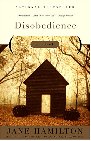
About The Reader's Guide The introduction, discussion questions, author biography, and suggestions for further reading that follow are designed to enhance your group's reading of Jane Hamilton's Disobedience, a novel that offers a fresh look at the age-old problems of love and betrayal, the hard lessons of history, and the fragility and strength of family life.
About This Book
When seventeen-year-old Henry Shaw inadvertently logs onto his mother's e-mail account, he discovers a secret that turns his previously stable sense of his family--and of himself--inside out. Mrs. Shaw is having an affair with Richard Polloco, a Ukrainian violin maker whose poetic messages and romantic lifestyle seem to offer an intensity lacking in her even-keeled husband. With mounting resentment, Henry tracks his mother's affair through her e-mail, and observes her with new eyes as she struggles with her daughter's obsessive interest in Civil War reenactments and her husband's maddening hands-off approach to parenting. Henry's perception of his mother is further complicated by his own first romance and his growing need to understand his parents while at the same time distancing himself from them. As the novel moves toward a violent confrontation that will change each of the Shaws, Hamilton explores the problems of obedience--to family, to one's passions, to history, to who we are at the deepest levels of identity--and reveals the hidden tensions that roil just beneath the surface of family life.
Part coming-of-age story, part meditation on the conflicting demands of romantic intensity and familial security, Disobedience creates an indelible portrait of one family teetering at the brink of disintegration, yet clinging to the mysterious bonds that hold them together.
Reader's Guide
- Why has Hamilton chosen Disobedience as her title? Which characters refuse to "obey"? In what ways is the novel as a whole about power relationships within the family and the pull of the heart against the roles each family member is expected to play?
- For centuries, novelists have used letters to help tell their stories. Is Hamilton's use of e-mail simply another instance of a long-standing tradition, or is there a distinctly new element that e-mail communication brings to Disobedience?
- In the first e-mail that Henry discovers, his mother informs Jane about her affair and writes, "This is an old story. There is nothing new in it" [p. 3]. Later, Henry wonders if there is "anything more interesting than the story of a man and a woman coming together out of nowhere" [p. 38]. And, indeed, the story of love and betrayal is both familiar and endlessly fascinating. In what ways is the novel both telling a story and commenting on the importance of stories in our lives? What does the book suggest about how stories shape and give meaning to human experience?
📖
Get the full reading guide
Join BookBrowse free to unlock all 13 discussion questions, author background, themes, and more for Disobedience.
Join free — it takes 30 seconds
Already a member? Log in →
- How does the author develop themes of identity and belonging throughout the narrative?
- What role does the setting play in shaping the characters' decisions and relationships?
- Discuss how the ending reframes the events of the story. Were you surprised?
Unless otherwise stated, this discussion guide is reprinted with the permission of Anchor Books.
Any page references refer to a USA edition of the book, usually the trade paperback version, and may vary in other editions.