Summary | Excerpt | Reading Guide | Reviews | Read-Alikes | Genres & Themes | Author Bio
Critics' Opinion:
Readers' Opinion:
First Published:
Oct 1998, 372 pages
Paperback:
Oct 1998, 255 pages

Please be aware that this discussion guide will contain spoilers!
Midwives: Reading Guide & Q&A
Reading Guide
The questions, discussion topics and suggestions for further reading that follow are designed to enhance your group's reading of Chris Bohjalian's Midwives. We hope they will give you a number of new angles from which to consider this enthralling and provocative novel, a gripping combination of courtroom thriller, domestic drama, and novel of ideas that adds up to a lyrical and suspenseful work of art.
On an icy winter night of 1981 in the rustic community of Reddington, Vermont, seasoned midwife Sibyl Danforth is forced to make a life-or-death decision that will change her world forever. Trapped by the weather in an isolated farmhouse, cut off from the hospital or even the emergency squad, she takes desperate measures to save the life of a baby, performing a cesarean section on a woman she believes has died of a stroke during a long and painful labor. But what if the woman was still alive during the surgery? What if Sibyl herself inadvertently killed her? The hair-raising story of Charlotte Bedford's death and of the subsequent trial of Sibyl Danforth is hauntingly told by Sibyl's fourteen-year-old daughter Connie, now an obstetrician. She is remembering, and it is through her intelligent and watchful eyes that we witness the tragic effects of Charlotte's death and Sibyl's trial. And as Sibyl faces the antagonism of the law, the hostility of the medical establishment, and the nagging accusations of her own conscience, we are compelled to confront questions of human responsibility that are fundamental to our society. As with all of the very best novels, Midwives provides no easy answers; rather, it consistently engages, moves, and challenges our ways of thinking.
For discussion
Suggestions for further reading
Jerome Lawrence and Robert E. Lee, Inherit the Wind
Jonathan Harr, A Civil Action
Harper Lee, To Kill a Mockingbird
Rodney Smolla, Jerry Falwell v. Larry Flynt: The First Amendment on Trial
Scott Turow, Presumed Innocent
Laurel Thatcher Ulrich, A Midwife's Tale
Abraham Verghese, My Own Country.
Also by Chris Bohjalian:
A Killing in the Real World (1988)
Hangman (1991)
Past the Bleachers (1991)
Water Witches (1995)
Page numbers refer to the Vintage paperback edition.
Reading group guide and suggested reading list reproduced with the permission of the publisher, Vintage.
An Interview with Chris Bohjalian, about Midwives
Q: What made you choose to write a book about a midwife?
A: It wasn't so much midwifery that interested me as it was drama.
About six months after my daughter was born--a perfectly fine hospital
delivery--I was at a dinner party here in rural Vermont where I live, and I met
the local lay midwife. She started teasing me very good-naturedly about the fact
that my wife and I had traveled 32.4 miles to that hospital in the middle of the
night to have our baby.
"If you had used me," she said, smiling, "you could have had
your little girl at your home in Lincoln. Your bedroom, if you wanted. And you
could have caught her."
I'd never heard the verb "catch" in the context of birth, and I
grew fascinated. Then, as she told me little bits about her life--the sensations
of delivering (or "catching") a baby in a bedroom, the wonderful drama
that seems to attend almost any birth--I became hooked. Sitting beside me, I
realized, was a woman who saw more sobbing men than any other professional I was
likely to meet. After all, she was there from the moment a labor began until the
baby arrived. She witnessed the absolutely momentous roller-coaster of emotion
that seems to accompany every birth.
Of course I also learned in my research that midwives who specialize in home
birth also shoulder enormous responsibility. They deliver babies far from the
medical safety net we take for granted. Clearly they're extraordinary people,
and clearly they're immensely gifted. But it is still a very special woman who
can help a laboring mother remain focused and composed when the pain is intense
and there's no epidural on the horizon. It's a rare woman indeed who--as one
midwife who helped me with the book actually did--can successfully deliver a
breech in a bedroom, with the knowledge that failure will result in head
entrapment and death.
Q: Your book, Midwives, is a dramatic story of a midwife who stands trial
for manslaughter. Is this based upon a true story?
A: No. Fortunately, it is not.
But lay midwives are nevertheless beleaguered in many states. A season
doesn't seem to go by when a lay midwife isn't on trial somewhere for simply
doing what she has done fabulously well for years: Catch babies. Yet in the eyes
of much of the medical community, she's "practicing medicine without a
license," and subject to a prosecution that borders often on persecution.
Q: You give such descriptive details of the home-birthing process, did you
actually work with a midwife to get such perspective?
A: I interviewed roughly 65 people while researching Midwives. I spent
time with midwives and ob-gyns, prosecutors and defense attorneys, and literally
dozens of people who had their babies at home.
Without exception, the midwives were wonderful: Forthcoming and honest, and
rich with stories. Not only were they unfailingly patient (clearly a part of the
job description), but they were very comfortable talking about the joys and
risks that mark their profession.
Q: What reaction have you gotten from midwives about your book?
A: When the book was first published in hardcover, some midwives
thought I was Satan. It's just that simple. There were some who thought I was
the single worst thing to happen to birth since forceps.
And that's understandable: Few midwives are going to be wild about the notion
of a novel in which a woman dies in a home birth, and is then tried for
manslaughter.
But the midwives who read the book for me in manuscript form and who helped
me with my research really loved it. They read it is a novel about the strength
of one woman and one family, and they read it as a courtroom drama.
And once the book was a few months old, a great many midwives started backing
the book, and--like me--really caring for my fictional midwife, Sibyl Danforth.
Midwives is my fifth novel, and I've never loved a character as much as I loved
Sibyl. (I'm working very hard to convince myself my infatuation is healthy.)
Moreover, I do not believe it will scare anyone away from home birth. When I
was touring with the hardcover, a great many mothers came to my readings with
their little babies born at home, and told me how the book had reinforced their
faith in midwifery, home birth, and the love a midwife brings to the experience.
They had really cherished the novel.
Q: After writing this book, would you and your wife consider using a
midwife at the birth of your next child?
A: In a heartbeat. My wife and I would be very comfortable having a
baby at home, or using one of the terrific nurse-midwives at the hospital.
Certainly we'd see an ob-gyn in the beginning as well, to make sure that
Victoria (my wife) was a good candidate for a midwife-attended birth. But
assuming it was a low-risk pregnancy, we'd be eager to call our neighbor--now
friend and neighbor--who happens to be a midwife, and ask her to help us have
our baby.
Unless otherwise stated, this discussion guide is reprinted with the permission of Vintage. Any page references refer to a USA edition of the book, usually the trade paperback version, and may vary in other editions.
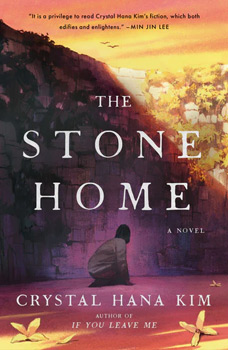
The Stone Home
by Crystal Hana Kim
A moving family drama and coming-of-age story revealing a dark corner of South Korean history.
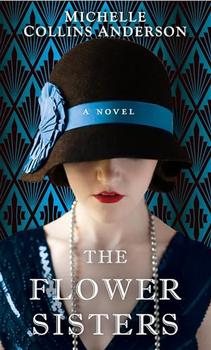
The Flower Sisters
by Michelle Collins Anderson
From the new Fannie Flagg of the Ozarks, a richly-woven story of family, forgiveness, and reinvention.
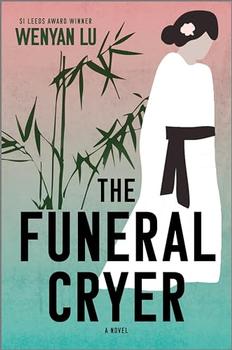
The Funeral Cryer by Wenyan Lu
Debut novelist Wenyan Lu brings us this witty yet profound story about one woman's midlife reawakening in contemporary rural China.
Your guide toexceptional books
BookBrowse seeks out and recommends the best in contemporary fiction and nonfiction—books that not only engage and entertain but also deepen our understanding of ourselves and the world around us.