return to home  
Join   |  Gift   |  Member Login   |  Library Login
BookBrowse Mobile
Follow Us: 
   Reading Guides

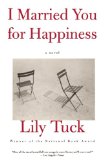
I Married You for Happiness by Lily Tuck: Questions, plus a reading group guide, with links to reviews, excerpt, author interview and author biography at BookBrowse.com.

I Married You for Happiness

I Married You for Happiness
by Lily Tuck
Hardcover: Sep 2011,
208 pages.
Paperback: Sep 2012,
224 pages.

Publication information
Author Information
Critics' Opinion:   
Readers' Rating:    Not Yet Rated
About BookBrowse Rankings
Share: 
Buy This Book

Reading Guide Questions

 Printer Friendly Guide

Please be aware that this discussion guide may contain spoilers!

  1. In the opening pages, we meet a widow who is stunned to lose the husband she was devoted to and depended on. What happens in the narrative to modify this first impression? Also, discuss how Nina grieves: "With her free hand, she touches her face to make sure" (p. 4); "Again she thinks about those dark-skinned, Mediterranean women, women in veils, women with long messy hair, and she wishes she could beat her breast and wail" (p. 6).


  2. Does Nina seem like a person bent on truth? Does she reproach herself for being deceptive? When? For what? Is she ever dishonest with herself?


  3. How do Philip the mathematician and Nina the artist respond to each other's fields? With respect? Curiosity? Talk about particular times when their worlds intersect. For instance, there is the Pi-reciting dinner, and remember Nina's portrait-painting of her husband when Philip said, "I read somewhere that art is about navigating the space between what you know and what you see.... I look for clarity, Nina tells him" (p. 184).


  4. "We never keep to the present. We recall the past.... The fact is that the present usually hurts" (Pascal). Time is at the center of this novel. "She has no desire to think about the future. For her, the future does not exist; it is an absurd concept" (p. 32). At one point, Philip says there is no absolute time. "According to Einstein, each individual has his own personal measure of time, which depends on where he is and how he is moving" (p. 152). Talk about these ideas of time and how they underpin the book. Does Tuck's persistent use of the present tense direct our sense of Nina and her view of time? Philip, talking about disorder and entropy of time, says "The arrow of time distinguishes the past from the future" (p. 124). Nina's contribution is a graffiti: "Time... is what prevents everything from happening at once" (p. 124). How is the reader swept up in these notions in a plot that covers decades?


  5. As a young child, "long before she had heard of solipsism, she devised the idea that only she existed in the world" (p. 97). Yet she has always created alternate realities. Was it her straw hat in the water, or her twin Linda's? Was it Linda who threw the water down on the boy in Uruguay? Does all her moving about, living in different languages, create multiple lives too? And how about her dreams? What is Philip's somewhat predictable explanation of dreams? (See pp. 165-166). In Philip's cat-in-the-box theory, "both realities... can exist simultaneously;" that is, life and death (p. 121). Do Nina's memories serve up alternate realities at the time she needs them most? What does alcohol do to shift reality?


  6. "His hand is growing cold; still she holds it" (p. 1). The opening line, the fact of Philip's death, is a setting we return to often, with Nina never going too far or too long in her memories. What does she achieve in her free-form re-creation of their life together?


  7. Talk about Nina's paintings and the importance of art to her. What is the history and destiny of various canvases? The butterflies, the straw hat, Philip's portrait, the migraine series, the charcoals of Philip she is tempted to go out to the shed to find? Why does Louise snipe at her mother about dabbling, and how does she redeem herself?


  8. "Where did all the anger come from?" (p. 180). What kind of person is Louise? What does she represent to Philip? To Nina? Is it surprising she seems ancillary in the book?


  9. "You cannot change the present but you can reinvent the past" (p. 57). In her long night of drinking wine and reminiscing, does Nina seem interested in reinventing? Or is she seeking the clarity she wants in art?


  10. Philip is aristocratic, brilliant, Europeanized - and he is from Wisconsin. "Philip has a healthy appetite. He will eat anything - rooster testicles, shark fin soup, garbanzo bean stew, crêpes coquilles St.-Jacques, the daube de boeuf à la provençale that she will cook for him one day.... An appetite for—life" (p. 186). "How can this have happened? How can this be? Philip is so robust, so healthy" (p. 41). "He is so sanguine, so merry, so handsome.... He is so polite" (p. 17). Do all of his gifts and energy make his death even more shocking and unbelievable?


  11. Mathematics is at the center not only of Philip's world but also Nina's, as she tries to grasp the enormity, the absurdity of death in the room. How does the math work as a literary - or philosophical - device to impose a semblance of order on sudden, illogical loss of life and love? Is Nina making progress, do you think? When she tries to describe Philip's work, the best she can do is "Derandomization. There you go, Philip says. You're getting warm" (p. 53).


  12. What are some of the complexities in their marriage? "Philip's assurance always astonishes her. It is not arrogance but a confidence, based in part on old-fashioned principles and in part on intelligence, that he is right and, usually, he is. For Nina, this is both a comfort and an irritant" (p. 38). How does she deal with this complication?


  13. Dr. Mayer "tells her that jealousy sustains desire or that, at least, it arouses it, which also suggests how fragile desire is... Not only do we need to find a partner... but we also need to find a rival" (p. 56). How are jealousy and desire woven through the story? Who are the women Nina worries about? Are her concerns justified? Do you think she provokes herself deliberately? Is Philip ever jealous, or should he be?


  14. "Always, in her mind, she and Philip are in bed. Or they are eating" (p. 30). What are some memorable scenes of their love in bed or at table? Certainly there are delicious meals and fine wines. "They laugh a lot. Is laughter the secret to a good marriage, she wonders?" (p. 50). Try to recall some specifics, along with Nina, of their joy, including frequent verbal sparring and attraction to abstractions.


  15. Tuck is adept in quick characterizations. For instance, about Marta, the housekeeper admonished for tidying Philip's study: "Her look conveys both disapproval and martyrdom" (p. 53). Are there other vignettes that caught your attention?


  16. Whose story is it? What might Philip's narrative have been had their roles been reversed? Does he seem like a person who would have re-created his dead wife with the spirit and detail that Nina does?


  17. "A chance event is not influenced by the events that have gone before it. Each toss is an independent event" (p. 26). How does Nina recall and try to use probability theory to understand Philip's life and his death?


  18. How much of the end has been prefigured in the book? In the final scene, has Nina found her own way to change the present? Is it fantasy or delusion? Art? "She is not religious. She does not believe in an afterlife, in the transmigration of souls, in reincarnation, in any of it" (p. 13). And yet there is l'heure bleue of pages 188 - 189. Caravaggio's angel is art to sustain her. "She must be dreaming. It does not matter." Do you see a resolution? How does the end link some of her main concerns, from who will weed the garden to how she can hold onto Philip?


Unless otherwise stated, this discussion guide is reprinted with the permission of Grove Press. Any page references refer to a USA edition of the book, usually the trade paperback version, and may vary in other editions.

Become a Member
Click Here
Editor's Choice
  •  Jun 19 
  •  Jun 17 
  •  Jun 15 
If You Find Me
Emily Murdoch

If You Find Me Jacket

There are some things you can't leave behind…
Americanah
Chimamanda Ngozi Adichie

Americanah Jacket

Fearless, gripping, at once darkly funny and tender, spanning three continents and numerous lives, Americanah is a richly told story set in today's globalized world.
We Are All Completely Beside Ourselves
Karen Joy Fowler

We Are All Completely Beside Ourselves Jacket

The story of an American family, middle class in middle America, ordinary in every way but one. But that exception is the beating heart of this extraordinary novel.
The Expats by Chris Pavone
   Most Recent Blog Entries
Top Ten Guidelines For How to Behave in a Book Club
Movies Based on Books: Summer 2013 (May - August)
Jewish Themed Young Adult Books, Not About The Holocaust
rss  RSS   rss  subscribe
Recent Reader Reviews
In the Shadow of the Banyan by Vaddey Ratner
First time novelist Vaddey Ratner captured my heart and senses in this novel based on her childhood in Cambodia. Her story transcends any news story... read more
In the Shadow of the Banyan by Vaddey Ratner
From the first page, I was drawn in by the lyrical writing of the author and mesmerized as the narrator, eight year old Raami, remembered the years... read more
TransAtlantic by Colum McCann
Trite but true, all good things must come to an end. I so wanted to keep reading the wonderful prose, the settings that let one think they are part... read more
RSS RSS feed More...  
Most Viewed This Week
1. Coraline
Neil Gaiman
2. Memoirs of a Geisha
Arthur Golden
3. The Glass Castle
Jeannette Walls
4. The Immortal Life of Henrietta Lacks
Rebecca Skloot
5. Behind the Beautiful Forevers
Katherine Boo
More...
Book Club Recommendations
Where'd You Go, Bernadette
by Maria Semple
Paperback (Apr/13)
The Unlikely Pilgrimage of Harold Fry
by Rachel Joyce
Paperback (Mar/13)
The Unchangeable Spots of Leopards
by Kristopher Jansma
Hardback (Mar/13)
How to Get Filthy Rich in Rising Asia
by Mohsin Hamid
Hardback (Mar/13)
More...
First Impressions
Members read and review books often months before they're published. See what they think in First Impressions!
Her Last Breath
by Linda Castillo
4.5 Stars            (Jun/13)
Crime of Privilege
by Walter Walker
Four Stars            (Jun/13)
Children of the Jacaranda Tree
by Sahar Delijani
4.5 Stars            (Jun/13)
More...
  Latest BookBrowse News
Kenn Nesbitt is new Children's Poet Laureate (Jun 12 2013)
Kenn Nesbitt has been named the new Children's Poet Laureate: Consultant in Children's Poetry to the Poetry Foundation, which noted that the two-year position... Full Story
rss RSS feed More...
 
BookBrowse Poll
Q: We've been discussing guidelines for book club etiquette. Which of these do you think are important?
Read the book
Listen thoughtfully to all members
Take notes while you're reading
Stay on topic when you're speaking
Enjoy yourself
Don’t get drunk
Bring chocolate, everyone likes chocolate!
Eat before you come so you don’t devour the snacks
Compliment others sincerely
Have a good sense of humor
Don’t fret the small stuff
Search: Title or Author
Free Newsletters

Online Book Club
More about
The Execution of Noa P. Singleton
Join the discussion!


Win This Book!
You Only Get Letters From Jail


one of the finest and truest collections of 'American' short stories I have ever read

Enter To Win Now!

wordplay
Solve this clue:
"T M T C, T M T Stay T S"

and be entered
to win....
frame top
New Author
Interviews
Carol Rifka Brunt
Kent Wascom
Jennifer McVeigh
Elizabeth Becker
frame bottom
HOME Book Submissions | Advertising | Library Subscriptions | Reviewing for BookBrowse | Contact Us