return to home  
Join   |  Gift   |  Member Login   |  Library Login
BookBrowse Mobile
Follow Us: 
   Reading Guides

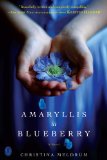
Amaryllis in Blueberry by Christina Meldrum: Questions, plus a reading group guide, with links to reviews, excerpt, author interview and author biography at BookBrowse.com.

Amaryllis in Blueberry

Amaryllis in Blueberry
by Christina Meldrum
Paperback: Feb 2011,
384 pages.

Publication information
First book/First Novel


Author Information
Critics' Opinion:   
Readers' Rating:  
About BookBrowse Rankings
Share: 
Buy This Book

Reading Guide Questions

 Printer Friendly Guide

Please be aware that this discussion guide may contain spoilers!

Introduction

In a West African village, Seena Slepy stands trial for the murder of her husband, Dick, a doctor who brought his family from their home in the United States to do humanitarian work. How Seena got to this crossroads, with her fate hanging in the balance, is told in a series of flashbacks. Richly atmospheric, Amaryllis in Blueberry is a stirring, soulful novel about the intricacies of human relationships and the haunting nature of secrecy.

Topics & Questions for Discussion

  1. Amaryllis in Blueberry is told from the viewpoints of Seena, Dick, their four daughters, their neighbor Clara, and finally the priest Heimdall. How do the varied perspectives affect you as a reader? The final chapter is the only one told from Heimdall Amadi's perspective. Why do you suppose the author chose to give him the last word?
  2. Consider how truth and reality are portrayed in the novel. What besides individual perspective contributes to each character's view of truth and reality?
  3. What are your thoughts on the narrative structure of the novel, which begins with The End—Seena on trial for murder—and intertwines scenes from the past and present? How does knowing about Dick's death at the beginning of the novel affect your perception of him throughout the book? How does it affect your view of the other characters, particularly Seena and Yllis? If the story had been told in a more linear fashion, do you think you would have felt differently about the story and/or the characters?
  4. Consider the significance of storytelling and mythmaking in the novel. The author interweaves Greek mythology, African mythology, and Catholic doctrine into the story line of Amaryllis in Blueberry. How are these myths/faiths similar? What purpose do they serve? How does religion relate to storytelling and myth making in the novel?
  5. The title refers to a Greek myth—the myth of Amaryllis, and Seena summarizes the myth on page 317. What parallels do you see between the myth of Amaryllis and Yllis's story? In chapter two, Seena explains the myth of Pandora (pages 17–18). What parallels do you see between the myth of Pandora and the novel's characters, story and structure?
  6. Yllis is the only character who tells her story in past tense. Why do you think the author chose to give Yllis this unique perspective? Although Dick, Seena, the Marys, Clara, and Heimdall all tell their stories in the present tense, each looks back on past events. How do you think their present circumstances impact their memory of those past events? How does their memory of these events impact their sense of the present?
  7. Discuss the role of religion in the novel. What drives Dick's strong Catholic faith, including his affinity for the Virgin Mary? Mary Catherine says, "seeing God, believing in Jesus, is like believing in air" (page 53). How does Mary Catherine use religion to construct her identity? How does Dick? How do their experiences in Africa challenge their self-perceptions?
  8. Compare the two different settings portrayed in the novel, Michigan and West Africa. For the various members of the Slepy family, how are their expectations of Africa different from the reality they encounter? How does each setting affect the way each character constructs his/her sense of identity and reality?
  9. What role does names and naming play in the novel? Yllis in not a Mary. Tessa, Grace and Catie all share the name Mary. Seena does not use her given name, Christina—except when Dick insists on calling her Christina. Each of the girls receives a West African day name. Mawuli's name has meaning. Addae's name has meaning. Are the characters empowered by their names? Confined? Do any of the characters use naming either to empower or to disempower others?
  10. "How can you live with someone for years . . . and see only your imagination reflected?" wonders Seena (page 3). Seena's comment suggests she came to realize her perception of Dick was built on imagination— on myth. Was it? Seena claims she never loved Dick, but do you think she did? Does he love her? To what degree are Heimdall, Seena's daughters and Clara also Seena's "imagination reflected"? What role does imagination play in the formation, nourishment and/or undermining of the other relationships in the novel?
  11. Is the "Day of the Snake" (page 86) a turning point in the life of each of the Slepys? Seena seems to think it may be, but is Seena's perception of the announcement's significance fueled by her own needs? Is this another moment when Seena sees only her "imagination reflected"? Do you think a single statement can have the power to irrevocably alter the course of people's lives?
  12. Obsession affects several of the characters in Amaryllis in Blueberry. Why is Dick obsessed with Seena? Why does Seena become "Seena the Stalker"? Is Mawuli merely a replacement for Mary Catherine's lost obsession, her faith? How important is the theme of secrecy in the novel, and why?
  13. What are Seena's strengths and weaknesses as a mother? How does your perception of her as a mother affect your view of her as a person? How does each of her children see her? In what ways is Seena's relationship with Yllis different from her relationship with her other daughters?
  14. What are Dick's strengths and weaknesses as a father? As a husband? As a human being?
  15. What is the significance of Yllis being a synesthete? In a sense, her gift results in her "carrying the sins of the world," given she is the recipient of others' unspoken confessions. And in the end, it is she who sacrifices her innocence to save her mother. Do you think the author intended to make a parallel between Yllis and Father Amadi? Yllis and Christ? What other metaphors or symbolism do you detect in the novel?
  16. "Grace isn't the same. That Dipo meant something to her. Standing before all those people, stripped inside and out, she found something inside herself she forgot she had" (page 321). What reaction did you have to the Dipo ceremony? Do you think it has redeeming cultural value? Why do you think it is important to Grace? Does the Dipo ceremony make you reflect at all on our own cultural practices related to puberty and youth coming-of-age?
  17. Why do you think Mary Catherine is drawn to Father Amadi? Why do you think she cuts herself and starves herself ? Is it merely a plea for attention, as Seena suggests at one point? Is it possible Mary Catherine knows more about the relationship between Father Amadi and Seena than she is able to admit?
  18. Tessa's family regards her as a "troublemaker," and even Yllis says Tessa is "good at sick. And cruel" (page 15). Yet in many respects, Tessa is more sensitive to and affected by both the joys and sorrows of life in Africa than anyone else in her family. How is this seeming sensitivity consistent with her family's perception of her? How it consistent with her perception of herself?
  19. What role does Clara play in the novel? She is not part of the Slepy family, yet she still has a voice in the novel. Why?
  20. Now that you know the novel's ending—that Yllis killed Dick—what new insights does it give you into the story and the characters, particularly Yllis? Would your foreknowledge of this and other events—particularly the true circumstances of Yllis's birth and Mary Catherine's meeting with Father Amadi—have altered your perception of the events themselves? How do you think a second reading of this novel would affect you?

Enhance Your Book Club

  1. Visiting the slave castles along the West African coast has an emotional impact on some of the characters in Amaryllis in Blueberry. Further information about the slave castles can be found at http://www.lasentinel.net/African-Slave-Castles.html.
  2. Synesthesia is a rare sensory condition that affects Yllis. Find out more about it here: http://en.wikipedia.org/wiki/Synesthesia.
  3. Prepare a feast with recipes from The Africa Cookbook: Tastes of a Continent by Jessica B. Harris, or check out the selections at www.epicurious.com/recipesmenus/global/african/recipes.


Unless otherwise stated, this discussion guide is reprinted with the permission of Gallery Books. Any page references refer to a USA edition of the book, usually the trade paperback version, and may vary in other editions.

Become a Member
Click Here
Editor's Choice
  •  Jun 19 
  •  Jun 17 
  •  Jun 15 
If You Find Me
Emily Murdoch

If You Find Me Jacket

There are some things you can't leave behind…
Americanah
Chimamanda Ngozi Adichie

Americanah Jacket

Fearless, gripping, at once darkly funny and tender, spanning three continents and numerous lives, Americanah is a richly told story set in today's globalized world.
We Are All Completely Beside Ourselves
Karen Joy Fowler

We Are All Completely Beside Ourselves Jacket

The story of an American family, middle class in middle America, ordinary in every way but one. But that exception is the beating heart of this extraordinary novel.
The Expats by Chris Pavone
   Most Recent Blog Entries
Top Ten Guidelines For How to Behave in a Book Club
Movies Based on Books: Summer 2013 (May - August)
Jewish Themed Young Adult Books, Not About The Holocaust
rss  RSS   rss  subscribe
Recent Reader Reviews
In the Shadow of the Banyan by Vaddey Ratner
First time novelist Vaddey Ratner captured my heart and senses in this novel based on her childhood in Cambodia. Her story transcends any news story... read more
In the Shadow of the Banyan by Vaddey Ratner
From the first page, I was drawn in by the lyrical writing of the author and mesmerized as the narrator, eight year old Raami, remembered the years... read more
TransAtlantic by Colum McCann
Trite but true, all good things must come to an end. I so wanted to keep reading the wonderful prose, the settings that let one think they are part... read more
RSS RSS feed More...  
Most Viewed This Week
1. Coraline
Neil Gaiman
2. Memoirs of a Geisha
Arthur Golden
3. The Glass Castle
Jeannette Walls
4. The Immortal Life of Henrietta Lacks
Rebecca Skloot
5. Behind the Beautiful Forevers
Katherine Boo
More...
Book Club Recommendations
Where'd You Go, Bernadette
by Maria Semple
Paperback (Apr/13)
The Unlikely Pilgrimage of Harold Fry
by Rachel Joyce
Paperback (Mar/13)
The Unchangeable Spots of Leopards
by Kristopher Jansma
Hardback (Mar/13)
How to Get Filthy Rich in Rising Asia
by Mohsin Hamid
Hardback (Mar/13)
More...
First Impressions
Members read and review books often months before they're published. See what they think in First Impressions!
Her Last Breath
by Linda Castillo
4.5 Stars            (Jun/13)
Children of the Jacaranda Tree
by Sahar Delijani
4.5 Stars            (Jun/13)
Crime of Privilege
by Walter Walker
Four Stars            (Jun/13)
More...
  Latest BookBrowse News
Kenn Nesbitt is new Children's Poet Laureate (Jun 12 2013)
Kenn Nesbitt has been named the new Children's Poet Laureate: Consultant in Children's Poetry to the Poetry Foundation, which noted that the two-year position... Full Story
rss RSS feed More...
 
BookBrowse Poll
Q: We've been discussing guidelines for book club etiquette. Which of these do you think are important?
Read the book
Listen thoughtfully to all members
Take notes while you're reading
Stay on topic when you're speaking
Enjoy yourself
Don’t get drunk
Bring chocolate, everyone likes chocolate!
Eat before you come so you don’t devour the snacks
Compliment others sincerely
Have a good sense of humor
Don’t fret the small stuff
Search: Title or Author
Free Newsletters

Online Book Club
More about
The Execution of Noa P. Singleton
Join the discussion!


Win This Book!
You Only Get Letters From Jail


one of the finest and truest collections of 'American' short stories I have ever read

Enter To Win Now!

wordplay
Solve this clue:
"T M T C, T M T Stay T S"

and be entered
to win....
frame top
New Author
Interviews
Carol Rifka Brunt
Kent Wascom
Jennifer McVeigh
Elizabeth Becker
frame bottom
HOME Book Submissions | Advertising | Library Subscriptions | Reviewing for BookBrowse | Contact Us