return to home  
Join   |  Gift   |  Member Login   |  Library Login
BookBrowse Mobile
Follow Us: 
   Reading Guides

Father of the Rain by Lily King: Questions, plus a reading group guide, with links to reviews, excerpt, author interview and author biography at BookBrowse.com.

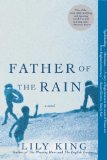
Father of the Rain

Father of the Rain
A Novel
by Lily King
Hardcover: Jul 2010,
384 pages.
Paperback: May 2011,
368 pages.

Publication information
Author Information
Critics' Opinion:   
Readers' Rating:  
About BookBrowse Rankings
Share: 
Buy This Book

Reading Guide Questions

 Printer Friendly Guide

Please be aware that this discussion guide may contain spoilers!

  1. What are the defining traits of Father of the Rain? Is it a courageous book? Why? Francine Prose, in Reading Like a Writer talks about being “heartened by all the brave and original works that have been written without the slightest regard for how strange or risky they were, or for what the author’s mother might have thought when she read them.” Talk about King’s daring, her bone honesty in this book.

  2. When she is away, Daley misses her mother, her spirit and values. Daley calls her the ballast in her life. Does she actually miss her father when she is absent from him? If so, why? It takes Gardiner two weeks to call her when her mother has decamped with her to New Hampshire. Is that call just legal strategy? How does Daley react? (see p. 25)

  3. “People need to be held accountable” (p. 23), Daley’s mother says, referring to Nixon in the summer of 1974. How is this issue of accountability woven through the novel?

  4. Is there a sense of a lost Eden, however spurious? “I never suspected we all weren’t having a good time” (p. 66), Daley says about the Peking Garden restaurant and poolside frolics. What does her mother’s rose garden signify to her? Despite the family dysfunctions, in Daley’s mind certain things have connected the Amorys as a family. What are those things? Perhaps “I don’t like you, I don’t like Pinky, and I’m not having a good time” (p. 61)? Or the silly back-to-school song? Other things? How does Daley deal with these codes when she returns to Ashing? What does she mean by “those two smashed sides of me fusing briefly” (p. 61)?

  5. Which of the minor characters move us to love or pity? For instance, is it Neal’s mother with her bipolar mania that we feel sympathy for? Or her son Neal who always has to conceal and protect her and pick up the pieces after McLean’s? The officer Mullen? The sisters Vance in their hidden garden world? Others?

  6. Daley’s is a rich and capacious spirit. Whatever her pain, she has a great heart, and her sense of humor is often her salvation. Talk about that shrewd, funny quality in Daley. Even though her father’s humor is often crude and reductive, has she sharpened her wit on him? They do have each other’s measure. After an AA meeting Gardiner has jotted down that “‘Thank you is all you need to say to get God’s attention. I thought that was pretty good.’ He looks embarrassed, then laughs when he sees that my eyes have filled” (p. 212). When else are they able to share that connecting wire of humor?

  7. Who are the people in Daley’s life that she truly cares about? Which ones does she dismiss without mercy?

  8. Is regret part of Daley’s nature? If so, when? What would she like to change about herself if she could? What are the most terrible choices she has to make?

  9. “Did my father ever have a conscience? . . . Or did he truly never develop to that extent? Was he only ever capable of feeling his own needs, his own pain? Was there any way to have had a good relationship with him?” (p. 343). Much of Daley’s growth comes with disillusion. Talk about these times in her life. How is it that the scorn and neglect of her father does not create a hard shell of a girl? “In my father’s culture there is no room for self-righteousness or even earnestness. To take something seriously is to be a fool. It has to be all irony, disdain, and mockery. Passion is allowed only for athletics” (p. 173). After a rare burst of anger at Gardiner, Daley is blistered with “You turned out worse than your mother, you little bitch.” It is the first word about her mother since her death nearly a decade ago. She retreats in despair, but “It’s a normal night for him. A quart of vodka, a vicious argument. He probably feels damn good, like he’s just played two sets of tennis” (p. 179).

  10. Does the reader have any sympathy for Gardiner? Is his any kind of tragedy? Here is a man of great physical grace and prowess, with gifts of birth, enviable education, and mental agility laid low by alcohol and self-deception. “Ridding my father of his racist and anti-Semitic rhetoric would take a long time. It would be a whole reeducation. His prejudices are a stew of self-hatred, ignorance, and fear” (p. 167). How does Daley try to seek explanations in his childhood? In his dubious work experience? Is it Daley among all his women who battles to save him as well as herself?

  11. What is the role of politics in Father of the Rain? How does it act as a wedge between some characters and a bond between others? Does Daley come to her convictions under the influence of others or based on her own observations? When she streaks with Gardiner through her mother’s Project Genesis pool party, is it her own protest or the lure of her father’s insidious charm? “My mother, for a moment, looks like she’s been tossed out of a plane” (p. 14).

  12. Eudora Welty, in the preface to her stories, wrote: “I have been told, both in approval and in accusation, that I seem to love all my characters . . . to try to enter into the mind, heart, and skin of a human being who is not myself . . . man or woman, old or young, with skin black or white.” Do you think Lily King makes the jump in imagination Welty refers to? How does she achieve the astonishing truth of Daley’s world and of those around her? Carefully chosen vivid details? Ones that skewer a character or a type, a place or a custom? Give examples. Does anyone, including Daley, completely escape satire? Who? Can you both satirize and love a character? For example, when Daley calls her mother to talk about Myrtle Street: “She’s doing something, painting her nails maybe. The phone keeps slipping away from her mouth” (p. 66). Gently, a deft and funny sketch is made of a woman who cares deeply for her child but still has her own life. Other examples?

  13. In the muddle of family behavior, how has King sifted through layers of the past for concrete evidence, the shards of love and hate, vengeance and delight that have made Daley who she is? Daley usually has no trouble being honest with herself. Does she ever delude herself? Does she slip into whitewashing herself when she tells her story? When does she disappoint you? What about Paul?

  14. “The impulse to lie is instinctive, like one of those desert cats hastily burying its kill in the sand” (p. 156). Here Daley refers to covering her tracks with her father, even a phone call. Is it any wonder she learns the wiles of a feral creature in his house? “My mother . . . loved me but did not protect me . . . let me go off every weekend for years and years to my father’s even though I returned a wild animal and she never asked why” (p. 180). Beneath the veneer of Ashing civilization (pool, tennis courts, club, red pants, wild geese socks, multigenerational Harvard credentials,) the father’s behavior often veers between boorish and grotesque. Does violence always lurk beneath the surface even when it is not overt? What does Daley see in his language about “girls” and their bodies? Are you as shocked as she is when he ultimately turns his savagery against his daughter?

  15. Is Daley’s commitment to taking care of her father an act of filial responsibility? She says it is her “duty not just as a daughter but as a human being” (p. 219). But both Jonathan and Julie tell her she is indulging in a need to be needed . . . and throwing away her life. How do you see it? What is Garvey’s opinion on her staying on in Ashing? Is she still trying vainly to rewrite the past? Is her attempt to “save” her father ultimately selfish or altruistic? What is an adult child’s responsibility to a parent who has been negligent or even abusive?  The Bible advises: “Honor thy father and thy mother.”  Are there any exceptions?

  16. How has Jonathan been raised to deal with white people? He recalls going to a movie in a crowd of white people when he was terrified but also exhilarated “because the world was different from what I had thought” (p. 138). How does loving Daley represent such a huge step for him? What do you think Jonathan sees in Daley, what about her interests him? What does she see in him?  How do you think their children will fare with Jonathan and Daley as their parents?  Is our world becoming “post-racial”?

  17. King is sometimes stunningly graphic about sex. For instance, Daley is perplexed and horrified by accidental sightings of Gardiner and also Garvey. But what about her own explorations and lovemaking? “My mother had told me not to make love without love, but I had become a freakish air-traffic controller, determined to land the two, love and sex, at precisely the same time . . . With Jonathan I lost interest in control, lost the ability to control” (p. 139). What has happened by the lake? How has she been lucky enough to find exuberance and celebration in sex? (How does alcohol figure in the two really successful relationships, those of Daley and Jonathan and her mother and Paul?

  18. Do you think Daley has met her match in Jonathan? For intelligence? Education? For sass and fun? Bedrock devotion? Integrity? Libido?

  19. How is the Obama election a touchstone for various characters? Which ones? Any surprises? Is Daley celebrating for both herself and her family as well as for her mother?

  20. In the end of the novel Gardiner the old reprobate shows a change of heart. How? Is his late transformation credible? What has caused it? His relationship with Barbara?  With Daley’s children? Are his last moments of grace as much a gift to himself as to Daley and her family?

Suggestions for further reading:
The Duke of Deception by Geoffrey Wolff
This Boy’s Life by Tobias Wolff
The Liar’s Club by Mary Carr
The Glass Castle by Jeanette Walls
Them by Francine du Plessix Gray
The Subject Was Roses by Frank D. Gilroy
I Never Sang For My Father by Robert Anderson


Unless otherwise stated, this discussion guide is reprinted with the permission of Grove Press. Any page references refer to a USA edition of the book, usually the trade paperback version, and may vary in other editions.


Become a Member
Click Here
Editor's Choice
  •  May 23 
  •  May 21 
  •  May 20 
And the Mountains Echoed
Khaled Hosseini

And the Mountains Echoed Jacket

Khaled Hosseini has written a new novel about how we love, how we take care of one another, and how the choices we make resonate through generations
Helga's Diary
Helga Weiss

Helga's Diary Jacket

The remarkable diary of a young girl who survived the Holocaust—appearing in English for the first time.
Fever
Mary Beth Keane

Fever Jacket

A bold, mesmerizing novel about the woman known as "Typhoid Mary," the first known healthy carrier of typhoid fever in the burgeoning metropolis of early twentieth century New York.
Click Here
   Most Recent Blog Entries
Movies Based on Books: Summer 2013 (May - August)
Jewish Young Adult Books That Are Not About The Holocaust
Books to Give This Mother's Day
rss  RSS   rss  subscribe
Recent Reader Reviews
Two Lives by Vikram Seth
Two Lives is a memoir written by international best-selling author, Vikram Seth. In this interesting and engaging book, Seth writes about his great... read more
Z: A Novel of Zelda Fitzgerald by Therese Fowler
Z, the novel about the life of Zelda Sayre Fitzgerald is at points charming and; like another reviewer, I kept thinking of the movie, "Midnight... read more
Flight Behavior by Barbara Kingsolver
Although heavy on the scientific details, which slowed down the story for me (OK, I admit, I was one of those liberal arts majors who skipped out on... read more
RSS RSS feed More...  
Most Viewed This Week
1. Wonder
R.J. Palacio
2. A Child Called It
Dave Pelzer
3. The Glass Castle
Jeannette Walls
4. The Notebook
Nicholas Sparks
5. The Boy in the Striped Pajamas
John Boyne
More...
Book Club Recommendations
Why Be Happy When You Could Be Normal?
by Jeanette Winterson
Paperback (Mar/13)
Eleanor & Park
by Rainbow Rowell
Hardback (Feb/13)
The House Girl
by Tara Conklin
Paperback (Oct/13)
The Painted Girls
by Cathy Marie Buchanan
Hardback (Jan/13)
More...
First Impressions
Members read and review books often months before they're published. See what they think in First Impressions!
The Last Girl
by Jane Casey
Four Stars            (May/13)
The Sisterhood
by Helen Bryan
Four Stars            (Apr/13)
Golden Boy
by Abigail Tarttelin
4.5 Stars            (May/13)
The Caretaker
by A .X. Ahmad
Four Stars            (May/13)
More...
  Latest BookBrowse News
Judge rules unused Borders gift cards to be worthless (May 23 2013)
Borders owes nothing to holders of roughly $210.5 million of gift cards that had not been used by the time the bookstore chain shut down, a Manhattan federal... Full Story
rss RSS feed More...
 
BookBrowse Poll
Q: Which of these Summer movies based on books would you like to see? (Info on each movie here)
The Great Gatsby
Epic
Man of Steel
World War Z
The Lone Ranger
The Wolverine
R.I.P.D.
Percy Jackson
Paranoia
The Mortal Instruments
Select Any That Apply
Search: Title or Author
Free Newsletters
The Light Between Oceans

Online Book Club
More about
The Comfort of Lies
Join the discussion!


Win This Book!
On Sal Mal Lane


"Piercingly intelligent and shatter-your-heart profound."

Enter To Win Now!

wordplay
Solve this clue:
"I Y N P O T Solution, Y P O T P"

and be entered
to win....
frame top
New Author
Interviews
Menna van Praag
Erica Brown
Helga Weiss
Kate Morton
frame bottom
HOME Book Submissions | Advertising | Library Subscriptions | Reviewing for BookBrowse | Contact Us