return to home  
Join   |  Gift   |  Member Login   |  Library Login
BookBrowse Mobile
Follow Us: 
   Reading Guides

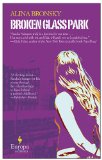
Broken Glass Park by Alina Bronsky: Questions, plus a reading group guide, with links to reviews, excerpt, author interview and author biography at BookBrowse.com.

Broken Glass Park

Broken Glass Park
by Alina Bronsky
Paperback: Mar 2010,
366 pages.

Publication information
First book/First Novel


Author Information
Critics' Opinion:   
Readers' Rating:    Not Yet Rated
About BookBrowse Rankings
Share: 
Buy This Book

Reading Guide Questions

 Printer Friendly Guide

Please be aware that this discussion guide may contain spoilers!

About the Book

Sascha Naimann was born in Moscow, but now lives in Berlin with her two younger siblings and, until recently, her mother. She is precocious, independent, street-wise, and, since her stepfather murdered her mother several months ago, an orphan. Unlike most of her companions, she doesn't dream of escaping from the tough housing project where they live. Sascha's dreams are different: she longs to write a novel about her beautiful but naïve mother and she wants to end the life of Vadim, the man who brutally murdered her.

Sascha's story is that of a young woman consumed by two competing impulses, one celebrative and redemptive, the other murderous. In a voice that is candid and self-confident, at times childlike and at others all too mature, Sascha relates the struggle between those forces that can destroy us, and those that lead us out of sorrow and pain back to life.

  1. "I thought I was already old…"
    Sascha is as if torn between adulthood and what remains of her childhood. Caught in a moment balanced between youth and maturity, Sascha is perhaps not so different from others her age. While an American seventeen-year-old may be forced to drop out of school and provide for his family, an Israeli teen prepares to sacrifice two years of her life to the army, and in many parts of the world young people are forced to face the horrors of war, the tribulations of social unrest, or the damages wrought by domestic violence, both physical and psychological.

    When does a child become an adult? And does this passage from childhood and adulthood occur more or less at the same age despite one's circumstances? Can Broken Glass Park be described as a coming-of-age novel? Can childhood survive difficult and damaging experiences, or do these necessarily make of one an adult? Does preserving a child's innocence necessarily mean shielding him or her from life's dark side? What are the effects of a childhood cut short?


  2. Her mistress's voice.
    Much of the success of Broken Glass Park has been attributed to the first person narrator's intoxicating and compelling voice. What makes this voice so distinctive and appealing? Are we witness to an act of literary ventriloquism or do you think that main character's voice probably is that of the author herself?


  3. Family…they'll %&§£ you up!
    How accurate a picture of family life, albeit it a tragic one, is Bronsky's Broken Glass Park? Sascha loves her mother deeply, but is also furious with her for what she sees as her mother's stupidity. Has Sascha made peace with the ghost of her mother by the end of the novel?


  4. "Because things are the way they are, things will not stay the way they are."
    Delia Lloyd writes in her Huffington Post review of The Elegance of the Hedgehog (Europa 2008), "Growing up is about being open to change," and maturity is found when you discover "that something you thought was closed off to you is actually within reach." Does Broken Glass Park depict this kind of gathering of strength? Does adulthood bring maturity, or are the two things different? Do you agree with Lloyd's description of maturity: not the death of innocence and purity, but a gathering of the strength necessary to change and to reach for what you want?


  5. Jailhouse Conversion?
    "I still love her. I wish I could tell her. I'm writing her a letter…I'm ashamed to face my children. I'm also terribly sorry for the young man who also had to die."–Vadim (p. 51) In the last chapter of the book, Sascha sees among Vadim's belongings photos of her mother, her siblings, and herself. Is Vadim sincere in his love, shame and regret? Is it possible that he has reformed? Or is a bad egg always a bad egg? How do you feel about prison changes of heart?


  6. "A friend who changes when I change and who nods when I nod…"
    We are introduced to Anna on the first page of the book and given the idea that there is intimacy and friendship between her and Sascha. By the end of the book, however, it becomes clear that Anna is just another character in the Emerald roster. Does Sascha have any true connections with other people? Is this the story of a true loner? With whom does she have the most meaningful relationship?


  7. What is normal?
    Broken Glass Park
    is unique in that it employs no stock characters; each character is instead distinctive and struggles with his or her own individual demons. Sascha's struggle bears the name Vadim, and is naturally the struggle that receives the most attention in the book. But closer examination reveals that every character has his own version of Vadim. Jobst-Ulrich Brandt, in his review of Broken Glass Park published in Focus (Germany), wrote that Alina Bronsky had achieved her goal of writing a story that was "rooted in life." Does characters' refusal to be type-cast, to conform to sterotypes and/or archetypes make forming conslusions about their stories difficult? Is there such a thing as a "normal" literary character? What is normal?


  8. "I mean, we've already established you're not into sex and drugs."
    Throughout Broken Glass Park, Sascha places, and finds herself, in situations where sex is overwhelmingly present. Each sexually charged event is both similar to the others, and fundamentally different; their unusual nature, same but different, invites the reader to find a common thread that connects the episodes. How does Sascha see sex, and how does she use it?


  9. City Within a City
    Another seemingly prominent theme is that of the clash of cultures; in this book, it is the Russians versus the Germans. The Emerald is Berlin's own Little Russia. The tenants of the Emerald, such as Maria, see it as a haven—a retreat back into what is comfortable. They do not go out; they do not learn the language. The physical distance a character travels from the Emerald is directly proportionate to his or her willingness to merge with new surroundings. How is this comparable to the situation in other urban immigrant centers? Are there characteristics of Bronsky's portrait of Russians in Germany that are specific to that context, or could her portrait of an immigrant "ghetto" apply to any urban immigrant community? Is the desire among immigrants to aggregate in specific neighborhoods, to stick together, more a form of selfprotection or of denial?


  10. The Emerald Scent
    In his conversation with Sascha, young Volker asserts that the Russians are degenerates who will delete themselves by drinking themselves to death, killing each other, or rotting in prison. Is there a real tendency towards self-destruction among immigrant communities? With reference to the previous question, how are we inclined to feel towards the immigrant populations in our country, and how do we view "their" neighborhoods?


  11. This is the End…
    Revenge is (bitter) sweet What is Sascha's mental response to the news about Volker that reaches her at the book's conclusion? Does Sascha get her revenge? For much of her life, she has been focused on two things: killing Vadim and writing her mother's story. Does the denouement grant her a full release from her obsessions? Is she free now to want something out of life for herself?


Unless otherwise stated, this discussion guide is reprinted with the permission of Europa Editions. Any page references refer to a USA edition of the book, usually the trade paperback version, and may vary in other editions.

Become a Member
Click Here
Editor's Choice
  •  May 25 
  •  May 23 
  •  May 21 
The Shelter Cycle
Peter Rock

The Shelter Cycle Jacket

An American original, Peter Rock brings our strangest beliefs to vivid and sympathetic life in this haunting novel inspired by true events.
And the Mountains Echoed
Khaled Hosseini

And the Mountains Echoed Jacket

Khaled Hosseini has written a new novel about how we love, how we take care of one another, and how the choices we make resonate through generations
Helga's Diary
Helga Weiss

Helga's Diary Jacket

The remarkable diary of a young girl who survived the Holocaust—appearing in English for the first time.
Click Here
   Most Recent Blog Entries
Movies Based on Books: Summer 2013 (May - August)
Jewish Young Adult Books That Are Not About The Holocaust
Books to Give This Mother's Day
rss  RSS   rss  subscribe
Recent Reader Reviews
Bring Up the Bodies by Hilary Mantel
A very large book - in number of pages and in content - and every page worth reading. Thoroughly enjoyed this one and her first book on the... read more
Two Lives by Vikram Seth
Two Lives is a memoir written by international best-selling author, Vikram Seth. In this interesting and engaging book, Seth writes about his great... read more
Z: A Novel of Zelda Fitzgerald by Therese Fowler
Z, the novel about the life of Zelda Sayre Fitzgerald is at points charming and; like another reviewer, I kept thinking of the movie, "Midnight... read more
RSS RSS feed More...  
Most Viewed This Week
1. The Boy in the Striped Pajamas
John Boyne
2. And the Mountains Echoed
Khaled Hosseini
3. Telegraph Avenue
Michael Chabon
4. The Glass Castle
Jeannette Walls
5. The Round House
Louise Erdrich
More...
Book Club Recommendations
Why Be Happy When You Could Be Normal?
by Jeanette Winterson
Paperback (Mar/13)
Eleanor & Park
by Rainbow Rowell
Hardback (Feb/13)
The House Girl
by Tara Conklin
Paperback (Oct/13)
The Painted Girls
by Cathy Marie Buchanan
Hardback (Jan/13)
More...
First Impressions
Members read and review books often months before they're published. See what they think in First Impressions!
The Sisterhood
by Helen Bryan
Four Stars            (Apr/13)
Golden Boy
by Abigail Tarttelin
4.5 Stars            (May/13)
The Caretaker
by A .X. Ahmad
Four Stars            (May/13)
The Last Girl
by Jane Casey
Four Stars            (May/13)
More...
  Latest BookBrowse News
Judge rules unused Borders gift cards to be worthless (May 23 2013)
Borders owes nothing to holders of roughly $210.5 million of gift cards that had not been used by the time the bookstore chain shut down, a Manhattan federal... Full Story
rss RSS feed More...
 
BookBrowse Poll
Q: Which of these Summer movies based on books would you like to see? (Info on each movie here)
The Great Gatsby
Epic
Man of Steel
World War Z
The Lone Ranger
The Wolverine
R.I.P.D.
Percy Jackson
Paranoia
The Mortal Instruments
Select Any That Apply
Search: Title or Author
Free Newsletters
The Light Between Oceans

Online Book Club
More about
The Comfort of Lies
Join the discussion!


Win This Book!
On Sal Mal Lane


"Piercingly intelligent and shatter-your-heart profound."

Enter To Win Now!

wordplay
Solve this clue:
"I Y N P O T Solution, Y P O T P"

and be entered
to win....
frame top
New Author
Interviews
Menna van Praag
Erica Brown
Helga Weiss
Kate Morton
frame bottom
HOME Book Submissions | Advertising | Library Subscriptions | Reviewing for BookBrowse | Contact Us