The Swan Thieves by Elizabeth Kostova: Questions, plus a reading group guide, with links to reviews, excerpt, author interview and author biography at BookBrowse.com.
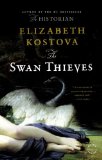
The Swan Thieves
by Elizabeth Kostova
Hardcover: Jan 2010,
576 pages.
Paperback: Nov 2010,
592 pages.
Please be aware that this discussion guide may contain spoilers!
At the beginning of Chapter 2, psychiatrist Andrew Marlow confesses that the story he is going to
tell is not only private but subject to my imagination as much as to the facts. In what ways does this
prove to be true, in the course of the book? How does Marlows imagination affect the telling of his
own story?
Each of the artists in the bookRobert, Marlow, Mary, Kate, Béatrice, and Olivieris
faced with
choices between art and personal life. What are some of these dilemmas, and how does each
character resolve or at least experience them?
In Chapter 64, at their painting conference in Maine, Mary says to Robert, I have the feeling that if
I knew why you were still painting the same thing after so many years, then I would know you. I would
know who you are. Why does Robert paint Béatrice for years and how does his obsession with her
shape his artwork? What other obsessions appear in the course of the book, in Robert and in other
characters?
Landscapes play an important role in The Swan Thieves, both in life and on canvas. What are the
major landscapes of the book, and what effect do they have on the characters?
5. In Chapter 95, just before Marlow flies to Paris to learn more about Béatrice de Clerval, Mary tells
him, Please just let her die properly, the poor woman. What does she mean by this? Why is it
important to her?
The Swan Thieves is partly a study of love that bridges gaps across time and agepassion,
mentoring, parenting. Which characters have these relationships? What do the old, or older,
characters have to offer the younger ones? What do the younger ones offer their elders?
At many points in the story, artists paint or sketch one another. What are these occasions and how
is each significant to the story?
In Étretat, as she considers her relationship with Olivier, Béatrice realizes that whatever happens
between them she must effect herself and live with later. Is this true of other characters
experiences? In what senses?
The myth of Leda and the Swan surfaces repeatedly in the narrative. Where do we encounter it and
what is its significance in each of the main characters lives? What other swans make an appearance in
the book?
Kate says of her second meeting with Robert Oliver, His apparent unawareness of himself was
mesmerizing. What else mesmerizes other people about Robert? Why do some of the other
characters find him compelling?
On leaving the National Gallery at the end of Chapter 7, Marlow notes that mingled relief and
disappointment one feels on departure from a great museumrelief at being returned to the familiar,
less intense, more manageable world, and disappointment at that worlds lack of mystery. What
museums appear in the novel? Is Marlows craving for mystery ultimately satisfied by museums or by
the world, and in what ways?
Unless otherwise stated, this discussion guide is reprinted with the permission of Back Bay Books.
Any page references refer to a USA edition of the book, usually the trade paperback version, and may vary in other editions.

The first biography of Clarence Birdseye, the eccentric genius inventor whose fast-freezing process revolutionized the food industry and American agriculture.
BookExpo America will broadcast live author appearances for the first time(May 24 2012) For the first time, BookExpo America is making author appearances at the show available for viewing online live or on demand, via Livestream. It is...
Full Story