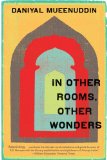
In Other Rooms, Other Wonders by Daniyal Mueenuddin: Questions, plus a reading group guide, with links to reviews, excerpt, author interview and author biography at BookBrowse.com.
In Other Rooms, Other Wonders
by Daniyal Mueenuddin
Hardcover: Feb 2009,
224 pages.
Paperback: Feb 2010,
256 pages.
Please be aware that this discussion guide may contain spoilers!
The figure of the wealthy landowner K. K. Harouni is the recurring thread that connects the lives of the disparate characters in Daniyal Mueenuddin's In Other Rooms, Other Wonders. Describe the nature of the feudal system as defined by this figure sitting atop the pyramid and all his subordinates, acquaintances, and relations.
Even as Mueenuddin reveals that his stories are set in the present-day, the reader is struck by the timelessness of the stories, as if they were fables. How is this effect achieved, and to what end?
Many of Mueenuddin's characters fall into predicaments beyond their control, and these predicaments define the conflicts at the heart of their stories. Women and the poor, in particular, are powerless and suffer because of it. At the same time, the characters reinforce their disadvantages by the choices they make, and so to a degree are agents of their own misfortune. Describe the interplay of these two factors in the fates of his tragic characters. Are the characters responsible for the tragedies that befall them? In the context of these stories, how are responsibility and blame defined and apportioned?
The Pakistani society that Mueenuddin describes contains a striking blend of spirituality and materialism. Spirituality is generally thought to be undermined by materialism. Is this true in the world that Mueenuddin describes? What form does spirituality take in these stories?
The feudal world is sometimes described as being dependent upon a complex system of responsibility and privilege among the different classes. What are the responsibilities and privileges of the lower and higher classes in these stories? Is the system stable? Why or why not?
What is revealed about the possibilities of social mobility in contemporary Pakistan in stories such as "Provide, Provide," "In Other Rooms, Other Wonders," and "Lily"?
"About a Burning Girl" is the only story narrated in first person. How does this set it apart from the others in the collection? Why do you think the author chose to tell this story in first person? Are the stories generally uniform in tone or perspective?
Some critics and readers have dwelled on the darkness of this book. How does humor enter into Mueenuddin's stories?
"Our Lady of Paris" and "A Spoiled Man" feature prominent Western characters. How does the inclusion of these characters, as well as of Pakistani characters who have returned home from abroad, serve to broaden the scope of the collection's depiction of Pakistan?
How sustaining is sexuality as a form of power for the women in these stories?
How do the stories "Lily" and "A Spoiled Man" reveal the idealization of rural life by the wealthy? Why do their characters retreat to the countryside? Do the lives of the poor characters in Mueenuddin's collection support any of their fantasies?
Might these stories be called morality tales?
Unless otherwise stated, this discussion guide is reprinted with the permission of W.W. Norton & Company.
Any page references refer to a USA edition of the book, usually the trade paperback version, and may vary in other editions.

A bold, mesmerizing novel about the woman known as "Typhoid Mary," the first known healthy carrier of typhoid fever in the burgeoning metropolis of early twentieth century New York.
Z, the novel about the life of Zelda Sayre Fitzgerald is at points charming and; like another reviewer, I kept thinking of the movie, "Midnight...
read more
Although heavy on the scientific details, which slowed down the story for me (OK, I admit, I was one of those liberal arts majors who skipped out on...
read more
Loved this book. Magical, quirky, enchanting I could go on. All books do not have to be literary fiction, sometimes it is just so comforting to read...
read more
British Parliament asks Amazon to clarify why it pays $9 million in income tax on $23 billion of UK sales.(May 20 2013) Amazon will be called back to give further evidence to members of the British Parliament "to clarify how its activities in the U.K. justify its low corporate...
Full Story